Police Fleet Expo: What public safety agencies are really asking about AI, EVs and accountability
What Geotab heard at this year’s Police Fleet Expo: agency leaders pushing for AI accountability, frontline operators reshaping product development and telematics data driving smarter procurement decisions.
%20Photo.jpg)
Aug 24, 2026
Key Insights
- Conversations at this year’s Police Fleet Expo revealed that public safety agencies are scrutinizing AI vendor claims more closely than ever.
- Telematics data, including duty cycle analysis and real-world EV performance metrics, are helping agencies make evidence-based procurement decisions.
- Frontline teams are now driving product feedback loops, and the industry is better for it.
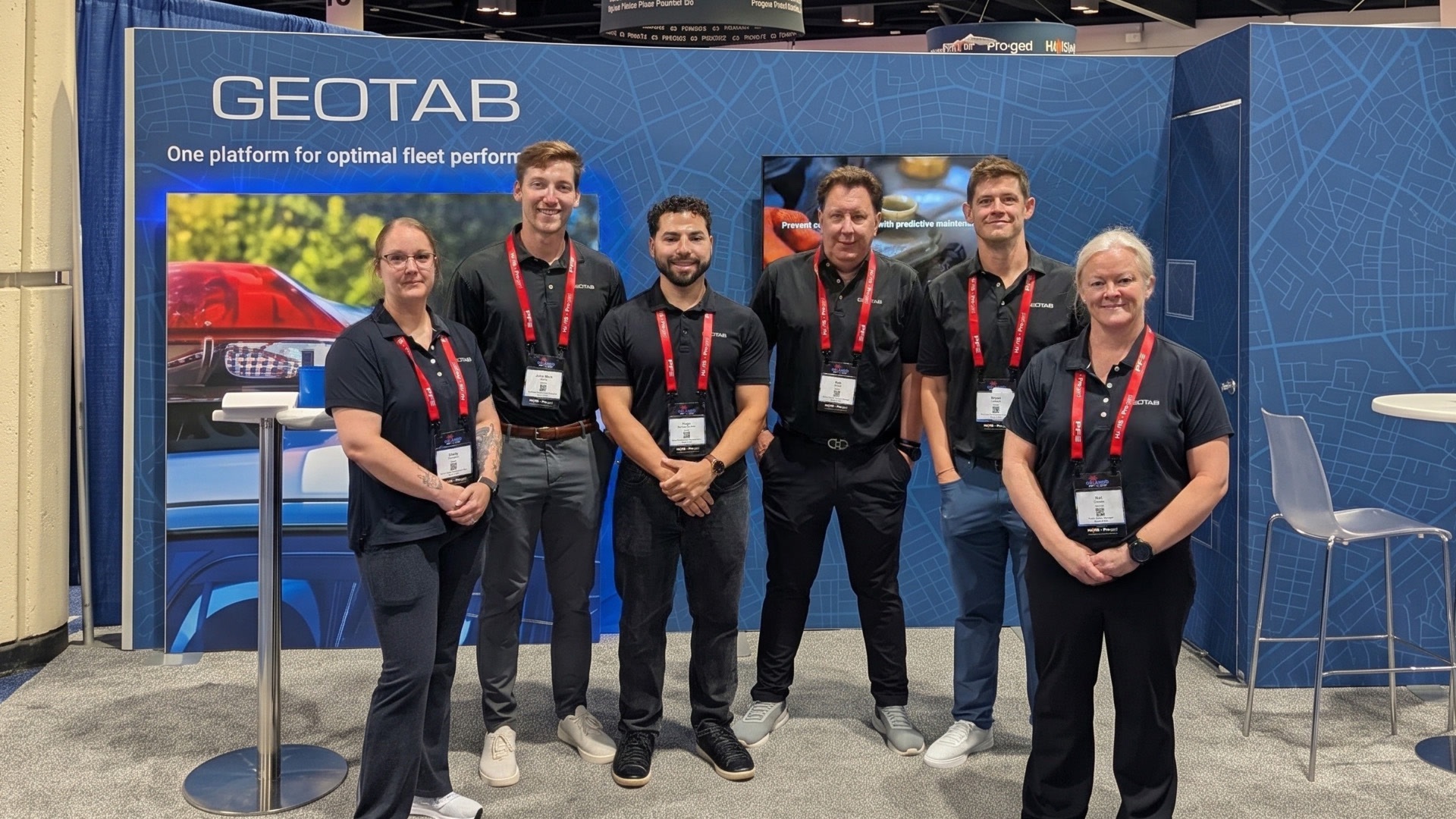
Police Fleet Expo is one of the few events where fleet directors, upfitters, manufacturers and the officers who drive these vehicles are all in the same room — and this year, that room had more energy than we’ve seen. More agencies. More questions. Multiple discussions extended far past their scheduled times because participants were deeply invested in addressing essential needs. With over 1,000 total attendees (not including exhibitors), engagement in this year’s event hit an all-time record.
Geotab used the opportunity to have in-depth conversations with multiple public safety agencies. Our discussions spanned key operational challenges, including:
- Measuring telematics ROI.
- Distinguishing actual AI functionality from vendor hype.
- Assessing hybrid vehicle durability under demanding shift conditions.
- Defining accountability metrics for public technology purchases.
Although each conversation was unique, a common theme connected them all: technology that delivers practical value on a public budget.
The value of direct engagement for vendors and agencies
At events like Police Fleet Expo, the gap between the technologies being sold and what agencies actually need gets exposed (and sometimes closed). For agencies, the show floor is a filter. For exhibitors, it’s a chance to hear from agency leaders — something a product roadmap meeting alone can’t provide.
For example, an agency that challenges a vendor to prove AI ROI leaves with a sharper accountability framework. A manufacturer who is told their product falls short of requirements leaves with a development plan that’s aligned more closely to the industry’s current needs. This tight-knit collaboration is how the industry gets better.
Core takeaways from conference sessions at this year’s Police Fleet Expo
The focus on measuring product value and exchanging feedback stood out across several key sessions. In one discussion, a 30-year fleet consultant put it plainly: most agencies can’t tell whether the AI they’re buying is actually working; not because they aren’t paying attention, but because they haven’t built the conditions to measure it. Geotab, guided by the principle that you can only manage what you measure, was highlighted as a platform actively enabling these results. Concrete outcomes were showcased, including saving 12 minutes per diagnostic event, detecting battery faults prior to deployment and identifying cooling system issues before a total breakdown.
While these results demonstrate clear, practical value, realizing them depends on asking vendors essential questions from the start:
- Does the platform connect seamlessly with your existing work order system?
- Is the underlying model trained on a small, localized fleet or a massive, industry-wide network of vehicles?
- How reliable is your baseline data, and what specific metrics will be used to track ongoing success?
Another session focused on evaluating electric police vehicles. Robert Martinez, former Deputy Director of the NYPD, shared candid insights from hands-on electric vehicle deployments. During his time at the NYPD, he oversaw a fleet of more than 10,000 vehicles. He discussed how fully electric options are not yet ready for mission-critical demands for the majority of law enforcement agencies.
Martinez highlighted how hybrids present a far more practical solution, citing potential benefits including up to $20,000 USD in fuel savings per vehicle over six years, reduced underhood heat during idling and extended maintenance intervals. Telematics data (including duty cycle analysis, idling habits and actual range requirements) provides the evidence needed to substantiate these benefits during budget reviews.
Frontline teams are closing the product feedback loop
A final defining shift emerged from the discussions: the frontline teams who know firsthand what breaks during a night shift, how vehicles perform in real-world conditions and what holds up over 12 hours are providing product feedback to vendors, too.
Consider the K-9 unit commander who confronted a major patrol equipment manufacturer directly, letting them know their kennel design fell short. That honest encounter sparked direct design sessions, integrated frontline operator feedback and ultimately yielded a better product. It may seem like an isolated anecdote, but it reflects a much broader industry pattern. The future of public safety is being shaped by stronger communication between vendors and those who put their lives on the line every day.
Geotab’s approach to supporting the front line
As frontline teams continue to ask for more from their tools, Geotab is committed to staying close to those conversations. We continue to work with public safety agencies to better understand their evolving challenges and develop reliable solutions for them. Through telematics, data analytics and partner integrations, Geotab gives law enforcement, EMS, corrections and fire teams the insights they need to make smarter decisions. Visit this webpage to learn how our tools can help you protect your frontline team and stay mission-ready every day.
Subscribe to get industry tips and insights
Frequently Asked Questions
In 2027, the Police Fleet Expo will be hosted in St. Louis, Missouri from August 9-12. Venue details will be shared as the event gets closer, but you can check the event website here for specific updates.
Geotab’s solution enables frontline teams to serve their communities better, remain transparent and stay safer through capabilities like these:
- Predictive maintenance: Detect early signs of component wear to fix vehicle issues before they result in breakdowns that strand officers.
- Collision detection and reconstruction: Discover major and minor incidents quickly to accelerate emergency response. If a collision happens, reconstruct the incident with data to better understand what happened and help exonerate innocent officers.
- Lights and siren integrations: Help defend your team with data that shows whether their lights and sirens were activated during speeding incidents.
- Lone worker app integrations: Get ‘man down’ alerts by connecting solutions like OK Alone to the Geotab platform. If an officer is outside their vehicle and incapacitated, an alert can help supervisors provide faster support.
While concerns like range and charging access may currently limit the widespread adoption of electric police vehicles, interest is likely to build as the technology advances. Battery-electric vehicles eliminate gasoline consumption and often contain fewer moving parts, which can help agencies reduce maintenance needs and costs. If your agency is waiting to adopt EVs until their capabilities grow, hybrid options can still help your team advance its sustainability goals in the meantime. These vehicles use both battery power and gasoline, balancing fuel economy with the rigorous performance needs of the job.
No matter which type of vehicle your agency chooses, sustainable options can help reduce costs and environmental impact. This shows your community that your agency is committed to smarter policing and responsible use of public funds.
With extensive experience in the public safety sector in the UK and now calling Canada home, Nat has been a passionate advocate for the integration of innovative technology solutions to enhance public safety operations. Nat has delivered localized end-to-end telematics and technology services to various agencies across North America, significantly improving operational efficiencies and safety for these public safety teams. As a speaker at many telematics and technology conferences, Nat is a huge supporter for the responsible use of technology to benefit front-line public safety operations. Leveraging technology to ensure public safety teams work more safely and with greater transparency is a key part of Nat's role here at Geotab.
Table of Contents
Subscribe to get industry tips and insights
Related posts
How private haulers can help prepare their fleets for new waste management contracts
October 23, 2026
4 minute read

Top seven best fleet fuel cards: How to choose the right one for your business?
October 1, 2026
7 minute read
Four ways to transform garbage fleet efficiency with data and video tools
September 28, 2026
4 minute read

Why the OEM versus device-level telematics debate misses the point for mixed-fleet operators
September 25, 2026
2 minute read