Corporate fleet management: Where to start + top tools for your fleet

By Geotab Team
Nov 5, 2025

Key Insights
- Corporate fleet management streamlines enterprise vehicle operations with strategic planning, technology integration and cost optimization.
- The right fleet management software offers fleet-wide real-time visibility into vehicle health, fuel consumption and driver behavior.
- Successful corporate fleet management programs balance total cost of ownership considerations with safety requirements and regulatory needs.
Managing dozens — or hundreds — of company vehicles requires more than just basic tracking and maintenance schedules. Corporate fleet management calls for strategic coordination of vehicle deployment, acquisition and disposal across your entire organization.
When used correctly, it turns vehicle operations from a cost drain to a competitive advantage, which is why many enterprise companies invest in corporate fleet management. The right program controls rising operational costs while maintaining regulatory compliance, no matter whether you are managing delivery vehicles or service fleets.
Read on to learn exactly what fleet management is, common benefits, best practices and the top management companies.
What is corporate fleet management?
Corporate fleet management is the coordinated oversight of company vehicle assets to improve fleet efficiency, reduce expenses and ensure safety. This covers vehicle acquisition, daily operations, disposal and replacement, and the use of telematics to optimize performance.
Unlike managing a few cars, corporate vehicle management addresses complexities that only large-scale fleets face. That means helping fleet managers balance competing priorities like minimizing total cost of ownership, maintaining regular compliance, ensuring driving safety and supporting business operations.
Key components of corporate fleet management
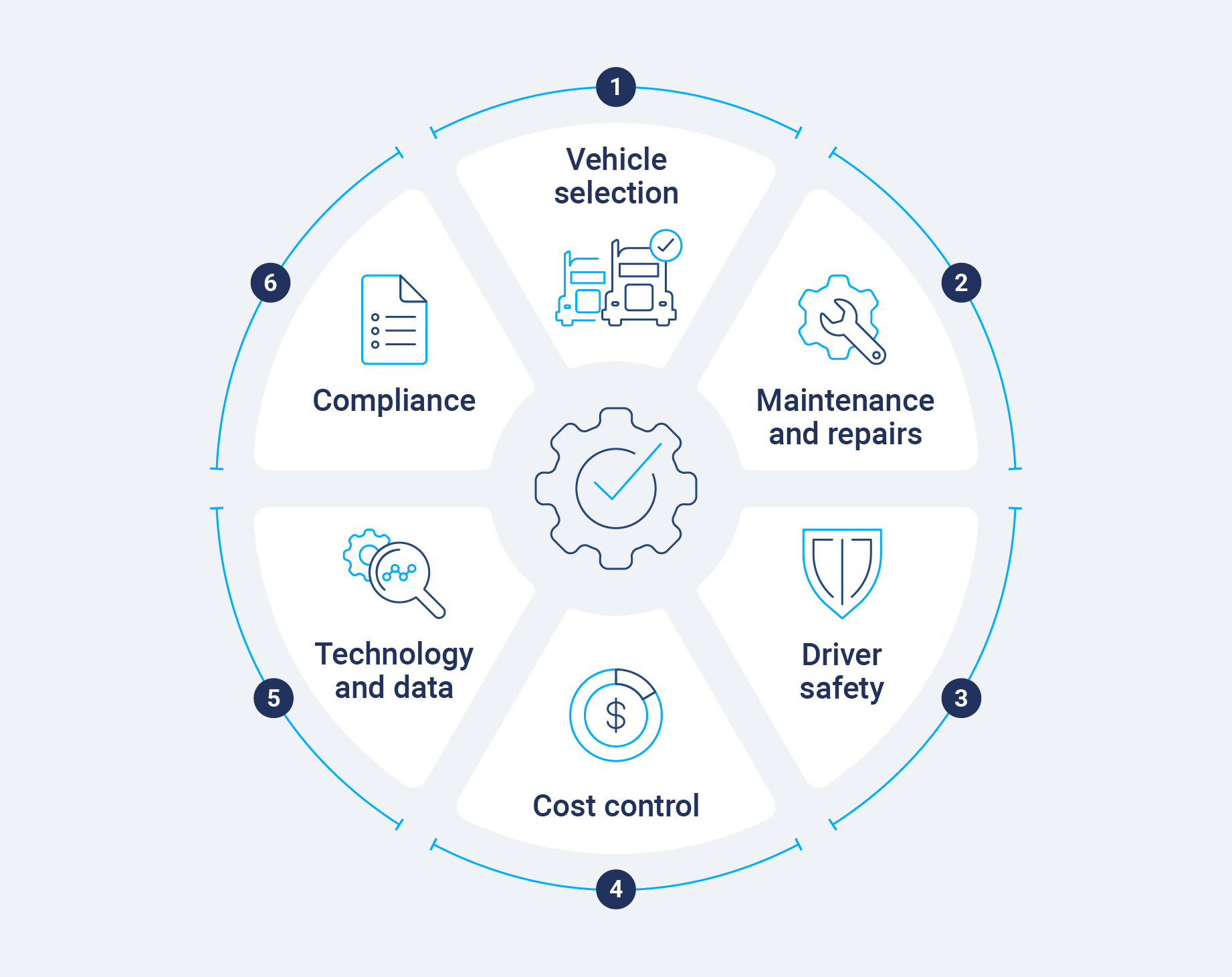
The key components of corporate fleet management include selecting the right vehicles, managing maintenance and repairs proactively, advising on driver management and safety, and ensuring regulatory compliance and more.
We’ll go into more detail on what each of these components looks like below.
Vehicle selection and acquisition
Before you can pick the best corporate fleet vehicles for your organization, you must first understand what your operation needs. Consider factors like:
- Payload capacity
- Fuel efficiency
- Driver comfort
- Expected lifecycle costs
Weigh the pros and cons of leasing versus purchasing. Take into account your available capital, expected vehicle usage, tax considerations and how often you’ll need to replace your fleet. Many organizations use a mix of acquisition methods based on vehicle type and deployment needs.
Maintenance and repairs
Proactive maintenance scheduling is key in preventing surprise breakdowns and prolonging vehicle durability. Corporate fleet management systems track:
- Maintenance intervals
- Vehicle lifespan
- Fleet-wide service appointments
This systematic approach helps control repair costs by addressing small issues before they become failures.
Driver management and safety
Proper fleet vehicle management also means managing your drivers. This is why corporate fleet management includes driver onboarding, ongoing training, safety monitoring and compliance verification.
Telematics systems offer real-time visibility into high-risk driver behaviors like harsh braking, speeding or acceleration, as well as valuable opportunities for driver coaching.
Cost control and financial management
Fleet managers need detailed oversight to manage expenses across fuel, maintenance, insurance, registration, depreciation and financing. The right corporate fleet management companies provide reporting tools to prevent errors, keep true operating costs accurate and even identify savings.
Technology and data systems
Modern corporate fleet management systems use integrated technology platforms to provide real-time visibility into fleet operations, telematics sensors, fuel cards and maintenance management systems.
The systems use this data to generate insights for fleet managers to optimize operations, identify cost-saving opportunities and maintain compliance.
Regulatory compliance
Fleet operations have to comply with regulations like driver qualifications, vehicle inspections, hours of service, emissions standards and safety requirements. Corporate fleet management systems help organizations keep track of required documents, monitor compliance status and most importantly, avoid costly violations and penalties.
Benefits of corporate fleet management
Organizations that implement structured corporate fleet management programs often see benefits across multiple operations like cost control, driver safety and vehicle usage. These improvements extend beyond simple cost savings, including improved safety and more actionable insights
Cost management
Strong corporate fleet management means clear visibility into the total cost of ownership for every vehicle because fleet managers can easily track expenses across fuel, maintenance, insurance and depreciation. These insights help you identify which vehicles are performing well and which are a resource drain.
Understanding fleet insurance costs, seeking volume discounts and implementing safety programs that reduce premiums means securing significant savings. The same goes for optimizing vehicle selection and fleet right-sizing, which eliminates any expenses from underused vehicles.
Safety and compliance
Corporate fleets face increased scrutiny from regulators and insurers because of sheer size and visibility. Comprehensive fleet management keeps all vehicles inspection-ready, drivers properly qualified and operations in compliance with hours-of-service rules.
Electronic logging devices like Geotab’s ELD automatically record driving time, rest periods and vehicle inspections, making compliance simple. This reduces administrative work. It also uses telematics safety monitoring to identify risky driving behaviors and help reduce collisions.
Technology integration
Full integration with GPS tracking, fleet management software and telematics offers a real-time view of fleet operations. Managers can oversee vehicle locations, track fuel consumption, receive maintenance alerts and analyze driver behaviors, all in one place.
This technology makes it easy to implement route optimization and improve fuel efficiency.
Corporate fleet management best practices
To successfully implement a strong corporate fleet management program, you must combine strategic planning with disciplined execution. These best practices help maximize fleet efficiency while maintaining costs.
Pick your vehicles wisely
Choose your vehicles carefully because your decision will have long-term cost implications. The purchase price is only the beginning — keep in mind factors like expected maintenance costs, fuel consumption, insurance rates and resale value.
Fleet managers who understand the total cost of ownership will not simply select the cheapest option. They might invest in a fuel-efficient vehicle to improve operational expenses, or purchase a vehicle that has a higher resale value despite a higher purchase price.
Prioritize predictive maintenance and repairs
Instead of waiting for vehicle breakdowns, modern fleet management systems monitor vehicle health indicators and set alerts for when components are likely to fail. This transition from reactive to proactive reduces downtime and extends vehicle life.
Scheduled inspections, proactive telematics services and tracking maintenance schedules is the best way to keep fleet costs manageable and prevent small repairs from becoming costly fixes.
Know your fuel and operating costs
Fuel costs are usually one of the largest ongoing expenses for any corporate fleet, which is why monitoring fleet consumption is so important. Keep tabs on fuel usage across vehicles and drivers to find opportunities to improve fuel efficiency with routing, driver coaching or vehicle replacement.
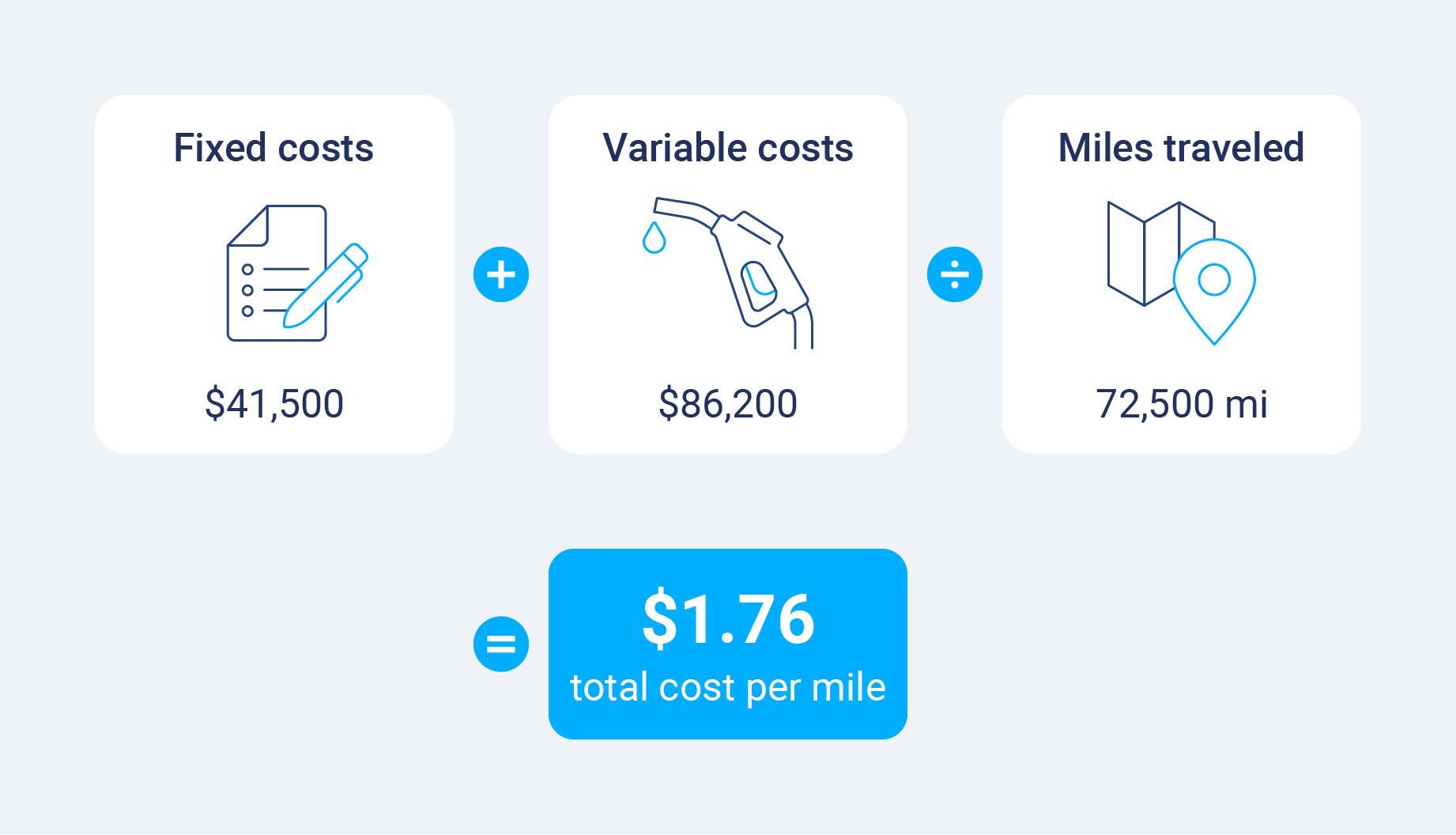
Calculating cost per mile and tracking operating expense trends is how fleet managers can identify the most efficient vehicles and routes. Tools like Geotab help streamline this process and optimize routes to reduce unnecessary mileage.
Integrate telematics
Telematics systems are the foundation for data-driven fleet management because of their ability to monitor vehicle health, driver behavior and operational patterns. These platforms let fleet managers make fleet-wide, data-informed decisions.
GPS tracking confirms vehicle locations and supports efficient dispatching, and telematics sensors like Geotab’s devices provide data on engine performance, fuel consumption and maintenance needs. This technology enables you to reduce fuel waste and detect costly repairs early.

Top fleet management companies
You understand all the benefits of investing in a fleet management company, but now you’re faced with a difficult decision: Which solution is best for you? Below is a quick overview of the leading providers in the corporate fleet services space to help you find the strongest support.
| Company | Highlights |
|---|---|
| Geotab | Industry-leading telematics platform with open architecture, ELD compliance, predictive maintenance, dash cams, and extensive third-party integrations |
| Fleetio | Cloud-based management with an intuitive interface, mobile apps and strong preventive maintenance scheduling |
| Trimble | Specialized solution for trucking and logistics with advanced routing, load optimization and compliance management |
| Verizon Connect | Robust mobile workforce management features, route optimization and integrated video telematic options |
| Samsara | Platform featuring dashcams, real-time GPS tracking and intuitive reporting |
| Trimble | Specialized solution for trucking and logistics with advanced routing, load optimization and compliance management |
| Motive | Modern platform with automated workflows, AI dashcams and a strong focus on driver safety and efficiency |
| FleetNet America | Nationwide fleet maintenance network offering standardized service, transparent pricing and centralized invoice management |
| Teletrac Navman | GPS fleet tracking with integrated video, driver safety scoring and customizable reporting for diverse fleet types |
| Azuga | Affordable telematics solution with driver rewards program, fuel management and easy-to-use interface for small to mid-sized fleets |
Take your fleet to the next level with Geotab
Upgrading from basic vehicle tracking to comprehensive corporate fleet management requires the right technology foundation. Geotab’s fleet management solutions offer the data visibility, analytical tools and integration capabilities that organizations need to optimize at scale.
Whether you’re starting a new corporate fleet program or modernizing your current setup, the key to growth is picking the right partner that can grow with your needs. Look for platforms with open architecture, extensive partner ecosystems and proven scalability that can support your current and future needs.
Ready to transform your fleet operations? See how Geotab’s telematics platform turns fleet data into smarter decisions for your corporate fleet.

Subscribe to get industry tips and insights
Frequently Asked Questions
A corporate fleet is a group of vehicles owned or leased by a business organization for commercial purposes. Unlike personal vehicle ownership, these vehicles exist to support business operations.
Fleet sizes vary, with small businesses owning a handful of vehicles and large enterprises managing thousands.
A company fleet manager oversees all aspects of a corporation’s vehicle operations. Those responsibilities include vehicle selection and acquisition, maintenance coordination, fuel management, driver safety programs, regulatory compliance and cost control.
Fleet managers analyze data to optimize operations, negotiate with vendors and service providers, and keep vehicles maintained and ready to meet business objectives.
Fleet management salaries in the United States vary based on fleet size, industry, location and experience level. The median annual salary for fleet managers starts at $53,500, with experienced managers earning $91,000 or more. Compensation often includes benefits and sometimes performance bonuses.
Start a corporate fleet program by first assessing your organization’s transportation needs and your current vehicle expenses. Determine how many vehicles you’ll need, what type of vehicle and if you want to purchase or lease. Next, separate must-have features from nice-to-haves. Start with essential capabilities like GPS tracking and work from there.
Finally, you’ll need to implement processes for regular reporting and continuous improvement based on fleet performance data.
The Geotab Team write about company news.
Table of Contents
Subscribe to get industry tips and insights
Related posts

Beyond the hype: Real AI priorities for field service leaders
March 26, 2026
6 minute read

Unified data: The key to fleet liability reduction for government agencies
March 19, 2026
9 minute read


Building a proactive government fleet safety program with data and AI
March 9, 2026
5 minute read

Building resilient school bus operations through four student transportation trends
February 24, 2026
6 minute read
Telematics trends for 2026: What is changing and how fleets can respond
January 30, 2026
6 minute read