ELD for hotshot trucking: Top tools and compliance guide
Compare the top ELD for hotshot choices and discover which FMCSA rules and exemptions apply to your fleet.

By Geotab Team
Nov 11, 2026

Key Insights
- The right ELD for hotshot trucking operations keeps your business FMCSA compliant, reduces paperwork and protects your bottom line.
- Compare ELD options based on features, pricing, hardware requirements, contracts and your organization's needs.
- Some hotshot operations can qualify for hours of service exemptions, though not all exemptions remove every recordkeeping duty.
- Look for features like IFTA tracking, flexible contract terms and a strong mobile app in addition to compliance features.
Hotshot trucking moves quickly, and every mile matters. With tight delivery schedules and slim profit margins, you must stay compliant with the Federal Motor Carrier Safety Administration (FMCSA) regulations. Using the right electronic logging device (ELD) helps you stay compliant, save time, reduce paperwork and avoid costly fines.
In this post, we review the best ELDs for hotshot drivers, breaking down their features, pros and cons. Whether you run a single truck or manage a small fleet, you will find practical advice to choose the best system for your operation. You will also get ELD tips to simplify compliance and keep your operations running smoothly.
Review the top ELD for hotshot providers below, ranging from full fleet platforms to more budget-friendly, no-contract choices.
| Tool | Key features |
| Geotab |
|
| Motive |
|
| EZ LYNK Auto Agent |
|
| Garmin eLog |
|
| Blue Ink Tech |
|
| GPSTab |
|
| HOS247 |
|
| Samsara |
|
1. Geotab
For hotshot drivers, staying compliant while managing tight delivery schedules, multiple loads and long hauls can be challenging. Geotab provides a reliable ELD for hotshot trucks that combines advanced fleet management insights with FMCSA compliance, helping single drivers and small fleets run more efficiently.
Geotab is built for flexibility and scalability. Single-operator hotshot drivers can quickly log hours, track routes and monitor fuel usage, while small fleets gain additional tools for driver performance, maintenance tracking and route optimization.
Geotab is particularly valuable for heavy equipment transport, where precise scheduling, compliance and route efficiency are critical. Additionally, a real-time vehicle tracking device and route monitoring allow drivers to make informed decisions on the road, saving time and fuel costs.
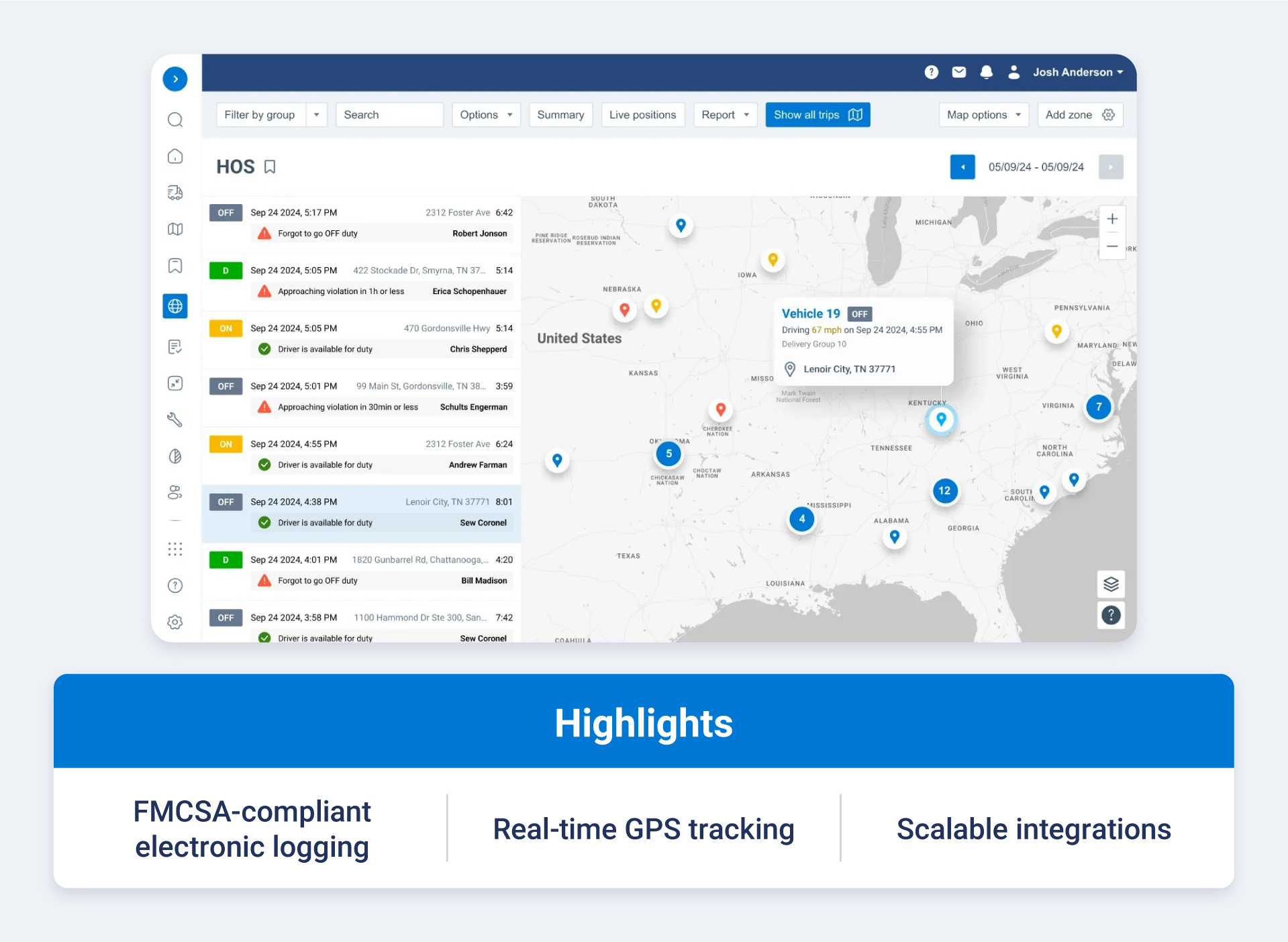
Key features
- FMCSA-compliant logging: Records hours automatically with this ELD to ensure accurate, reliable electronic logs and keep hotshot drivers compliant with federal regulations, including hours of service (HOS) tracking.
- Real-time GPS tracking: Monitors vehicle locations and routes in real time, helping hotshot drivers optimize deliveries, maximize efficiency and improve fleet visibility.
- IFTA reporting: Enables you to simplify fuel tax reporting across multiple jurisdictions, reducing administrative workload.
Scalable integrations: Integrates into fleet management, dispatch and maintenance tools, allowing hotshot drivers to expand from single-operator trucks to small fleets of heavy equipment transport.
2. Motive
Motive gives hotshot drivers compliance tools and 24/7 customer support. Beyond meeting FMCSA requirements, Motive helps small fleets and independent operators gain deeper insights into HOS performance, risk factors and driver behavior like distracted driving.
The Motive Driver App and Fleet App let hotshot drivers stay compliant on the road while giving fleet owners access to advanced reporting like violation breakdowns, cycle trends and Compliance, Safety, Accountability (CSA) score forecasting. AI-powered trip assignment also prevents compliance gaps by automatically matching drivers to unidentified trips in real time.
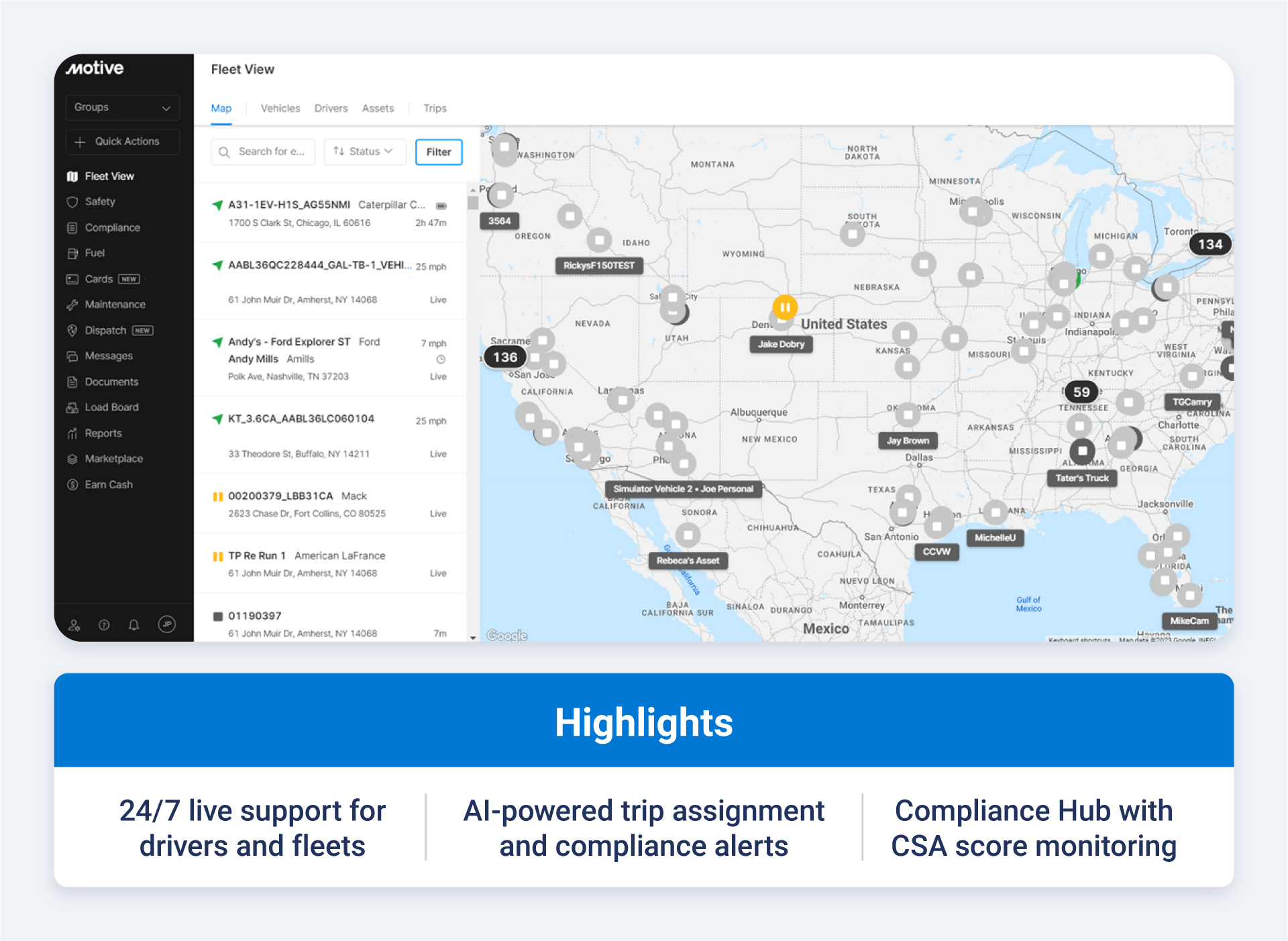
Key features
- Compliance Hub insights: Track violation breakdowns, cycle trends and driver leaderboards to spot issues before they become costly fines.
- Proactive CSA score monitoring: Forecast CSA scores alongside Motive’s Safety Score to monitor driver risk.
Driver-friendly app experience: Use countdown clocks, proactive alerts and quick roadside inspection mode to simplify HOS and DVIR compliance.
3. EZ LYNK Auto Agent
EZ LYNK Auto Agent 3 combines FMCSA-compliant logging with vehicle diagnostics. It connects directly to your truck’s on-board diagnostics (OBD) port, providing FMCSA-compliant logging and advanced diagnostic insights.
The companion mobile app allows drivers and fleet managers to log hours, complete DVIRs, track fuel for IFTA reporting and view real-time engine data to spot issues before they turn into costly repairs.
For hotshot operators balancing tight schedules and vehicle wear, EZ LYNK pairs electronic logging with onboard diagnostics. Reading fault codes and monitoring performance directly through Auto Agent 3 helps drivers make smarter maintenance decisions and avoid unexpected downtime.
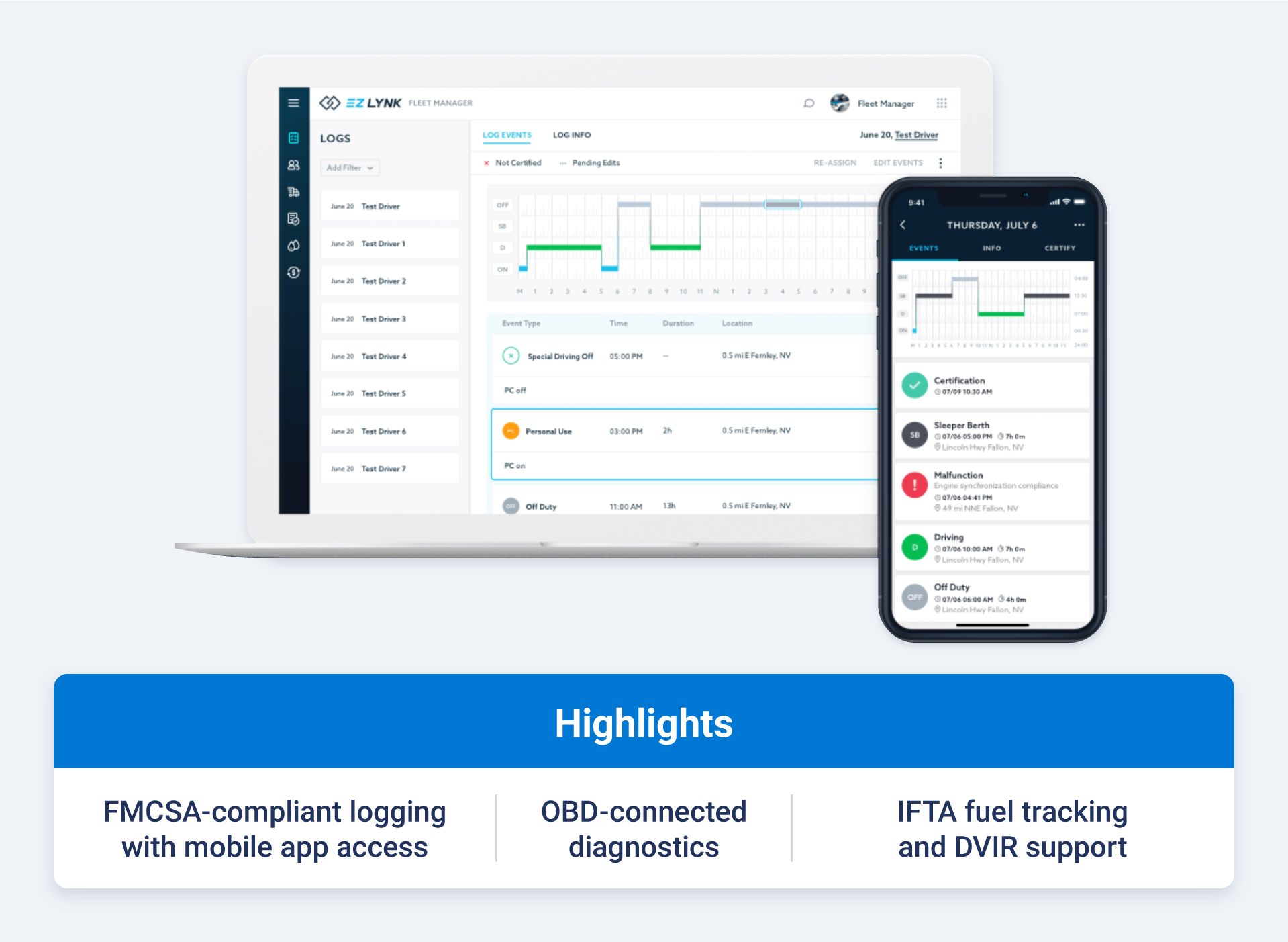
Key features
- OBD-connected diagnostics: Plug the Auto Agent 3 into your vehicle’s port to read fault codes and track engine health in real time.
- Electronic logging and DVIRs: Stay FMCSA-compliant with automated logs and digital driver vehicle inspection reports.
- IFTA fuel tracking: Record mileage and fuel data to simplify multi-jurisdiction tax reporting.
Mobile app management: Monitor hours, review logs and manage inspections using the EZ LYNK mobile app from any smartphone.
4. Garmin eLog
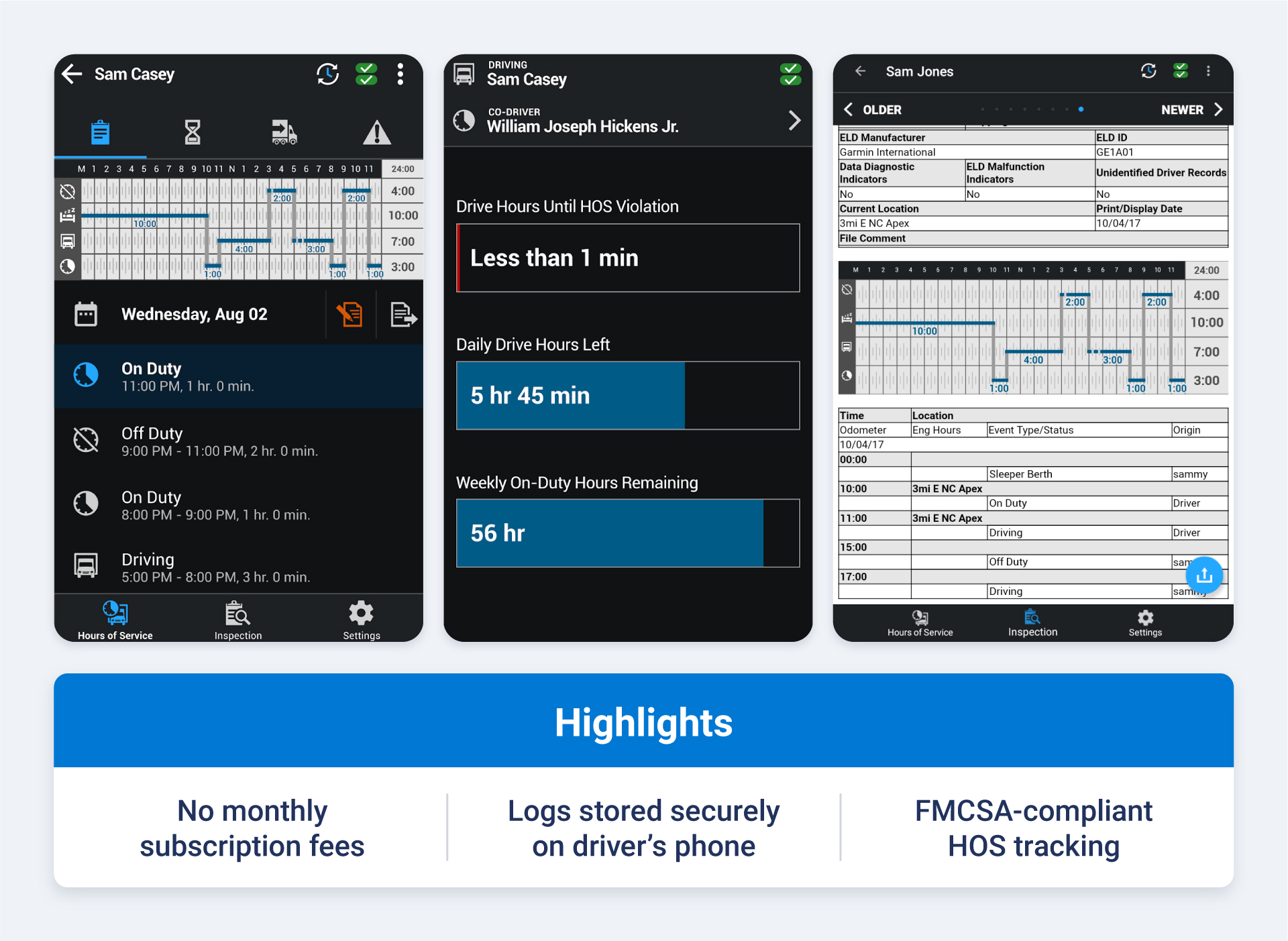
Garmin’s eLog is a choice for hotshot drivers who want a compliant, no-frills ELD without monthly subscription fees. Once purchased, the device connects directly to your truck and begins tracking HOS right away and stores all logs locally on your phone, keeping them secure and offline.
This makes Garmin particularly appealing for independent hotshot operators seeking low-maintenance FMCSA-compliant ELD. While it lacks some advanced features like real-time GPS tracking or cloud-based reporting, it covers the essentials for compliance at a one-time cost.
Key features
- One-time purchase: Avoid ongoing fees with a single hardware investment.
- FMCSA-compliant logging: Use Garmin eLog to automatically record driving time to keep drivers audit-ready.
- Local storage of logs: Save HOS records directly to the driver’s smartphone for easy access and added privacy.
Simple setup: Plug the device into your truck, and it begins logging immediately.
5. Blue Ink Tech
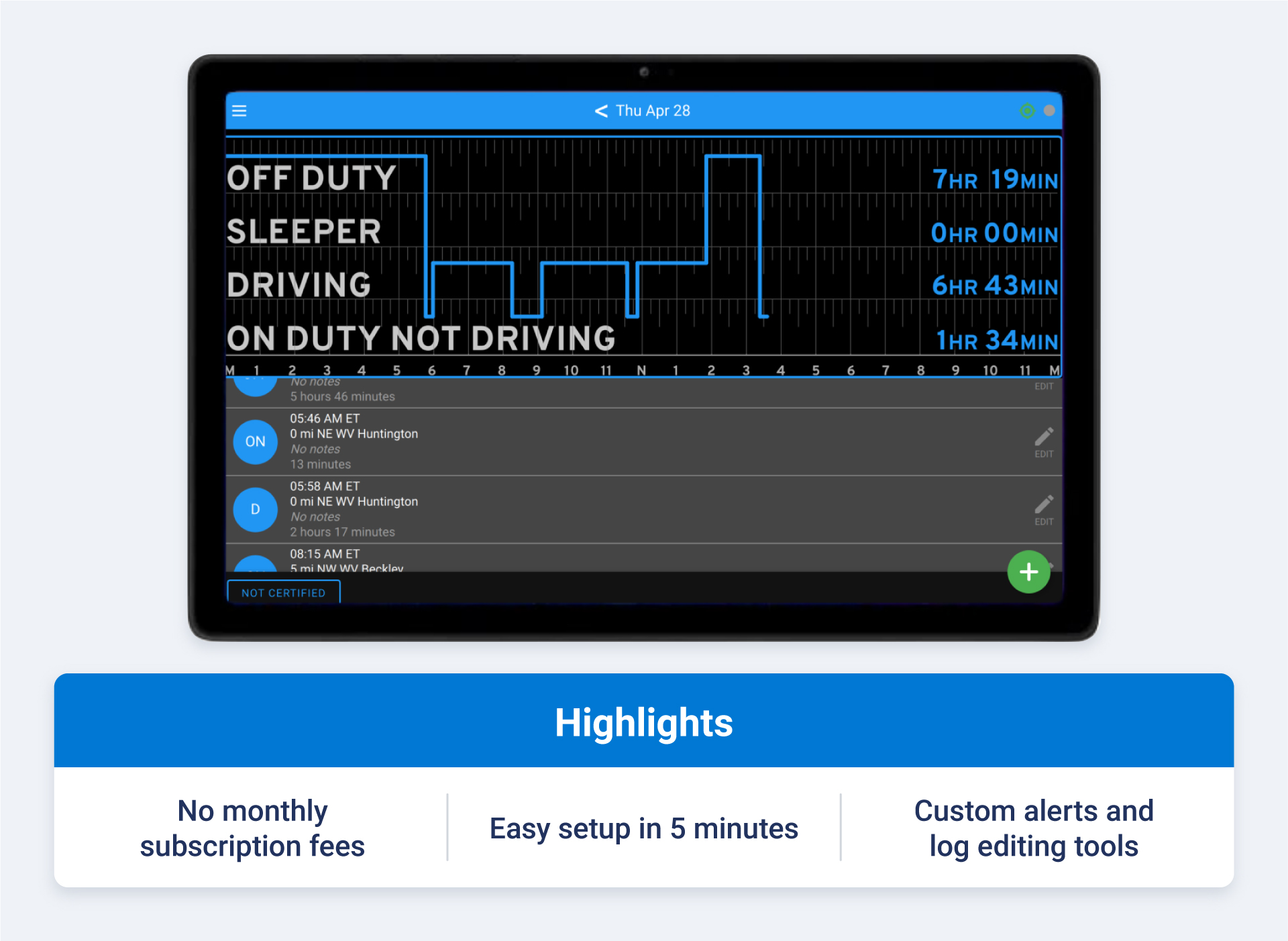
For hotshot drivers who want to avoid another monthly subscription, Blue Ink Tech (BIT) offers a pay-once approach to ELD compliance. Drivers pay upfront for the hardware and can use the companion app without recurring charges.
The BIT ELD connects wirelessly to the Blue Ink Tech app, giving drivers access to tools like guided log editing, one-tap certification and customizable HOS alerts. Setup takes as little as five minutes, and the system works across light-, medium- and heavy-duty trucks. With features like cycle recap tables, in-state mileage tracking for IFTA and real-time engine fault code reading, BIT helps hotshot drivers manage both compliance and efficiency on the road.
Key features
- Pay-as-you-go pricing: Purchase the BIT ELD device outright without ongoing subscription fees, ideal for budget-conscious hotshot drivers.
- Custom HOS alerts and recap hours: Get automatic reminders near driving limits and view cycle recaps to plan your driving time effectively.
Log editing and certification tools: Edit logs with guided steps and certify with a single tap to entry errors.
6.GPSTab
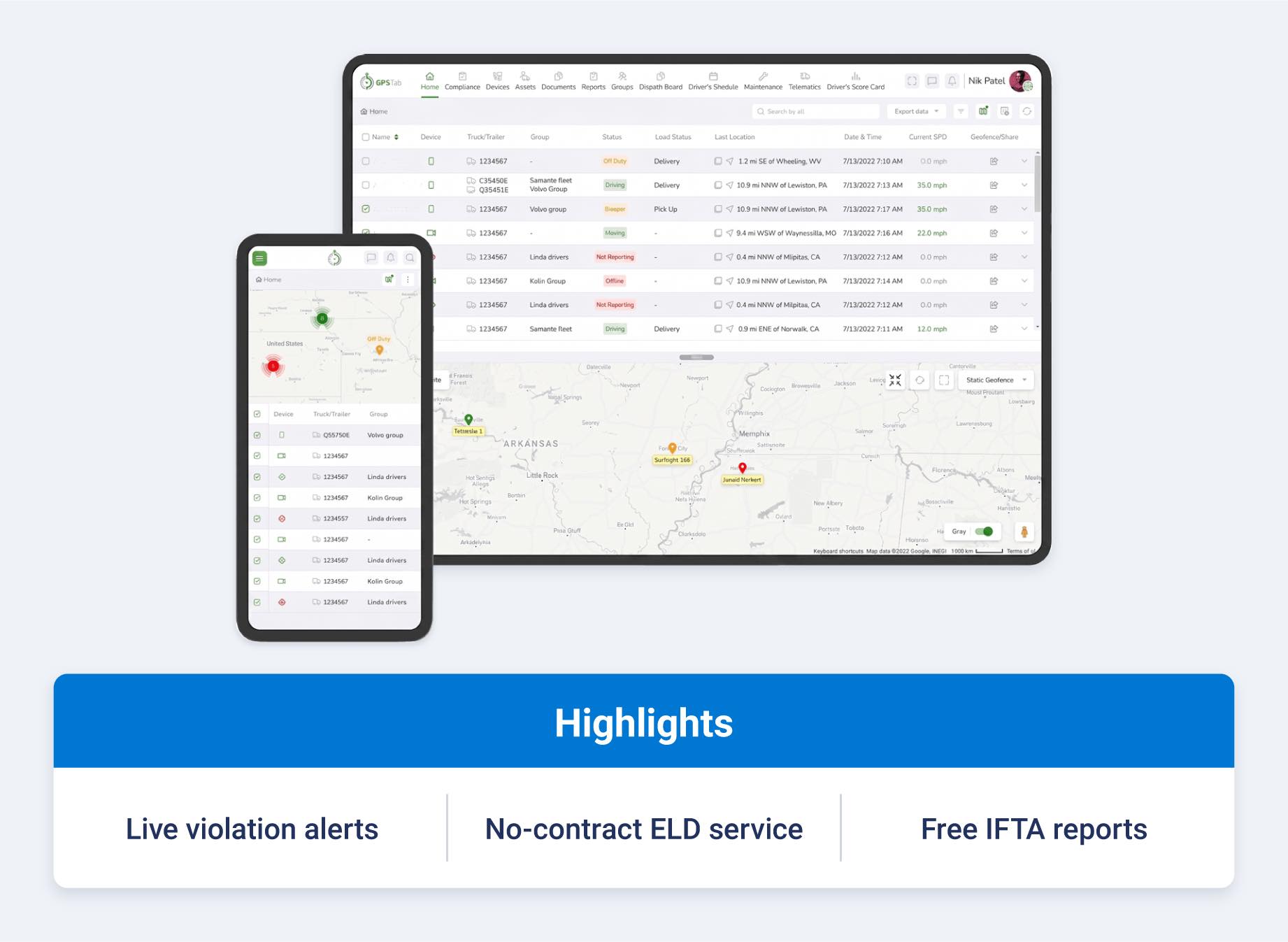
GPSTab offers to owner-operators and small hotshot fleets compliance solutions without the extra hardware investment. This provider offers the logging device at no charge and pairs it with a fleet manager portal, allowing single-truck operators and growing fleets to oversee compliance from a shared dashboard.
For hotshot drivers looking for a quick installation and a straightforward monthly rate, GPSTab provides core compliance and dispatch support. It combines GPS visibility with dispatch and routing software tools to simplify load tracking across multiple trucks.
Key features
- No long-term contracts: Fleet managers can pay a flat monthly rate and cancel or switch plans as the organization scales.
- Simple installation: Self-install the device in under a minute.
- Live violation alerts: Receive real-time driver and dispatcher alerts, making it easier to address compliance issues before they escalate.
Free IFTA downloads: Unlike providers that charge for reporting access, managers can use GPSTab to pull IFTA mileage data at no added cost.
7. HOS247
Owner-operators looking for an ELD with reliable compliance and flexible pricing often pick HOS247. Its trial period and no-contract policy options may appeal to managers and drivers who want to test the system before committing to a longer-term arrangement.
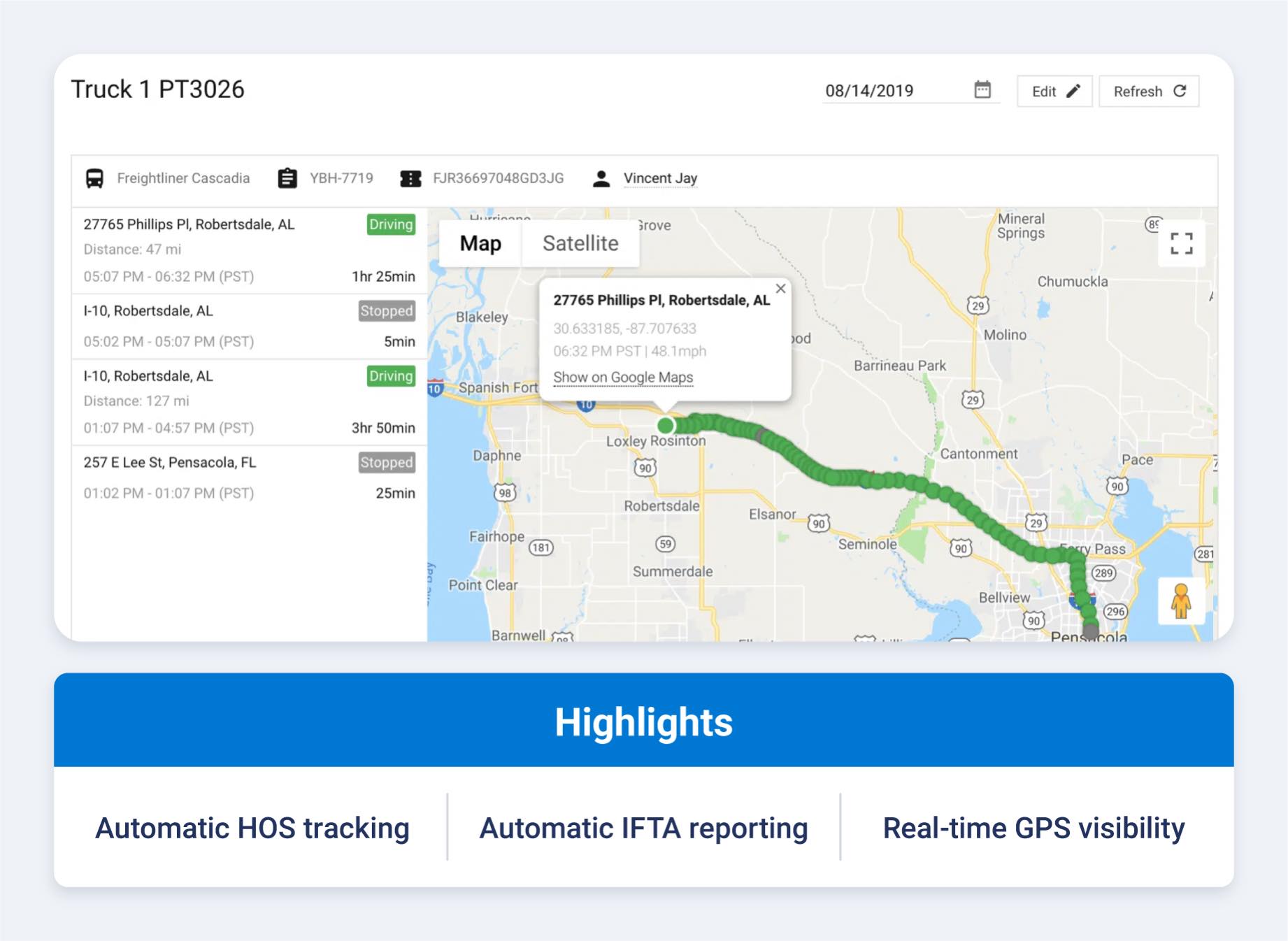
Beyond core HOS tracking, HOS247 provides automatic IFTA mileage reporting, vehicle diagnostics with fault code alerts and real-time GPS tracking, providing hotshot drivers visibility into both truck health and compliance. The device also works well for hotshot operators who swap equipment often, since it can transfer between trucks.
Key features
- Real-time GPS tracking: Monitor routes and vehicle locations to provide more insightful route planning and dispatch decisions.
- Transferable hardware: Move the device between trucks as your hotshot fleet changes.
- Automatic HOS tracking: Record hours in real time to reduce paperwork and manual log entry.
IFTA mileage reporting: Generate fuel tax reports automatically across all jurisdictions.
8. Samsara
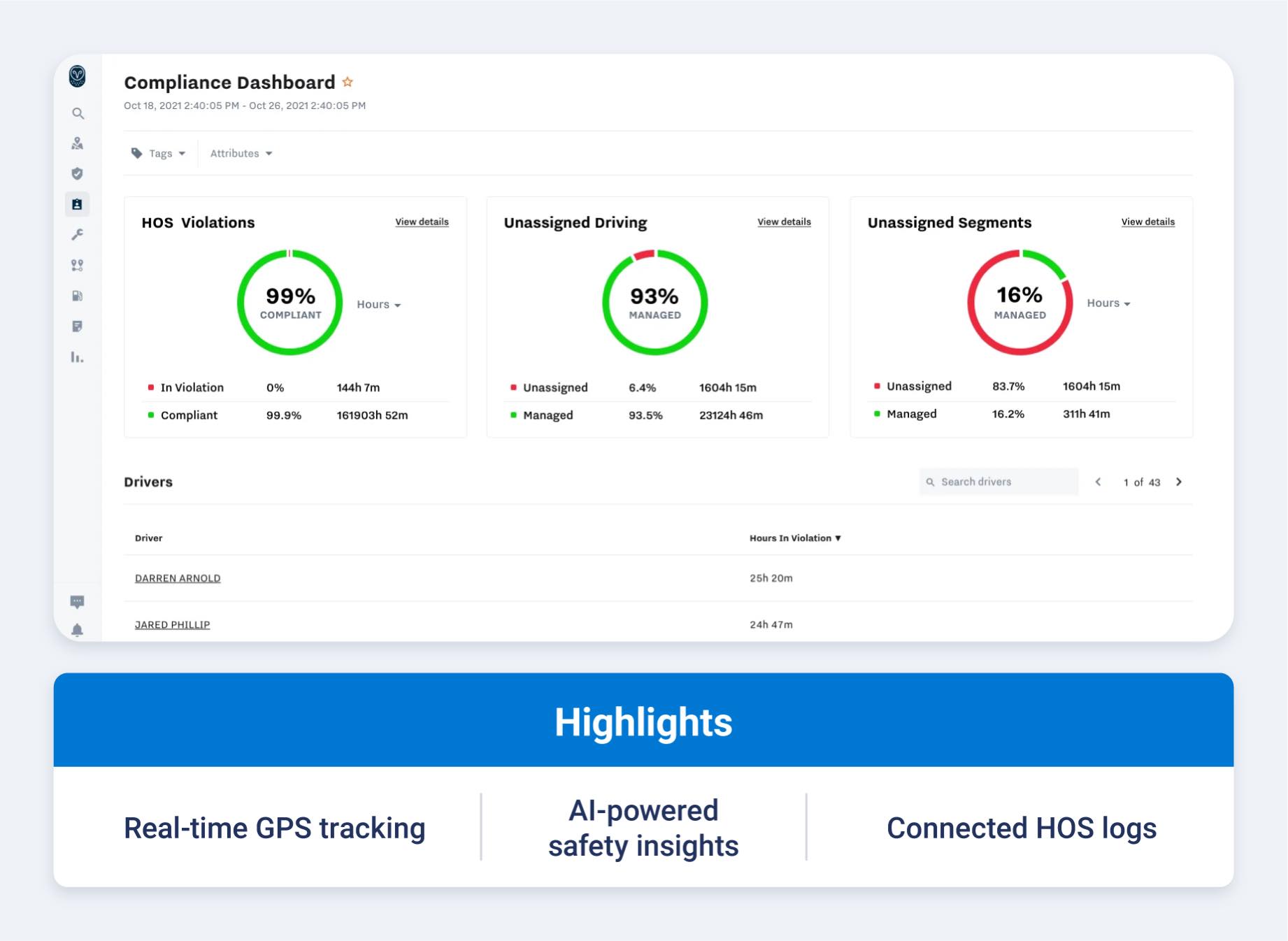
Samsara combines ELD compliance with a broader connected operations platform. It can work well for fleet managers and hotshot drivers who need HOS logs and telematics data. The Vehicle Gateway hardware doubles as a GPS tracker and works well as a WiFi hotspot, which helps drivers stay connected even in areas with limited coverage.
The Samsara Driver App adds coaching tools, digital DVIRs and AI-powered event summaries in addition to standard ELD tracking. Real-time GPS data links route history to safety events, providing managers with more context for route decisions and coaching.
Key features
- AI-powered event summaries: Review flagged safety events quickly to reduce administrative time and improve coaching.
- WiFi hotspot hardware: Stay in contact in low connectivity areas with Vehicle Gateway.
- Real-time GPS and weather overlays: View live vehicle locations and weather conditions to better plan routes around hazards.
- Digital DVIRs: Complete inspection records in the driver app.
What hotshot drivers should look for in an ELD
When choosing the best ELD for hotshot trucks, pick the solution that meets the unique demands of fast-paced, small-fleet hotshot operations.
Hotshot drivers often juggle tight delivery schedules, long hauls and slim margins, so the right ELD can help simplify operations, maintain compliance and save time on the road.
Key features to look for include device compatibility, flexible contracts, a strong mobile app, responsive support and truckload cross-border compliance. Understanding HOS regulations is also critical to avoid fines and downtime.
OBD-II compatibility
An ELD with OBD-II compatibility connects straight to your truck’s diagnostic port, for quick, simple installation. For hotshot drivers, this means less downtime while reducing interruptions on the road.
OBD-II devices pull real-time engine data, including miles driven, fuel usage and diagnostic trouble codes, giving you a clear view of your truck’s performance.
This data is especially valuable for single-operator hotshot drivers who need to maximize efficiency while avoiding unexpected maintenance costs.
A device that integrates easily with your truck’s onboard systems ensures your logs are accurate, meeting FMCSA requirements automatically.
No long-term contracts
Hotshot drivers often prefer ELDs without long-term contracts since load volumes can vary. Flexible month-to-month plans allow you to scale up or pause services based on seasonal demand or growth.
Choosing a contract-free ELD also reduces financial risk for owner-operators. You can switch providers without penalty, ensuring your ELD investment aligns with your business strategy.
Mobile app quality
A high-quality mobile app is essential for hotshot drivers who are constantly on the move. Choose apps that simplify logging hours, tracking routes and IFTA reporting.
Top mobile apps offer offline capabilities, automated reminders plus integration with dispatch or invoicing tools. A reliable app ensures you stay compliant even in areas with poor cell coverage while streamlining daily operations for single-truck operators or small-fleet operators.
Customer support and features
Strong customer support is critical when using an ELD. Hotshot drivers rely on fast, dependable assistance for any technical issues while on the road. Look for providers that offer 24/7 support through multiple channels like phone, chat or email.
Additional features to consider include customizable alerts, real-time GPS tracking and automated reporting. These tools ensure compliance while helping you optimize routes, manage loads and improve efficiency.
Cross-border compliance
If you haul loads across state or national borders, cross-border compliance is a must. The right ELD should automatically adjust logs and reporting to meet different regulatory requirements.
Automatic adjustment helps reduce fines, inspection delays and keep operations running smoothly across states or countries.
IFTA tracking
IFTA tracking is vital for hotshot drivers who cross state lines regularly. An ELD that automates International Fuel Tax Agreement reporting helps avoid manual mileage logs and reduce the risk of reporting errors by pulling mileage and fuel data by jurisdiction. Look for a provider that includes IFTA reporting in the base plan instead of charging extra.
Do I need an ELD for hotshot?
Hotshot drivers often run tight schedules and cover long distances on short timelines. Using an ELD is not just about compliance; it saves time, keeps logs organized and helps you avoid fines.
Most drivers operating trucks over 10,000 pounds or crossing state lines must follow hotshot trucking Department of Transportation (DOT) regulations and maintain electronic logbooks. Even if your route sometimes qualifies for exemptions, an ELD ensures accurate record-keeping and prepares you for audits.
ELDs also give real-time tracking, automated reporting and integration with dispatch tools, which helps single-operator hotshot drivers and small fleets. They simplify paperwork, improve route planning and provide insights on fuel efficiency and driver performance.
ELD exemptions that may apply to hotshot drivers
Some hotshot operations may qualify for exemptions to the ELD requirement, depending on the driver's operation, vehicle and recordkeeping requirements. An exception from the ELD requirement does not necessarily remove the underlying hours of service requirements.
The most relevant situations are the short-haul exemption, the 8-days-in-30-days ELD exception, the pre-2000 vehicle exception and qualifying driveaway-towaway operations. Since eligibility depends on the details of the operation, make sure to verify the current FMCSA requirements before operating without an ELD.
Short-haul exemption
The short-haul exemption, or the 150 air-mile exception, applies if you operate within 150 air miles of your normal work reporting location and return to that location within 14 hours.
The requirements depend on the type of operation, but under current FMCSA rules, the 150-air-mile radius and 14-hour workday apply to both CDL and non-CDL drivers.
As the eligibility requirements include strict limits on the driver's workday and reporting location, do not assume the hotshot operation qualifies based on the mileage alone. Review the applicable FMCSA requirements before relying on the exemption.
Infrequent paper log use (8-day rule)
Drivers who are required to prepare records of duty status (RODS) for no more than eight days during a 30-day period may qualify for an exception to the ELD requirement. These drivers may continue using paper logs or another permitted method for recording RODS.
The eight-day count reflects the total days RODS were required within the 30-day window, not the total days worked. That means if you exceed eight RODS days in that rolling period, you have to begin using an ELD.
Pre-2000 vehicle exemption
Vehicles with engines manufactured before model year 2000 are exempt from the ELD mandate, since older engines do not have the Electronic Control Module (ECM) port needed to capture digital HOS data.
This exemption is based on engine model year, not chassis or truck body model year. Make sure to confirm the engine build year before assuming your vehicle qualifies.
Driveaway-towaway operations
The driveaway-towaway exemption applies if the driver delivers the vehicle they are driving, like when moving a new truck to a dealership or towing an empty motorhome as part of commercial transit. The criteria here is very specific. Confirm your operation qualifies against current FMCSA rules before skipping ELD use.
Stay compliant and profitable on every hotshot run with Geotab
Choosing the right ELD does more than meet FMCSA requirements; it protects your bottom line. The best ELD for hotshot drivers saves time, reduces paperwork and keeps operations lean and efficient on every load. From flexible contracts to mobile app quality plus cross-border compliance, the right system lets you focus on driving while lowering risk.
If you’re ready to find an ELD that fits your business, Geotab offers a flexible and scalable solutions. Explore Geotab’s fleet management ELD solutions and hotshot trucking guide to see how they can support your growth.
Subscribe to get industry tips and insights
Frequently Asked Questions
The best ELD for hotshot drivers often depends on your fleet's size, budget and route type. Geotab, Samsara and Motive work for growing fleets that need deeper reporting. GPSTab, Blue Ink Tech and HOS247 can be better options for owner-operators who want no-contract and lower-cost options.
The best ELD setup for hotshot drivers is one that fits your budget, installs easily and supports mobile compliance tasks like roadside inspections and DVIRs. Systems that combine GPS tracking, IFTA reporting with flexible contract terms are especially useful for hotshot operations with tight schedules and variable margins.
Most major providers, including Geotab and Motive, offer FMCSA-certified ELDs that hotshot drivers can use. The key is to choose a system that’s listed on the FMCSA registry and fits your business, whether you run a single truck or a small fleet.
Yes, some hotshot drivers qualify for exemptions if they operate under the short-haul exemption (within a 150 air-mile radius and return to the same location daily within 14 hours) or use paper logs for no more than eight days in a 30-day period.
However, most interstate hotshot operations that exceed 10,001 pounds require an ELD.
Yes, some ELD providers support bring-your-own-device setups where your phone can run the logging app and pair with a small connector plugged into the truck. However, a phone alone without FMCSA-registered software or hardware does not meet ELD requirements.
ELD pricing per month varies depending on provider, features and hardware. Some providers charge a monthly subscription, while others offer no-contract plans or hardware purchases with different ongoing costs. When comparing prices, consider the hardware costs, monthly service, installation, cancellation and other features like GPS tracking.
The Geotab Team write about company news.
Table of Contents
Subscribe to get industry tips and insights
Related posts



Geotab's Response to PHP Vulnerabilities (CVE-2026-109618, CVE-2026-109619)
October 28, 2026
1 minute read

Before the storm call: Five ways to know your utility fleet is ready
August 6, 2026
3 minute read