Three steps to help defend your waste fleet against garbage truck collision claims
Garbage truck collision claims damage your service record. Learn how to find incident proof that helps protect your organization against them.

Aug 18, 2026
Key Insights
- Guard against garbage truck collision claims with tools that can capture evidence from incident locations.
- Fleet data and video give you deeper context into the causes of garbage truck incidents, supporting accountability and driver exoneration efforts.
- Saving digital case files with access controls helps you keep valuable evidence safer for future use.
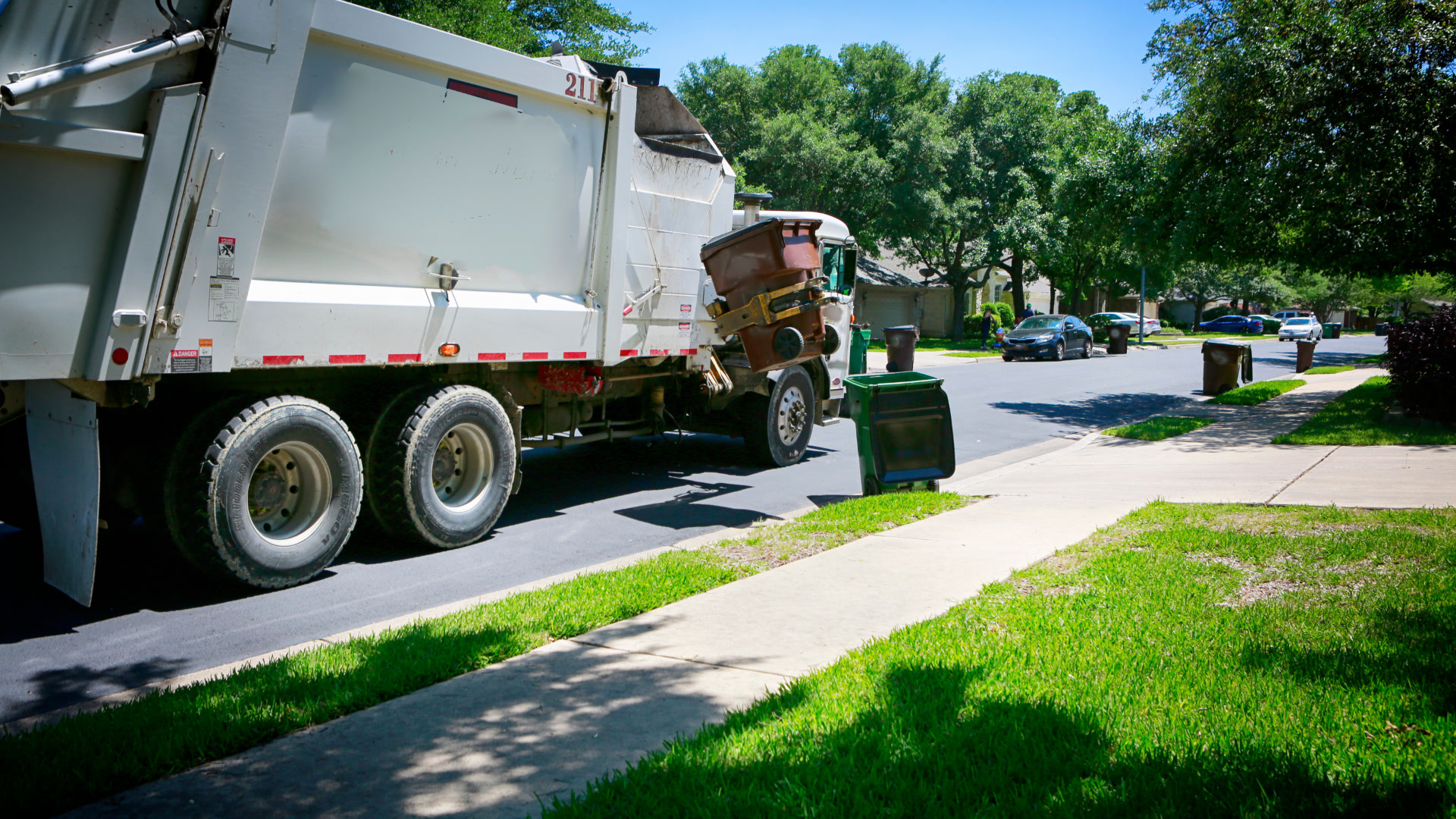
Every day, your operators tirelessly collect waste to make sure residents have clean, healthy communities to live in. But the nature of their high-density routes means there are risks at every stop. From cars parked curbside to citizens pulling out of their driveways and children crossing the street, there are countless chances for a collision to occur. And while avoiding incidents is your team's number one objective, knowing what happened if one takes place helps you:
- Take smarter action to protect lives and assets.
- Identify what caused it and stay accountable.
- Vindicate your drivers if they weren't at fault.
Use this three-step framework to better understand incidents and help shield your organization against expensive liability claims, weakened public trust and lost municipal contracts.
Step 1: Equip your sanitation fleet with tools that can collect data from the scene.
To thoroughly investigate a collision, you must first have tools that can tell you what happened. By adding telematics to your fleet, you get crucial information on where your garbage trucks are and how they're being driven, including the moments leading up to an incident. Telematics uses in-vehicle devices to automatically detect and report aggressive driving events like speeding, in addition to collision impacts.
But by itself, raw fleet data won't reveal all of an incident's context. Dash camera footage adds an important visual perspective, helping you understand factors that may not be captured by telematics. For example, Geotab's GO Focus family of AI dash cameras enables you to see what role other cars or objects might've played in a collision by capturing incident video from multiple angles. It offers road-facing and dual-facing models, as well as those that connect to auxiliary cameras for true 360° coverage.
Step 2: After a garbage truck incident, reconstruct what happened.
When a garbage truck collision occurs, prioritize safety by immediately calling emergency services. After you've accounted for those involved and sent help, it's time to understand what contributed to the incident.
Tools like Geotab Investigations make this easier to figure out by bringing important collision evidence into one place. Use it to:
- Jumpstart your analysis: Search the incident area by location and time to quickly uncover which vehicles were there.
- Reduce manual evidence searching: Review those vehicles' movements and driver behaviors before, during and after the incident.
- Centralize your findings: Attach notes, video, photos or third-party reports to corroborate your fleet data and keep everything in one place.
- Track the progress from start to finish: Stay up to date as new evidence is added and the investigation moves toward resolution.
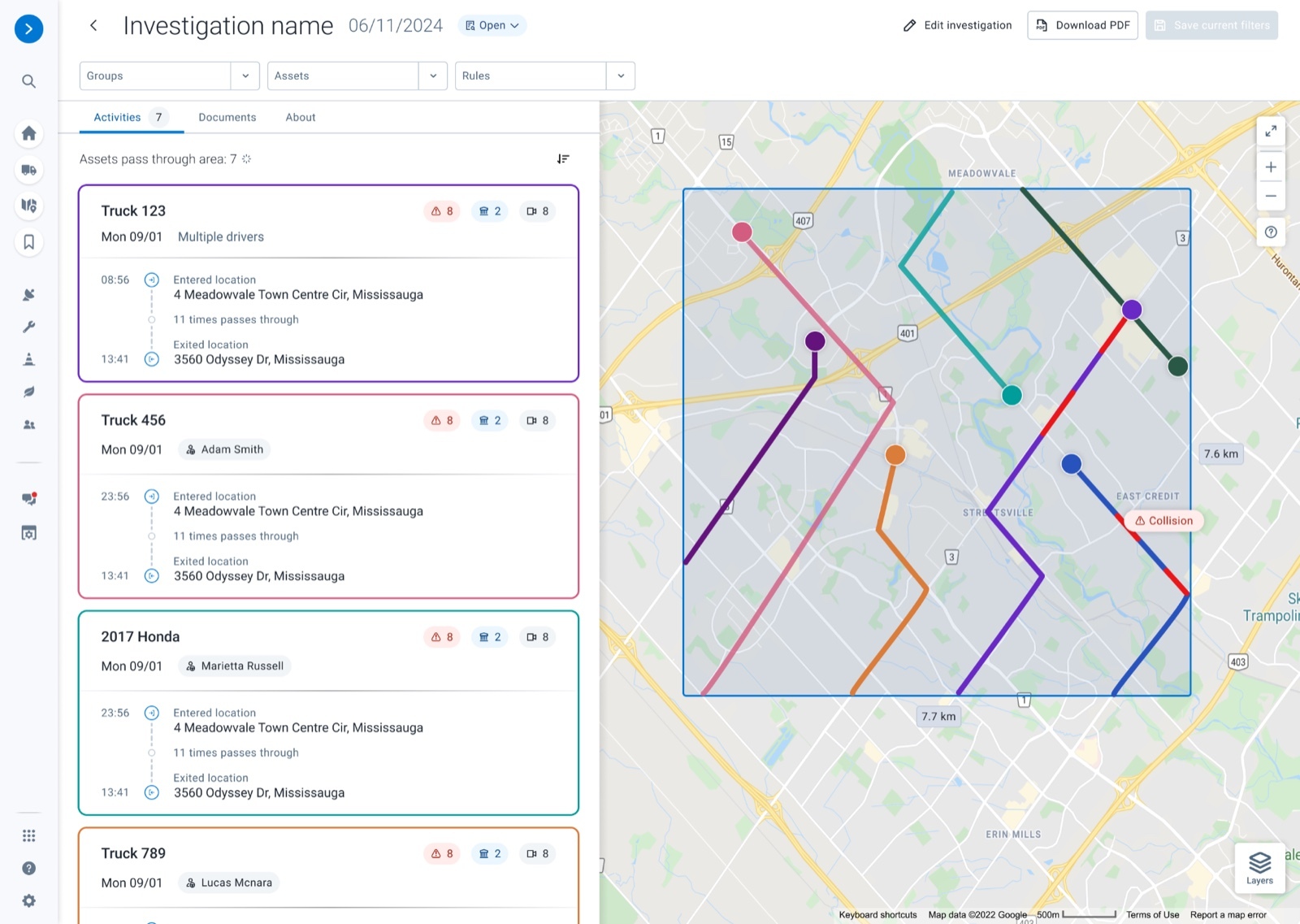
Geotab Investigations shows which vehicles entered or exited a defined area and what they were doing while there.
Once you've built the incident's timeline, check the video footage. Telematics platforms that can categorize events by severity will automatically surface the moment of impact first, saving you time finding the most critical seconds in the video clip. Depending on your camera setup, the video's full context can help you determine if:
- Your operator was focused on the road when the incident took place, or engaging in distracted behaviors like texting or eating.
- They were checking their side view mirrors and rear video feed while completing a backing maneuver.
- Another vehicle caused the incident by merging without signaling or running a red light.
- Other factors contributed to the impact, such as low sunlight on early morning routes, reduced visibility from rain or debris strewn across the road.
Step 3: Save a detailed case file for future reference.
Once you've reconstructed the incident using vehicle data and video footage, save your findings in an investigation file. This completes your evidence record, giving your legal team and safety managers what they need to make informed decisions.
If a claim gets filed months after the incident, having that structured case file can prove crucial for defending your organization against litigation. Unlike witness memories that can fade over time and paper forms that are easy to misplace, digital records are preserved as they were last recorded.
However, spoliation (when evidence is destroyed, tampered with or not kept safe for future use) is a constant concern for digital files. To help you prevent your evidence from being compromised, Geotab Investigations includes strict access controls. This means sensitive case information is only viewable to users with clearly defined permissions.
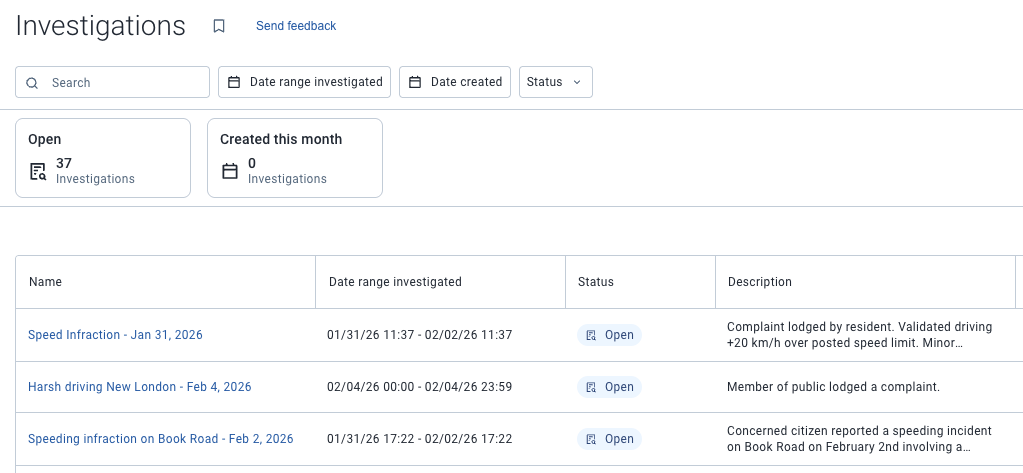
Saved case files in Geotab Investigations, including cases involving non-collision events (such as speeding or aggressive driving).
By thoroughly examining incidents, you demonstrate accountability to the public and bolster your waste fleet's safety record — no matter what the evidence shows.
Protecting your fleet against future garbage truck collisions
Proper investigations don't just prove your commitment to accountability. They also help you identify risks, improve safety and maintain accountability while keeping every pickup on track.
With fewer collisions, you conduct fewer investigations, create safer streets and maintain more transparent operations.
Learn more about protecting your sanitation fleet by reading Waste management fleet safety: Reducing hazards during service with AI garbage truck cameras.
Subscribe to get industry tips and insights
Frequently Asked Questions
With most waste collection vehicles carrying a company or city logo, collisions are high-visibility events. And if your sanitation fleet is found liable for an incident, word about it can spread fast online and lead to public distrust. A history of at-fault collisions can also hurt your service record, making contract renewals harder and potentially causing you to lose deals to competitors.
Because of the brand- and budget-damaging potential of every at-fault collision, driver exoneration is crucial when the evidence supports it. Clearing your operators when they're innocent shows your dedication to reliable service, helps you avoid sanitation fleet liability and backs up everything that goes into your safety record — from driver training to thorough investigations.
Video evidence supports collision fraud prevention by capturing context that standard vehicle data doesn't. If an incident involves one of your waste trucks and another driver on the road, footage provides important visual proof that can dispel 'he said, she said' arguments over your operator's actions and stop a faulty claim from turning into a settlement.
Content Marketing Manager at Geotab
Table of Contents
Subscribe to get industry tips and insights
Related posts
Top seven best fleet fuel cards: How to choose the right one for your business?
October 1, 2026
7 minute read
Four ways to transform garbage fleet efficiency with data and video tools
September 28, 2026
4 minute read

Why the OEM versus device-level telematics debate misses the point for mixed-fleet operators
September 25, 2026
2 minute read

6 benefits of an open, AI-powered fleet data platform
September 17, 2026
8 minute read