OTR trucking: How to improve driver safety and fleet efficiency
While over-the-road trucking is essential to keep freight moving, it also puts drivers and equipment far away from support. Learn what OTR trucking entails and how fleet managers can strengthen safety for drivers.

By Geotab
Oct 29, 2026
Key Insights
- OTR trucking is the practice of transporting long-haul freight across state lines, often for days or weeks at a time.
- OTR routes differ from local or regional trucking in terms of time away from home, schedule predictability and overall coverage.
- Fleet managers can reduce risks by implementing regular driver record checks, proactive maintenance planning and a telematics-based coaching system.
- A safety program that acts on consistent data and communication strengthens fleet performance and keeps drivers safe during long-haul operations.
In 2025, American trucks moved more than 11 billion tons of freight, representing more than 72% of all domestic freight tonnage in the U.S. For over-the-road (OTR) fleets, moving freight across state lines and over long distances creates additional efficiency and driver safety challenges. Understanding how OTR works makes it easier to optimize operations.
For drivers, OTR work can mean covering hundreds or thousands of miles on a single trip, navigating routes far from home. This guide covers OTR driving duties, how OTR compares to local or regional routes, licensing requirements, how pay structures vary from per mile to other styles and how fleets can optimize their programs.
What is OTR trucking?
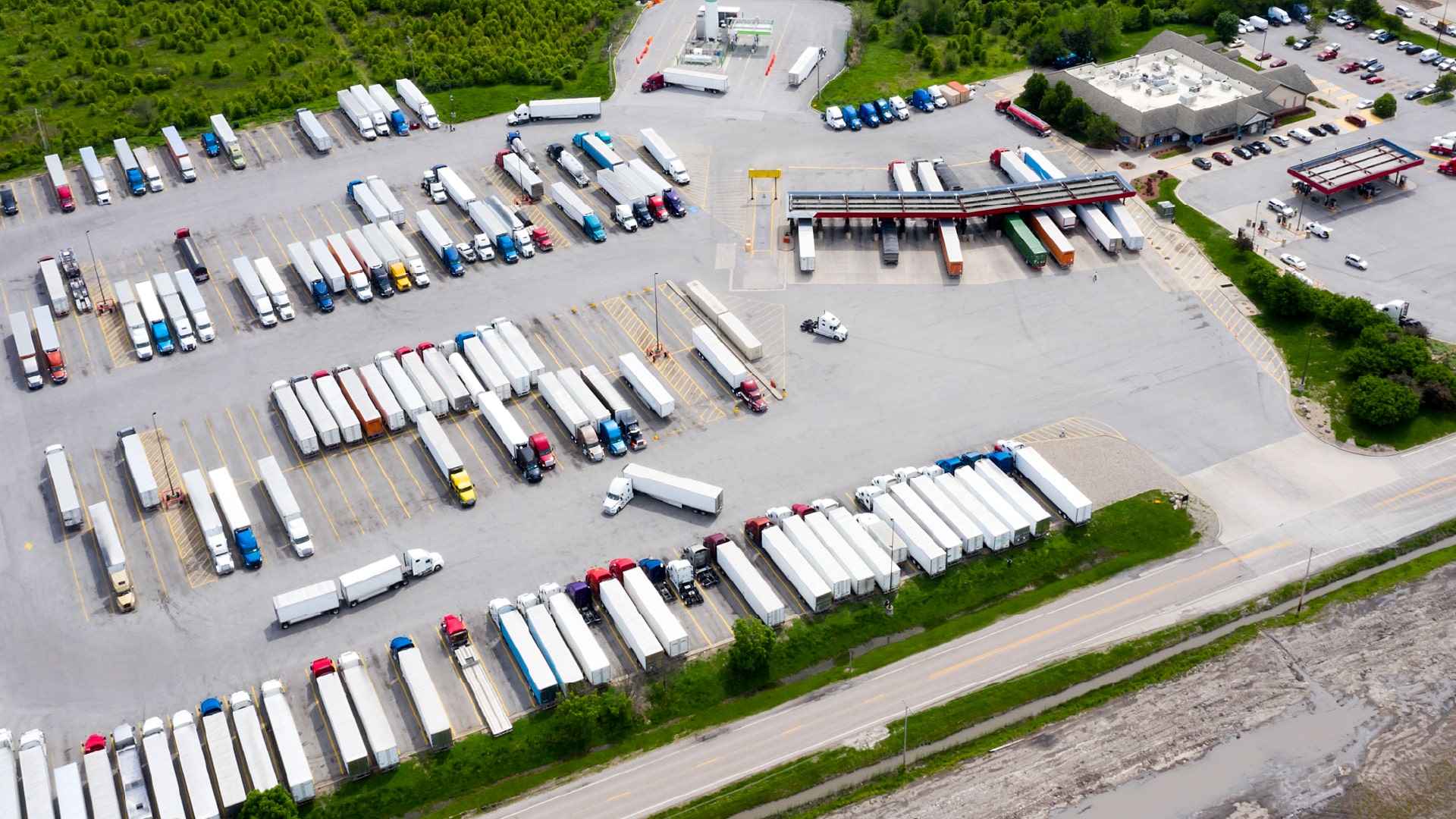
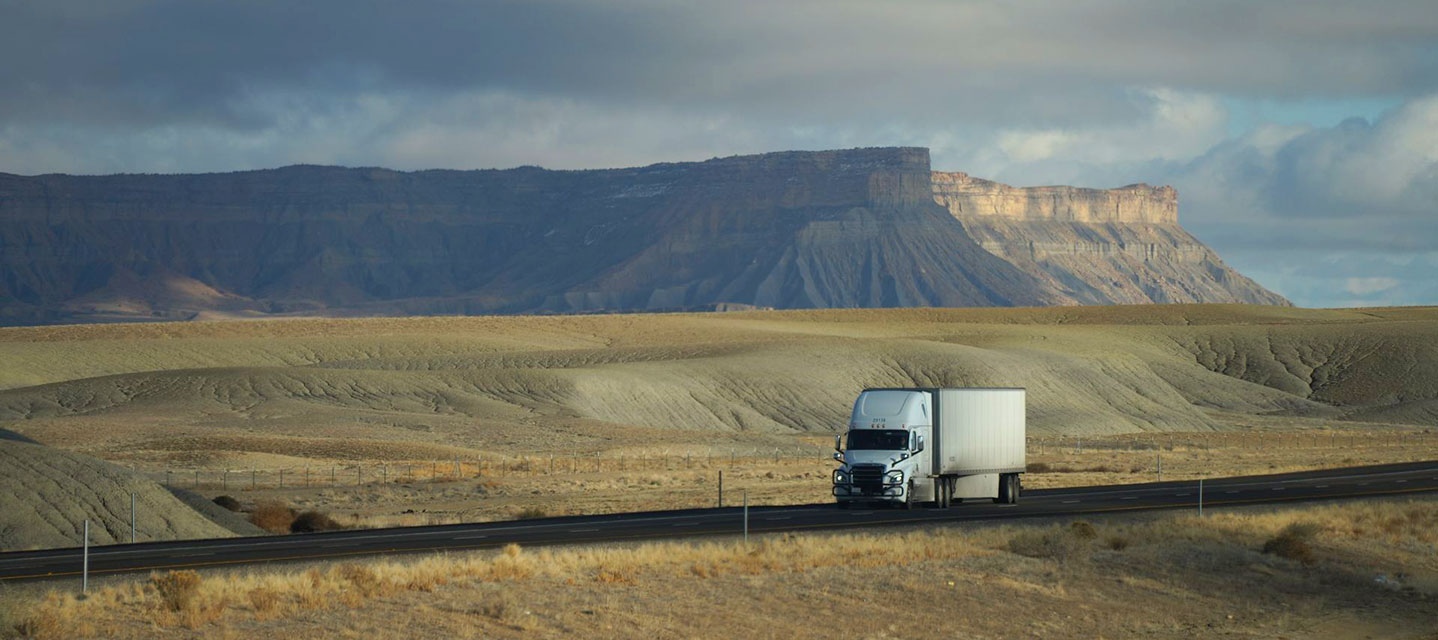
Over-the-road (OTR) trucking is the movement of long-haul freight across large geographic areas and state lines, spanning hundreds or thousands of miles in a single trip. Drivers are often on the road for days or weeks between home visits, though schedules depend on the route and carrier.
OTR trucking sits in the middle of the supply chain, with drivers moving freight between manufacturers, distribution centers, warehouses, terminals and distribution centers. They often do not complete the final delivery directly to a consumer.
Freight types vary widely. Common examples include:
- Dry van trailers for packaged goods
- Refrigerated trailers for temperature-sensitive freight
- Flatbeds for construction materials and equipment
- Tankers for liquid or bulk cargo
The specific equipment a driver might use depends on the carrier and freight type.
OTR vs. regional vs. local trucking
The main difference between OTR, regional and local trucking comes down to route coverage, time away from home, job demands and schedule predictability. Exact schedules and mileage vary from carrier to carrier, so treat the categories in the table below as general patterns.
OTR routes often cross multiple states and can span thousands of miles. Regional trucking, in comparison, keeps routes within defined areas like the Midwest or Southeast, with drivers returning every few days or on a weekly basis. Local trucking typically involves short hauls within a city or metro area, allowing drivers to return home almost every night.
OTR trucking compensation can include mileage-based pay and bonuses, but the total cost varies based on factors like freight type, pay structure and driver experience. As a result, mileage-based compensation does not necessarily make one type of trucking more costly than another.
| OTR trucking | Regional trucking | Local trucking | |
| Typical coverage | Multiple states, sometimes coast to coast | Defined multi-state region | Single city or metro area |
| Time away from home | Days to weeks | A few days to about a week | Home nightly |
| Typical freight | Long-haul dry van, refrigerated, flatbed, tanker | Regional distributed loads | Local delivery and drayage |
What does an OTR truck driver do?
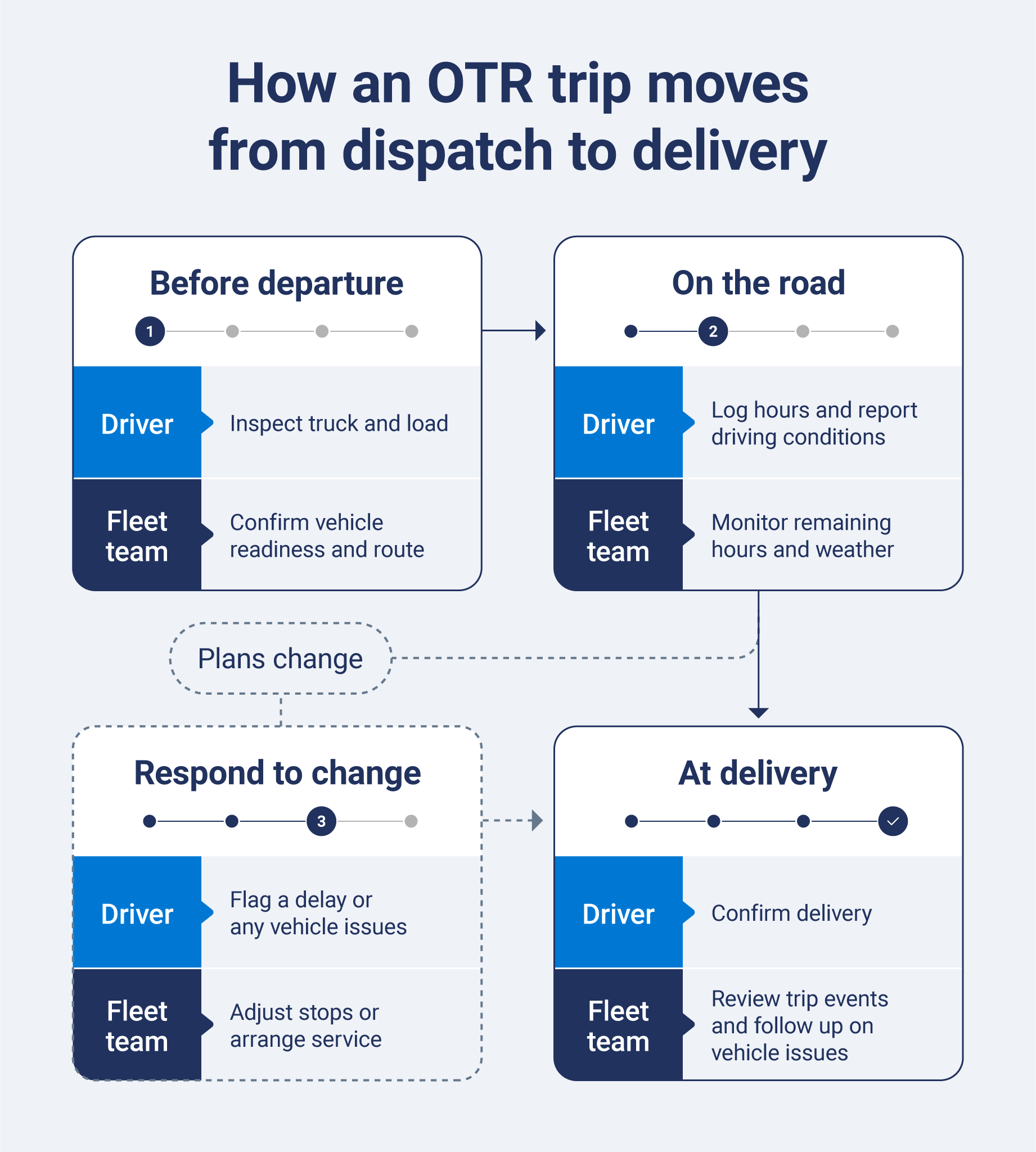
Driving is only one part of an OTR truck driver’s job. Other responsibilities include:
- Performing pre- and post-trip inspections
- Checking load documents
- Communicating with dispatch
- Coordinating delivery windows
- Logging hours of service
- Reporting vehicle issues before small problems turn into breakdowns
A typical day involves long stretches of highway driving across changing weather and traffic conditions. Drivers must work around scheduled pickup and delivery windows, resting overnight in a sleeper berth or other lodging. That mixture of driving, planning and paperwork means truckers must remain organized to perform well.
OTR license requirements
Most OTR drivers operate a standard tractor-trailer, which means they need a Class A commercial driver license (CDL). The specific CDL class depends on the vehicle weight and configuration, so drivers operating smaller vehicles regionally may need a different class from those working with larger trucks.
Certain cargo and equipment require additional endorsements, such as:
- H endorsement: Covers hazardous materials
- N endorsement: Covers tank vehicles
- X endorsement: Covers hazmat and tankers
- T endorsement: Covers double or triple trailers
How OTR drivers are paid
Fleet managers can pay OTR drivers based on cents per mile, a salary, activity-based pay for specific tasks or a percentage of load revenue. Unpaid detention time, or the time spent waiting at a shipper or receiver beyond a scheduled loading or unloading period, can reduce a truck driver's total salary.
What are the benefits and challenges of OTR trucking?
OTR trucking offers operational advantages for fleets but also presents challenges that affect safety, costs and driver retention. Fleet managers and safety compliance officers should understand these factors to make better-informed decisions about long-haul operations.
Benefits of OTR trucking
Long-haul routes allow fleets to serve wider markets and move freight across long lanes without having to hand it over to another carrier. This simplifies freight movement across regions and gives organizations access to routes and markets beyond their local or regional service areas.
For drivers, longer routes can provide more consistent mileage and exposure to specialized freight. Fewer handoffs can also reduce the disruptions associated with frequent transfers between carriers.
Challenges of OTR trucking
The distance involved in OTR can create a challenge just as much as it creates opportunity for fleets. Extended time away from home can affect driver retention, while multi-day schedules can make fatigue management and access to healthy food and exercise more difficult for drivers.
Remote breakdowns, rising fuel costs and difficulty coordinating maintenance when far away from a home terminal only add to the stress. Poor route planning can increase driver stress, while preventable roadside breakdowns create safety risks and increase the chance of missed delivery windows.
How to improve driver safety for OTR trucking
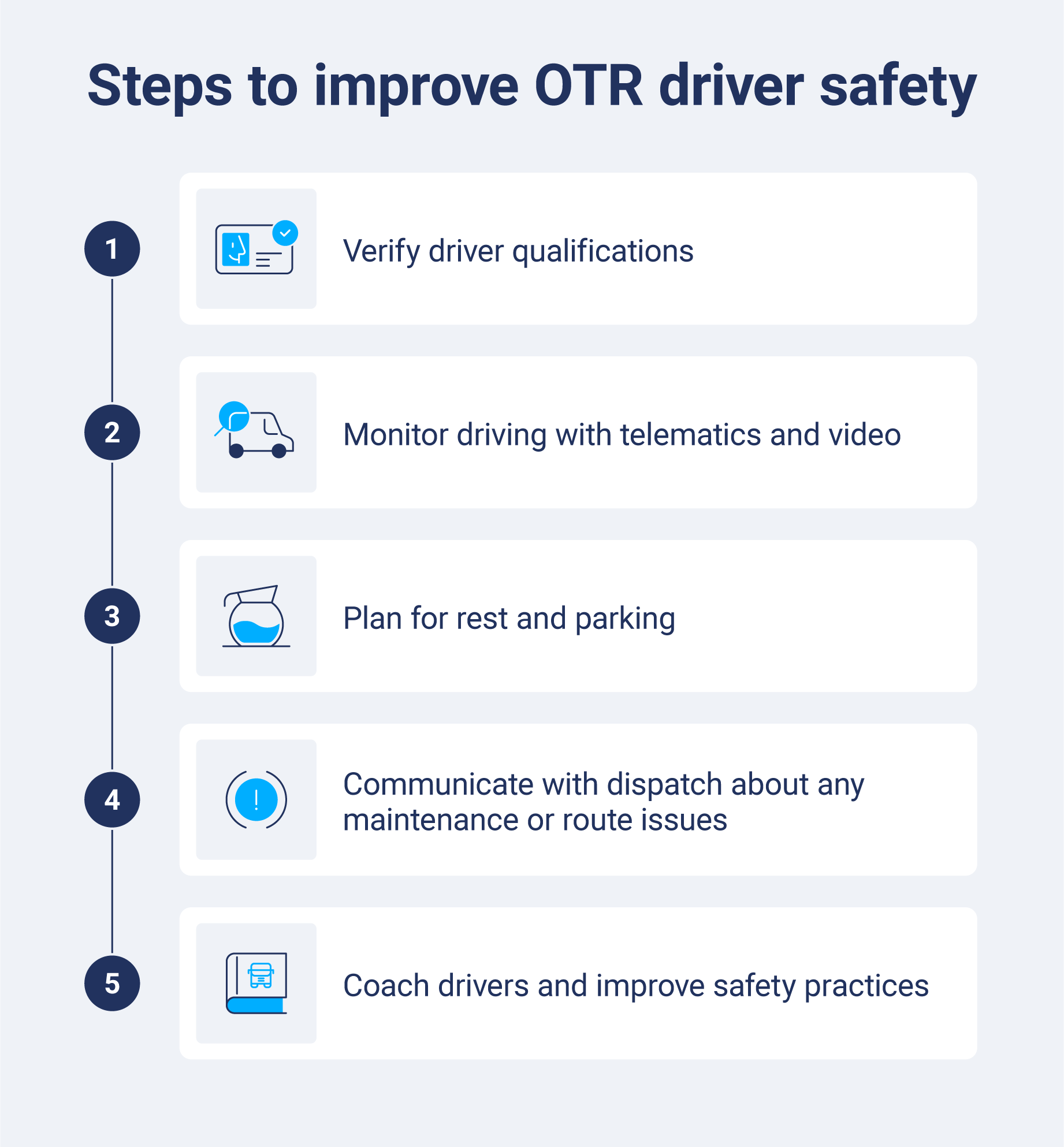
Fleet managers, safety compliance officers and trucking company owners can improve driver safety for OTR trucking by verifying driver qualifications on an ongoing basis, reducing fatigue risks and using connected vehicle data to monitor risky behavior or mechanical problems before they lead to dangerous issues.
These consistent systems are how fleet managers can keep drivers and their loads safe.
1. Use continuous MVR and driver license monitoring
Motor vehicle record (MVR) monitoring means an ongoing review of license status, violations and other record changes instead of relying only on annual pulls. MVR monitoring services can flag a suspended license or serious violation before it creates a safety or compliance risk.
Many fleets add MVR monitoring or driver license monitoring tools to flag changes automatically instead of waiting on a review cycle. These programs do not replace background checks or fleet policy but instead offer another layer of visibility. This makes it easier to identify potential issues and address them before they affect drivers on the road.
2. Track risky driving behavior with telematics
Telematics data can reveal patterns in risky driving behavior like harsh braking, speeding, rapid acceleration and seat belt non-use that a single trip report often misses. A driver who brakes hard once might have hit unexpected traffic. A driver who brakes hard every week on the same stretch of highway likely needs a route change or targeted coaching.
Fleet managers see more value from prioritizing repeated or high-severity behaviors instead of treating each isolated event in the same way. Telematics data becomes more useful when fleet managers connect it to specific coaching sessions, turning raw data from an overlooked report into actionable safety improvements.
3. Pair video context with driver coaching
Dash and fleet cameras add context that raw driving data alone cannot offer. Footage helps safety managers distinguish between hard braking caused by a preventable driving habit and hard braking in response to a dangerous situation. That distinction matters for fair coaching and accurate incident reviews.
Fleet managers can help drivers view cameras as safety tools instead of surveillance by setting transparent policies for footage use and focusing on coaching improvement rather than blame.
4. Manage fatigue and hours of service (HOS) compliance
When it comes to multi-day trips, long routes, detention time and parking constraints lead to increased fatigue and schedule pressure. Compliant scheduling starts with realistic expectations about driving time, supported by an electronic logbook device or an ELD.
ELDs automate hours of service tracking and provide real-time visibility into how much drive time a driver has left. These tools offer proactive alerts that help dispatchers build adequate rest into schedules and account for available drive time when planning routes and deadlines.
5. Plan safer routes, stops and parking
Truck-appropriate routing must take into account vehicle height, weight and length along with road conditions, weather and construction. Routing a passenger vehicle is dramatically different from routing a tractor-trailer.
Dispatch plans should include fuel, rest and legal parking stops in advance, so drivers have fewer difficult decisions to make near the end of their available driving time. Route efficiency should never come at the expense of safe speeds or adequate rest. Saving a few minutes is not worth the risk of a preventable collision.
6. Catch maintenance problems before a roadside failure
Pre- and post-trip inspections catch obvious problems. But a documented driver vehicle inspection report follow-up process helps ensure that fleets address flagged issues instead of simply logging and forgetting them.
Preventive maintenance schedules and remote engine diagnostics add another layer of visibility between inspections. Tools like Geotab offer insights into vehicle data that help fleet managers monitor fleet health and identify potential issues before they become roadside breakdowns.
Early fault detection is especially important for OTR routes where a truck can be hundreds of miles from its home terminal when a problem occurs. Strong maintenance planning protects delivery times and keeps operating costs predictable, lowering the odds of an expensive roadside repair.
7. Maintain reliable driver-dispatch communication
Fleets managers and trucking company owners can prevent small issues from turning into missed deliveries or unsafe decisions under pressure by establishing a clear escalation process for:
- Delays
- Poor weather
- Unsafe conditions
- Mechanical problems
- Changes to delivery windows
A defined escalation process gives drivers clear guidance on who to contact and when, particularly during an emergency.
Shared status information through transportation management system (TMS) software or a connected dispatch system reduces unnecessary check-in calls and helps dispatchers respond faster without taking driver attention from the road. Fewer distracting interruptions during a long shift are as much a benefit for efficiency as they are for safety.
8. Build a positive, data-informed safety culture
Recurring, behavior-specific coaching builds on initial training. Drivers improve faster when feedback is tied to a specific event with a specific fix.
Fleet-level trends in speeding, harsh braking or hours of service violations help refine policies and training programs, though it is important to remember that a single data point should never drive policy change on its own.
Improve OTR fleet safety and efficiency with Geotab
OTR trucking exposes drivers and assets to unpredictable weather and routes. Mechanical wear becomes a much larger issue when trucks are hundreds of miles from a home terminal, making visibility essential. When dispatch can see a vehicle's location and health and a driver's behavior, small problems get caught before they become big incidents.
Geotab combines vehicle diagnostics, driver behavior data and compliance information into a connected fleet management program for truckload carriers looking to move freight across long routes. See how Geotab can help your long-haul fleet improve driver safety, track compliance and control costs from a single dashboard.
Subscribe to get industry tips and insights
Frequently Asked Questions
Under federal hours of service rules, OTR drivers can drive up to 11 hours after 10 consecutive hours off duty, within a 14-hour on-duty window. Drivers must take a 30-minute break after eight hours of cumulative driving. Drivers may not drive after reaching 60 hours in seven days or 70 hours in eight days. A driver can restart the seven- or eight-day period after taking at least 34 consecutive hours off duty.
Most OTR drivers do need a special license depending on the type of vehicle they operate. Drivers must have a Class A commercial driver license (CDL) to operate a vehicle with a gross combined weight of 26,001 pounds or more when a vehicle exceeds 10,000 pounds. Class B CDLs cover certain heavy single vehicles. Certain freight types, like hazardous materials or tank vehicles, require additional endorsements.
OTR drivers may earn more annually in some cases than regional drivers because long-haul routes accumulate more paid miles and often include mileage-based bonuses. Regional drivers trade some of that earning potential for more predictable home time because they can return home every few days instead of every week or every few weeks.
OTR fleet managers face multiple challenges at once, including fuel costs. Fuel costs accounted for more than 20% of average trucking operations, and any small gains in route efficiency or driver behavior can make a meaningful difference to a fleet's bottom line.
Hours of service compliance is another consistent challenge, especially for fleets that are a mix of long- and short-haul routes that may qualify for different ELD exemptions. Out-of-route breakdowns, unpredictable detention time and high driver turnover add to these challenges. Fleets can address them by investing in telematics tools like Geotab.
Geotab team
Table of Contents
Subscribe to get industry tips and insights
Related posts
How to start a trucking business: Step-by-step guide for owner operators
October 28, 2026
6 minute read



6 benefits of an open, AI-powered fleet data platform
September 17, 2026
8 minute read
Fleet accident management: How to improve safety and reduce costs
September 4, 2026
5 minute read