Truck driver salary: 2026 guide to pay by state and job type
Competitive compensation remains one of the top factors in recruiting and retaining qualified drivers. This guide breaks down national and state truck driver salary averages, job type differences and factors that shape driver pay in 2026.

By Geotab Team
Aug 19, 2026

Key Insights
- Truck driver salary now averages $57,440 per year according to the latest BLS data, with significantly more earning potential for experienced and specialized drivers.
- Geographic pay varies widely, with Alaska, New Jersey and Washington, D.C. consistently ranking among the highest-paying states.
- Specialized drivers like hazmat and tanker operators command an increased salary of 20% or more compared to standard over-the-road (OTR) rates.
- Fleet operators must benchmark compensation against regional markets and specialized skill requirements to properly budget for salary.
According to recent trucking industry statistics, over 3.5 million drivers work in the U.S. trucking industry. One of the biggest factors influencing driver recruitment is competitive compensation. For fleet managers, navigating the bumpy road of the best truck driver salary is just another thing on a long list to improve driver retention and recruitment.
By using the latest Bureau of Labor Statistics (BLS) data, fleet managers can make informed decisions about how to continue attracting and maintaining top-of-the-line expertise. This comprehensive breakdown walks you through national salary averages, state-by-state compensation data and how pay can vary across different trucking specialties.
What is the average truck driver salary in the U.S.?
So, how much do truck drivers make a year? According to the BLS, as of May 2024, heavy and tractor-trailer truck drivers make a median annual wage of $57,440 and a mean hourly wage of $27.62.
These wages contain a considerable range, as how much truckers make is based on experience and performance. The percentile wages show:
- Bottom 10% of drivers earn up to $37,440 annually ($18/hour)
- Bottom 25% of drivers earn up to $45,920 annually ($22.08/hour)
- Middle 50% of drivers earn up to $54,320 annually ($26.12/hour)
- Top 25% of drivers earn up to $63,010 annually ($30.29/hour)
- Top 10% of drivers earn up to $76,780 annually ($36.91/hour)
Which state pays truck drivers the most?
New Jersey leads the nation in truck driver salaries with the highest mean annual wage of $67,630 or $32.51 per hour. Here’s how Alaska compares with other top-ranking states:
- Washington state: $67,630 ($32.24 per hour)
- Alaska: $66,890 ($32.16 per hour)
- Washington, DC: $66,740 ($32.09 per hour)
The increased costs of living and the need for drivers reflect a decent truck driver’s yearly salary. Newer BLS releases point to continued wage growth in these same high-demand states that have higher costs of living or freight demand.
Truck driver salary by state
How much do truckers get paid across different states? The following is a comprehensive breakdown of truck driver annual salary by state based on the most recent BLS employment and wage data:
State | Average Annual Salary | Hourly Wage | Employment Level |
|---|---|---|---|
| Alabama | $54,040 | $25.98 | 37,490 |
| Alaska | $66,890 | $32.16 | 3,240 |
| Arizona | $55,420 | $26.64 | 42,270 |
| Arkansas | $56,570 | $27.20 | 32,290 |
| California | $60,490 | $29.08 | 211,740 |
| Colorado | $61,750 | $29.69 | 27,840 |
| Connecticut | $57,710 | $27.75 | 15,860 |
| Delaware | $57,660 | $27.72 | 5,950 |
| District of Columbia | $66,740 | $32.09 | 830 |
| Florida | $54,360 | $26.13 | 105,730 |
| Georgia | $57,190 | $27.50 | 75,700 |
| Hawaii | $58,140 | $27.95 | 4,100 |
| Idaho | $55,340 | $26.61 | 14,860 |
| Illinois | $61,230 | $29.44 | 76,650 |
| Indiana | $61,160 | $29.40 | 57,870 |
| Iowa | $58,350 | $28.05 | 37,430 |
| Kansas | $59,350 | $28.53 | 23,250 |
| Kentucky | $60,060 | $28.88 | 33,430 |
| Louisiana | $51,310 | $24.67 | 26,260 |
| Maine | $53,960 | $25.94 | 10,180 |
| Maryland | $58,590 | $28.17 | 23,910 |
| Massachusetts | $59,300 | $28.51 | 32,170 |
| Michigan | $55,090 | $26.49 | 59,910 |
| Minnesota | $62,110 | $29.86 | 38,530 |
| Mississippi | $55,240 | $26.56 | 25,490 |
| Missouri | $54,480 | $26.19 | 47,530 |
| Montana | $59,050 | $28.39 | 7,050 |
| Nebraska | $60,150 | $28.92 | 24,160 |
| Nevada | $61,760 | $29.69 | 17,430 |
| New Hampshire | $59,120 | $28.42 | 6,730 |
| New Jersey | $67,630 | $32.51 | 49,450 |
| New Mexico | $51,530 | $24.77 | 10,850 |
| New York | $64,410 | $30.97 | 61,410 |
| North Carolina | $53,990 | $25.96 | 64,610 |
| North Dakota | $59,840 | $28.77 | 10,510 |
| Ohio | $59,700 | $28.70 | 91,090 |
| Oklahoma | $56,300 | $27.07 | 29,080 |
| Oregon | $63,890 | $30.72 | 24,720 |
| Pennsylvania | $58,620 | $28.18 | 90,160 |
| Rhode Island | $59,870 | $28.78 | 3,260 |
| South Carolina | $55,110 | $26.50 | 32,700 |
| South Dakota | $58,150 | $27.96 | 5,990 |
| Tennessee | $57,670 | $27.73 | 63,130 |
| Texas | $56,470 | $27.15 | 212,700 |
| Utah | $59,460 | $28.59 | 24,280 |
| Vermont | $57,050 | $27.43 | 3,370 |
| Virginia | $56,990 | $27.40 | 55,430 |
| Washington | $67,060 | $32.24 | 40,700 |
| West Virginia | $51,920 | $24.96 | 11,560 |
| Wisconsin | $56,980 | $27.39 | 52,980 |
| Wyoming | $63,220 | $30.39 | 6,530 |
*States marked with asterisks are estimates based on regional patterns, cost of living adjustments and industry benchmarks.
Truck driver salary by type of driver
Truck driver compensation varies significantly based on experience, specialization, route types and certifications. Fleet managers must understand exactly what drives these variances to effectively manage fleet costs.
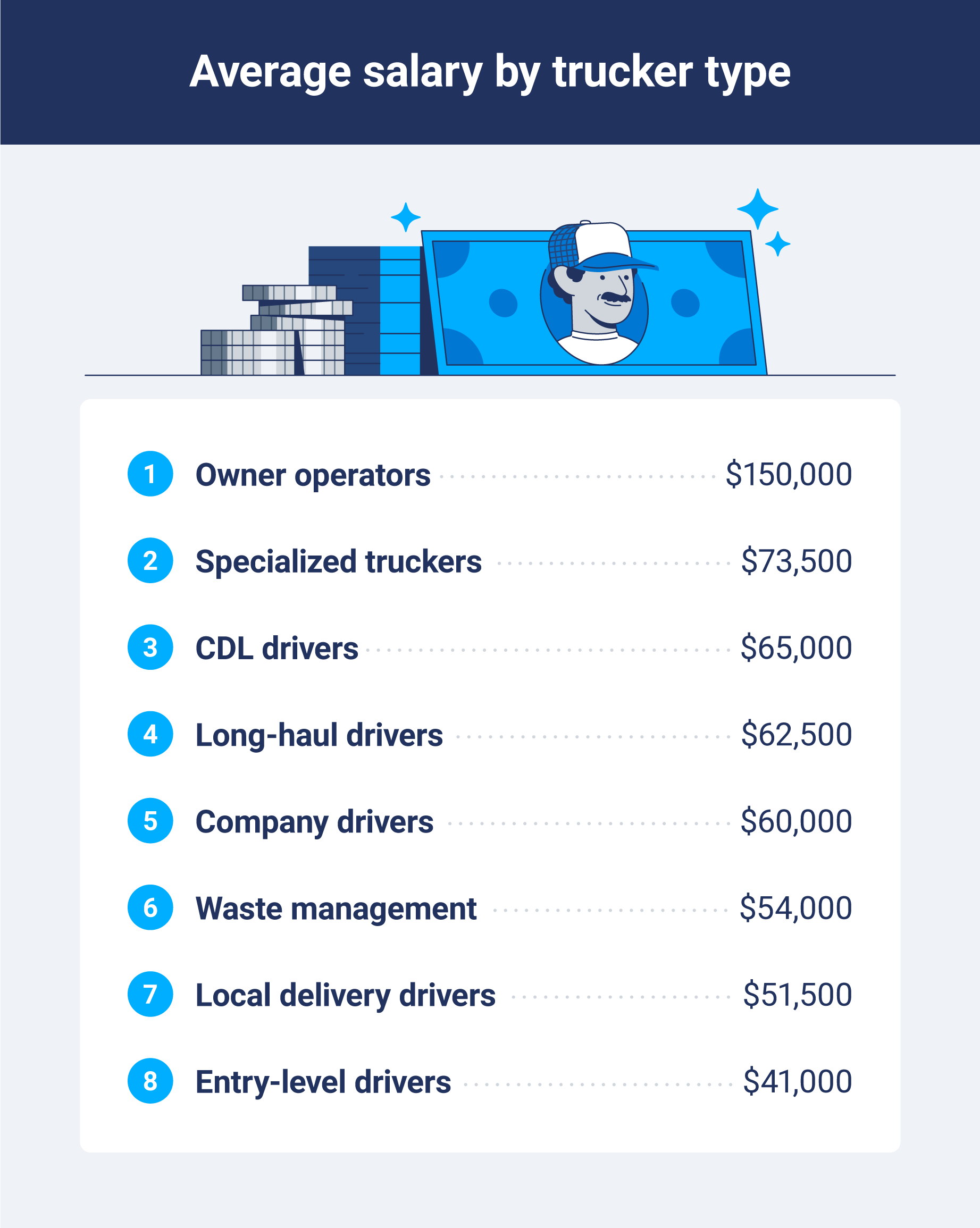
Owner-operators and specialized freight haulers, such as hazmat and tanker drivers, typically earn some of the highest annual pay of any driver type. However, they also carry higher operating costs and risks.
| Driver type | Salary | Key details |
| Entry-level drivers | $37,000 to $45,000 per year | New drivers often begin with local or regional routes so they can gain experience while maintaining a work-life balance. Some entry-level positions require drivers to have completed commercial driver’s license (CDL) training programs, but most do not require extensive experience or specialized certifications. |
| Long-haul drivers | $55,000 to $70,000 per year | OTR drivers take home premium rates compared to short-haul jobs because of extended time away from home, averaging at about $57,440 per year. These positions offer per-mile compensation, which means experienced drivers can earn more than $65,000 depending on route type, mileage, experience and availability. |
| CDL drivers | $58,000 to $72,000 per year | How much do CDL drivers make, and is it worth the extra steps to get an additional license? Commercial drivers who operate specialized commercial motor vehicles like tank vehicles usually earn in this range. CDL driver salaries are higher because they must undergo additional training and take on extra liability. |
| Local delivery drivers | $44,000 to $54,000 per year | Local delivery drivers, including those who help with last-mile delivery jobs, earn less per mile on average than long-haul drivers. These positions are attractive to many drivers because they offer a more predictable schedule. |
| Owner operators | $100,000 to $200,000 gross per year | Independent owner operators can gross this range annually but also face much higher expenses like vehicle maintenance, fuel, insurance and other operational expenses. Successful owner operators typically retain 60% to 70% of gross revenue after operating expenses by bolstering budget with techniques like freight factoring. |
| Company drivers | $52,000 to $68,000 per year | Company-employed drivers typically earn this range plus comprehensive benefits packages that include health insurance, retirement contributions and paid time off. |
| Specialized truckers | $62,000 to $85,000 per year | Drivers handling hazardous materials, flatbed transport, tanker operations or oversized loads can bring in this range annually. Since these positions require additional endorsements and specialized training and come with higher risks, drivers receive higher compensation. |
| Waste management truck drivers | $48,000 to $60,000 per year | Municipal and private waste collection companies usually offer competitive benefits packages and stable, local employment with predictable schedules. |
What affects truck driver salary?
Several key factors influence compensation levels for average truck driver salaries, including:
- Experience level: Seasoned drivers with proven reliability can earn 30% or more above the industry average. Experience directly correlates with earning potential and favorable route assignments.
- Region and cost of living: Geographic location is another significant factor affecting wages, with some coastal states and major metropolitan areas offering higher compensation due to demand, cost of living and freight volume.
- Route length: Cross-border routes, longer hauls and specialized corridors also include additional compensation to reflect complexity, time away from home and regulatory requirements.
- Type of freight: Specialized cargo like refrigerated goods, oversized loads, high-value merchandise or hazardous materials commands premium rates due to additional handling requirements, liability considerations and specialized equipment needs.
- Company pay structure: Compensation models vary between salary plus bonus, hourly wages and per-mile rates. Each approach provides different incentives for productivity and efficiency.
- Bonuses, incentives and union representation: Safety bonuses, fuel efficiency incentives, referral programs and union-negotiated contracts often add an additional $500 to $2,000 per quarter to base compensation packages, bolstering desired performance behaviors.
How fleet managers can build competitive driver compensation
Salary is only one part of a competitive compensation package. Fleet managers who want to attract and keep qualified drivers can also benefit from comparing their pay, bonuses and incentives with regional and national benchmarks.
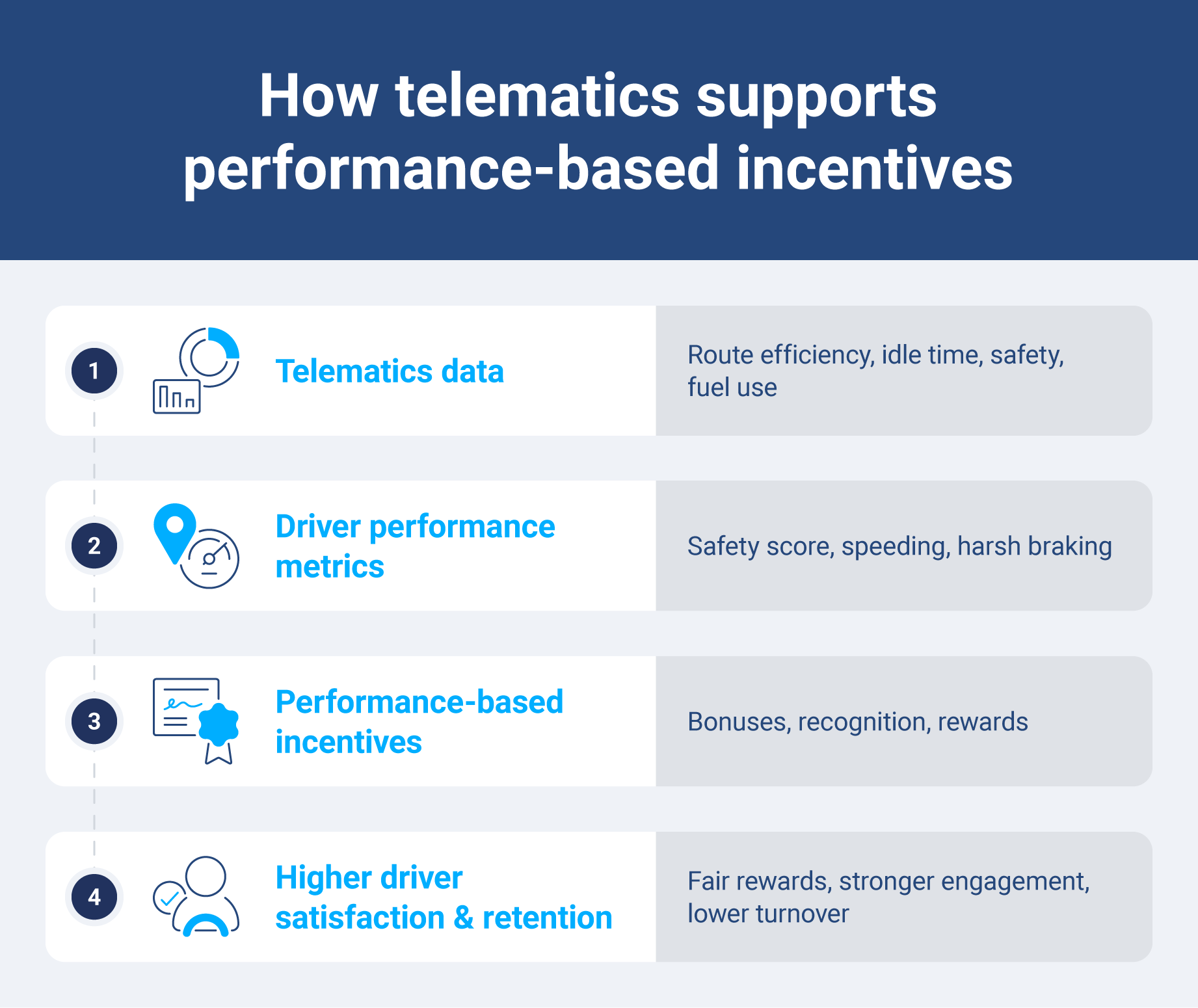
Safety bonuses, fuel efficiency incentives and referral programs all add value beyond base pay, and many carriers use them to reward the behaviors that matter most to the business. Retention strategies that combine fair pay with predictable schedules and clear paths to higher-paying routes tend to perform best over time.
Fleet technology also plays a role in compensation strategy. Telematics data gives fleet managers a clear view of route efficiency, fuel use and driver performance, which makes it easier to design performance-based pay structures that reward productivity without adding administrative burden.
Increase driver retention with better fleet management
Strategic fleet optimization through advanced telematics means fleet operators can create the conditions drivers need to maximize their earning potential and improve operational efficiency. Modern telematics handle route optimization, hours of service and vehicle health metrics automatically, making it easy to optimize routes and implement performance-based incentives.
Fleets that pair competitive truck driver salaries with the right technology tend to see the biggest gains in retention. Geotab's telematics solutions help fleet managers reduce idle time, improve route efficiency and create more predictable driver schedules. These insights can also support data-driven decisions that improve driver productivity and retention.
Subscribe to get industry tips and insights
Frequently Asked Questions
New Jersey is the highest-paying state when it comes to trucker salaries, with annual salaries averaging $67,630 per year.
Yes, experienced drivers in specialized roles like long-haul drivers or hazmat specialists, owner operators or those working with major carriers can earn $100,000+ annually.
The average salary range for a truck driver with a specialization, like a hazmat driver, is roughly $69,000 to $105,000 annually. Even the lowest pay range for a hazmat driver is 20% greater than the average truck driver salary.
Trucker compensation models vary between employers. Long-haul drivers often receive per-mile rates, local drivers usually earn hourly and some specialized roles offer salary plus bonus structures or even percentage-of-load compensation models.
No, most truck drivers do not make $100,000 a year, since the median annual wage sits well below that figure. Drivers who reach six-figure earnings are typically owner operators, specialized freight haulers or experienced drivers running high-mileage routes with premium pay.
How much CDL drivers in Florida make depends on route type, experience and employer, but Florida wages generally track close to the national average for heavy and tractor-trailer drivers. Drivers with specialized endorsements or those working for major carriers with distribution hubs in the state often earn above the state average.
Long-haul truck driver salary figures often exceed local driving salaries because these roles typically involve longer routes, more time away from home and higher mileage requirements. Local delivery drivers earn less per mile on average, but the trade-off is a more predictable schedule and the ability to return home each day.
The Geotab Team write about company news.
Table of Contents
- What is the average truck driver salary in the U.S.?
- Which state pays truck drivers the most?
- Truck driver salary by state
- Truck driver salary by type of driver
- What affects truck driver salary?
- How fleet managers can build competitive driver compensation
- Increase driver retention with better fleet management
Subscribe to get industry tips and insights
Related posts

How private haulers can help prepare their fleets for new waste management contracts
October 23, 2026
4 minute read

Top seven best fleet fuel cards: How to choose the right one for your business?
October 1, 2026
7 minute read
Four ways to transform garbage fleet efficiency with data and video tools
September 28, 2026
4 minute read

Why the OEM versus device-level telematics debate misses the point for mixed-fleet operators
September 25, 2026
2 minute read