Fleet software comparison: How to choose the right solution for your business
The right fleet management software (FMS) displays driver safety, regulatory compliance and operational cost data in one dashboard, giving you the visibility to act faster and the data to make smarter decisions. Learn which option is the best investment in this fleet software comparison guide.

By Geotab
Nov 16, 2026
Key Insights
- A strong fleet software comparison looks past feature lists, taking into account your business goals and total cost of ownership.
- The right fleet management system can reduce fuel costs and deliver a clear ROI.
- Top platforms differ significantly in hardware requirements, integration depth and support models.
- Geotab's open platform and data-first approach make it a strong choice for fleets that need customization and deep reporting.
Running an effective fleet safety program requires more than tracking where your vehicles are. Fleet management software (FMS) acts as the operational hub that combines vehicle telematics, driver safety and regulatory compliance into a single dashboard. This gives fleet managers and safety compliance officers the real-time data they need to act.
But not all platforms are built the same way. The wrong choice can mean poor data quality, expensive hardware lock-in or a system that your drivers simply will not use. This fleet software comparison guide looks past basic feature lists to give you a strategic framework for comparing leading providers and calculating return on investment.
Fleet software comparison: Top 5 platforms to choose from
Below is a side-by-side fleet software comparison of five leading fleet management platforms. Each has distinct strengths depending on your fleet's size, industry and priorities. Pricing is not listed here. Get a direct quote from each vendor to get a better idea of each fleet management software cost.
| Tool | Core strengths | Standout feature | Hardware required? |
| Geotab | Open platform, deep data analytics, massive third-party integrations via Geotab Marketplace | MyGeotab connects fleet data from GO devices with 400+ Marketplace integrations | Yes, it's included with GO Core and GO Plan; no upfront device cost or installation fee |
| Samsara | User experience, integrated AI dashcams, mobile interface | Unified video and telematics in one view | Yes; bundled hardware |
| Verizon Connect | Enterprise scale, field service management, route optimization | Advanced scheduling for large service fleets | Yes; proprietary hardware |
| Fleetio | Asset lifecycle tracking, maintenance scheduling, parts inventory | External shop integration and work order management | No; integrates with existing GPS hardware providers |
| Motive | Heavy-duty trucking, ELD compliance, driver-centric design | Automated Operations suite with AI safety and fuel card integration | Yes; dashcam and tracking hardware |
Geotab
Geotab is the global leader in commercial telematics companies, built on an open platform philosophy that puts data at the forefront of every decision. Geotab’s Next Gen GO device collects high-fidelity data for fuel tracking, engine health and electric vehicle (EV) performance. Native Bluetooth supports beacon-based small-asset tracking. Integrated auxiliaries monitor equipment signals such as PTO, cargo doors and seatbelts.
- Track vehicles and Bluetooth-tagged small assets in MyGeotab.
- Monitor PTO, cargo-door and seatbelt signals.
- View equipment signals as named MyGeotab diagnostics.
- Receive tamper alerts if the device is unplugged or power is cut (depends on cellular connectivity).
- Sync GO Focus dashcam video with vehicle data in MyGeotab.
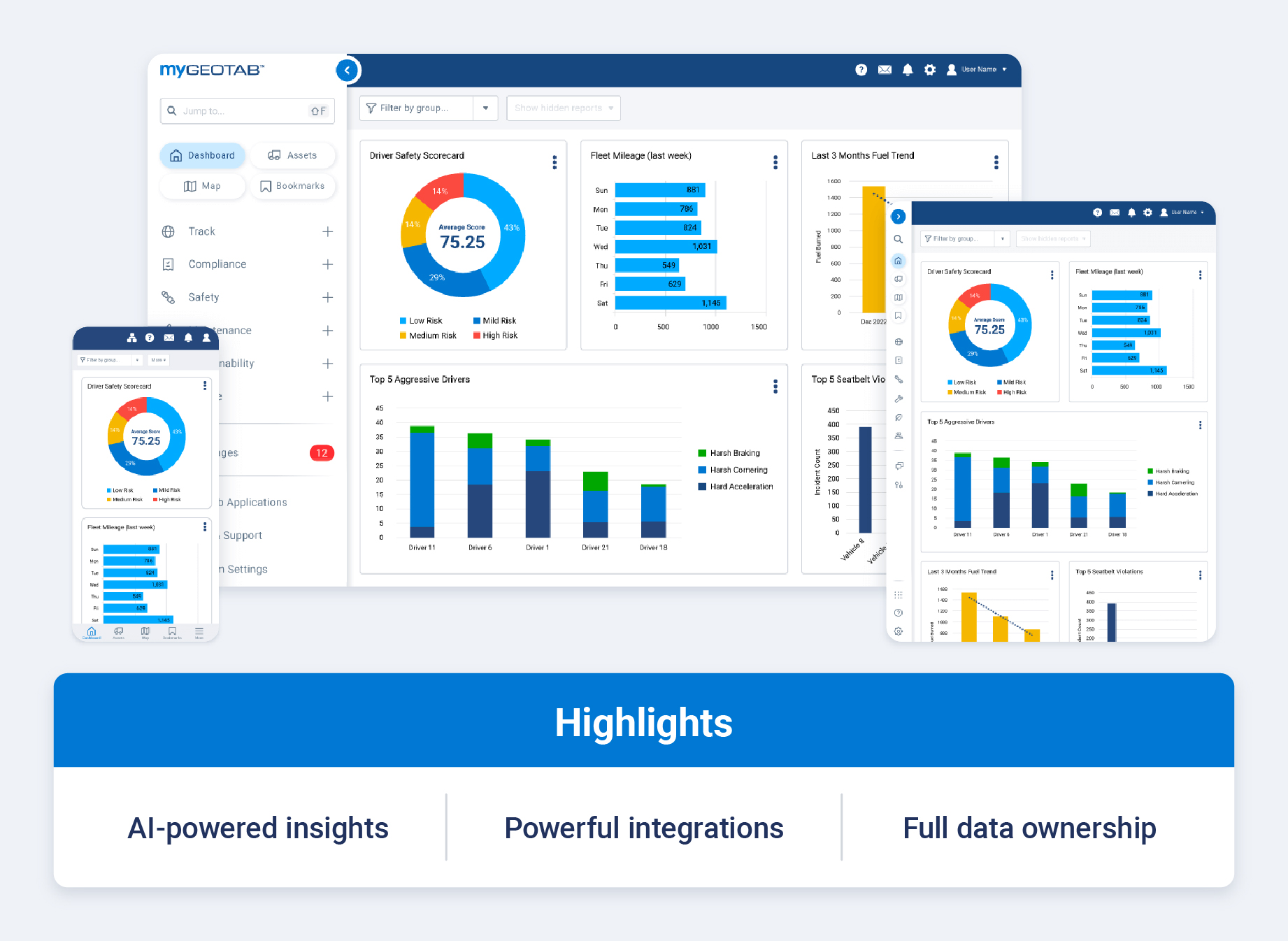
What sets Geotab apart is the Geotab Marketplace. It hosts hundreds of third-party applications and Add-Ins that extend the platform to fit almost any industry or workflow. Fleet benchmarking, Electronic Logging Device (ELD) compliance and maintenance alerts are all customizable and available.
Geotab operates through a reseller model, so customers get localized support from partners with specialized industry knowledge instead of a one-size-fits-all call center. For fleets that need a platform that grows with them and integrates with existing systems, from payroll to ERP, Geotab is built for that kind of depth.
Samsara
Samsara positions itself as a "single pane of glass" solution, acting as one interface for GPS equipment tracking software, driver behavior, compliance and video telematics. The company offers AI dashcams that automatically flag harsh braking, distracted driving and near-misses.
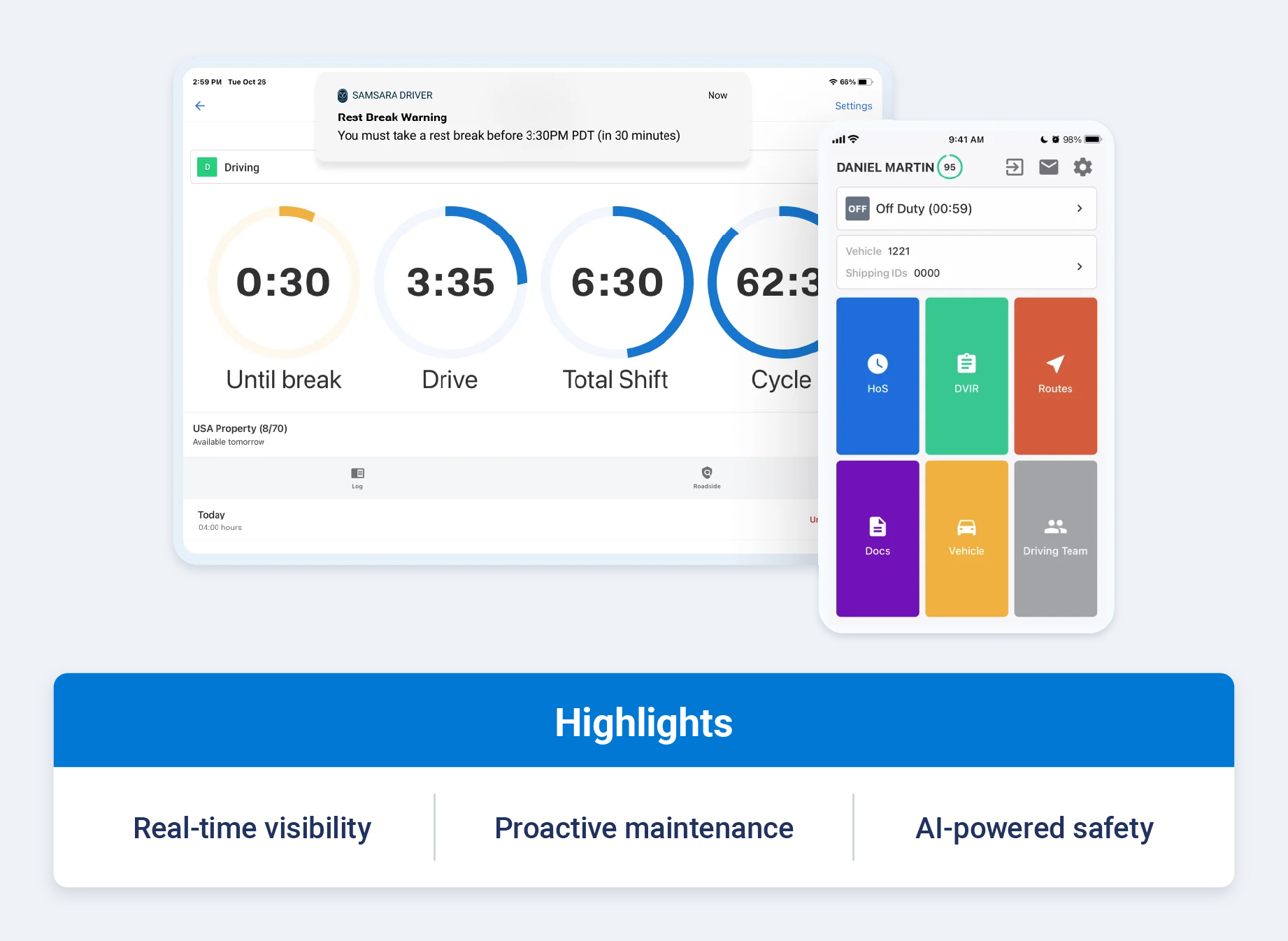
The platform is known for its clean interface that works well across desktop and mobile. Samsara bundles hardware and software together, which simplifies procurement but can lead to higher upfront costs.
Verizon Connect
Verizon Connect brings enterprise-grade reliability backed by Verizon's cellular infrastructure. It is a traditional option in fleet management software and is especially well-suited for large service fleets that need advanced scheduling, route optimization and field service coordination.
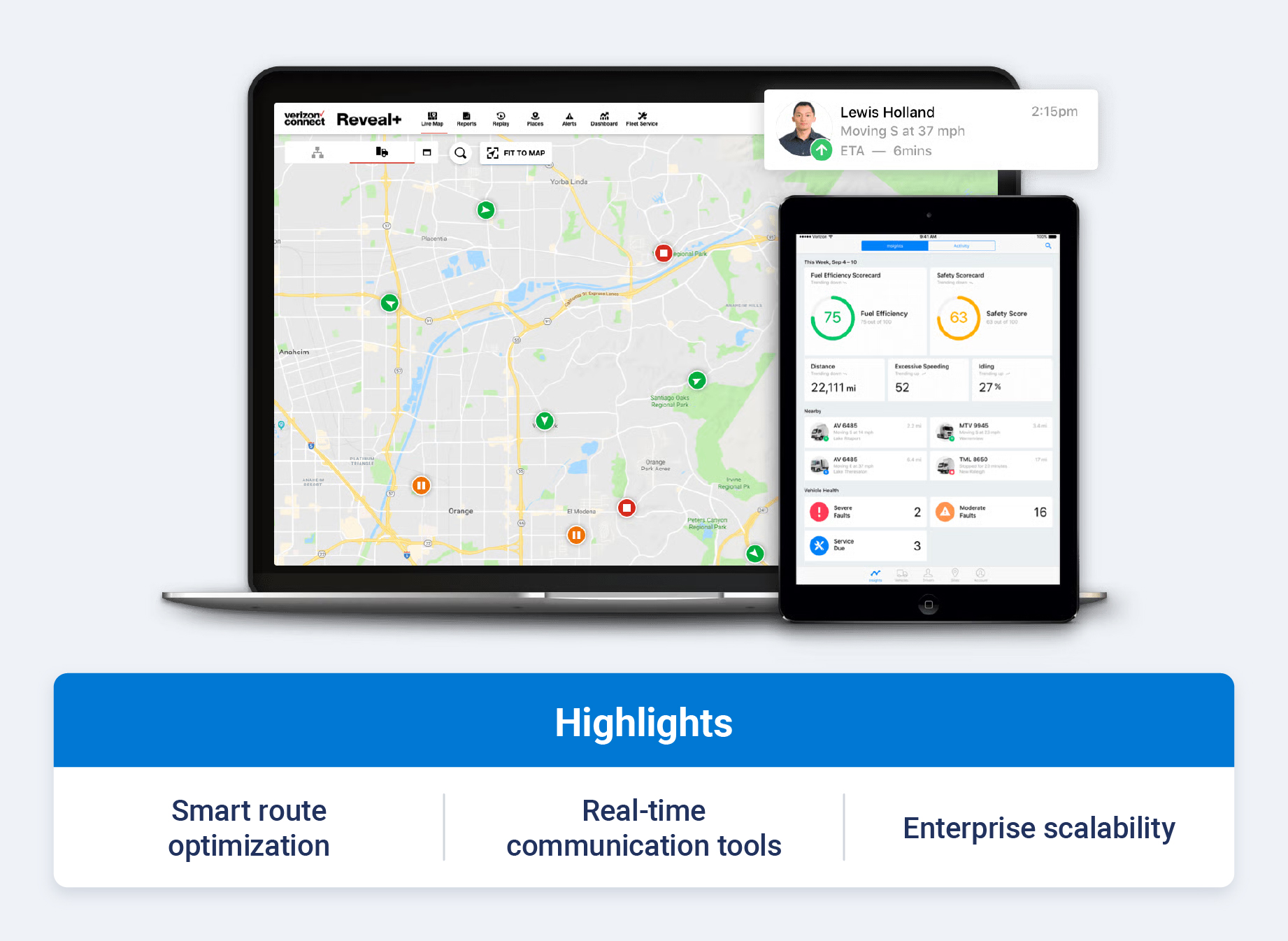
The platform offers a comprehensive feature set, including:
- Real-time fleet tracking
- Driver logs
- Maintenance alerts
Something to note about Verizon Connect is that it often requires longer-term contract commitments, so it is important to review terms carefully during your fleet management software comparison process.
Fleetio
Fleetio is not a traditional GPS telematics platform. It is a maintenance management system that pairs well with hardware providers like Geotab. If your primary pain point is asset downtime instead of real-time tracking, Fleetio is worth a close look
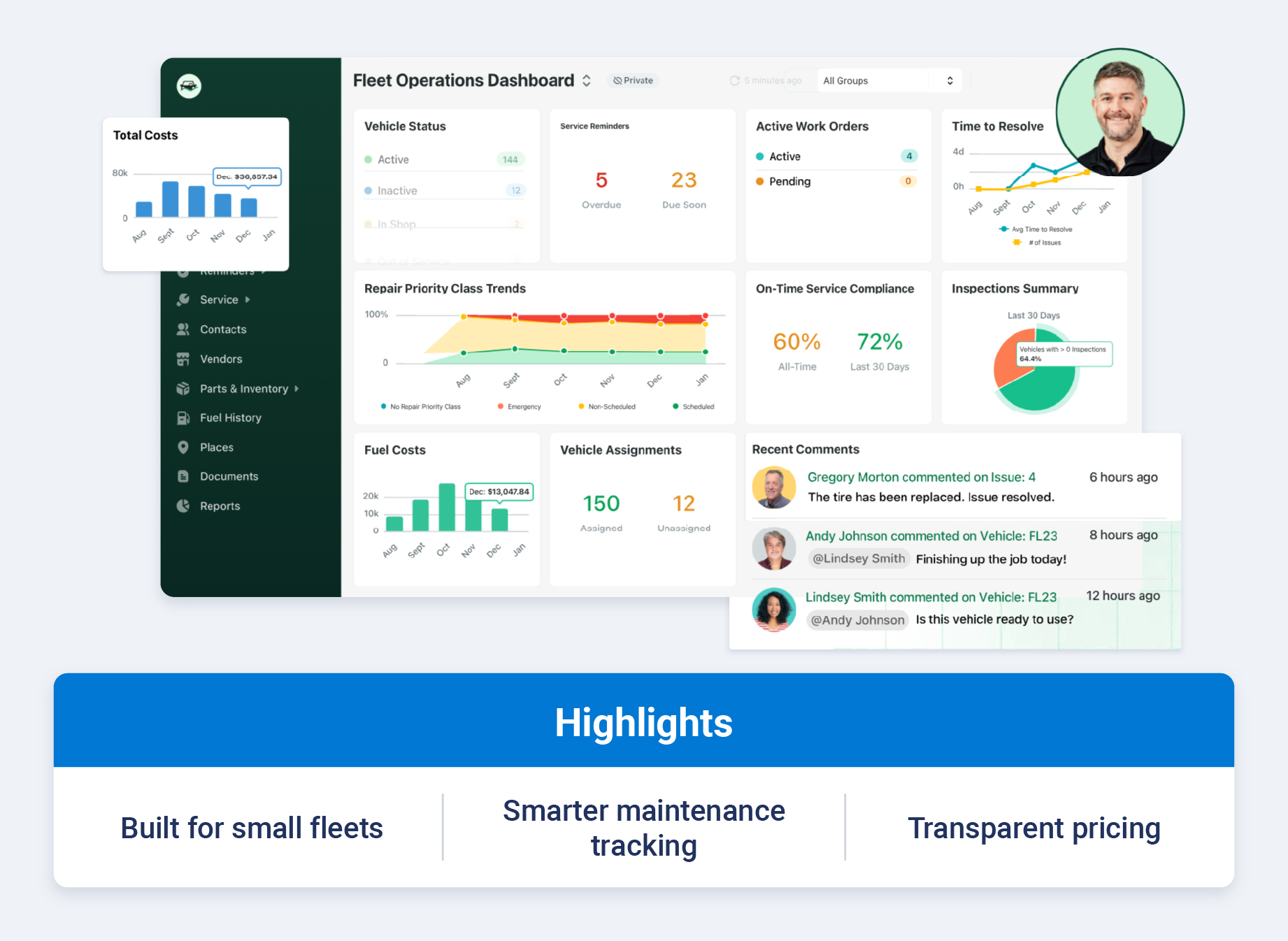
Its strengths include:
- Parts inventory management
- Preventive maintenance scheduling
- Vehicle inspection workflows
- Integration with external repair shops
For fleets that want to improve maintenance efficiency without replacing their existing GPS solution, Fleetio fills that gap cleanly.
Motive
Motive built its reputation on the strength of its ELD interface. It is widely regarded as one of the most driver-friendly on the market, an especially important factor for CDL holder adoption.
Beyond ELD compliance, the company has expanded into what it calls "Automated Operations," building AI-powered safety tools, dash cameras and integrated fuel card management.
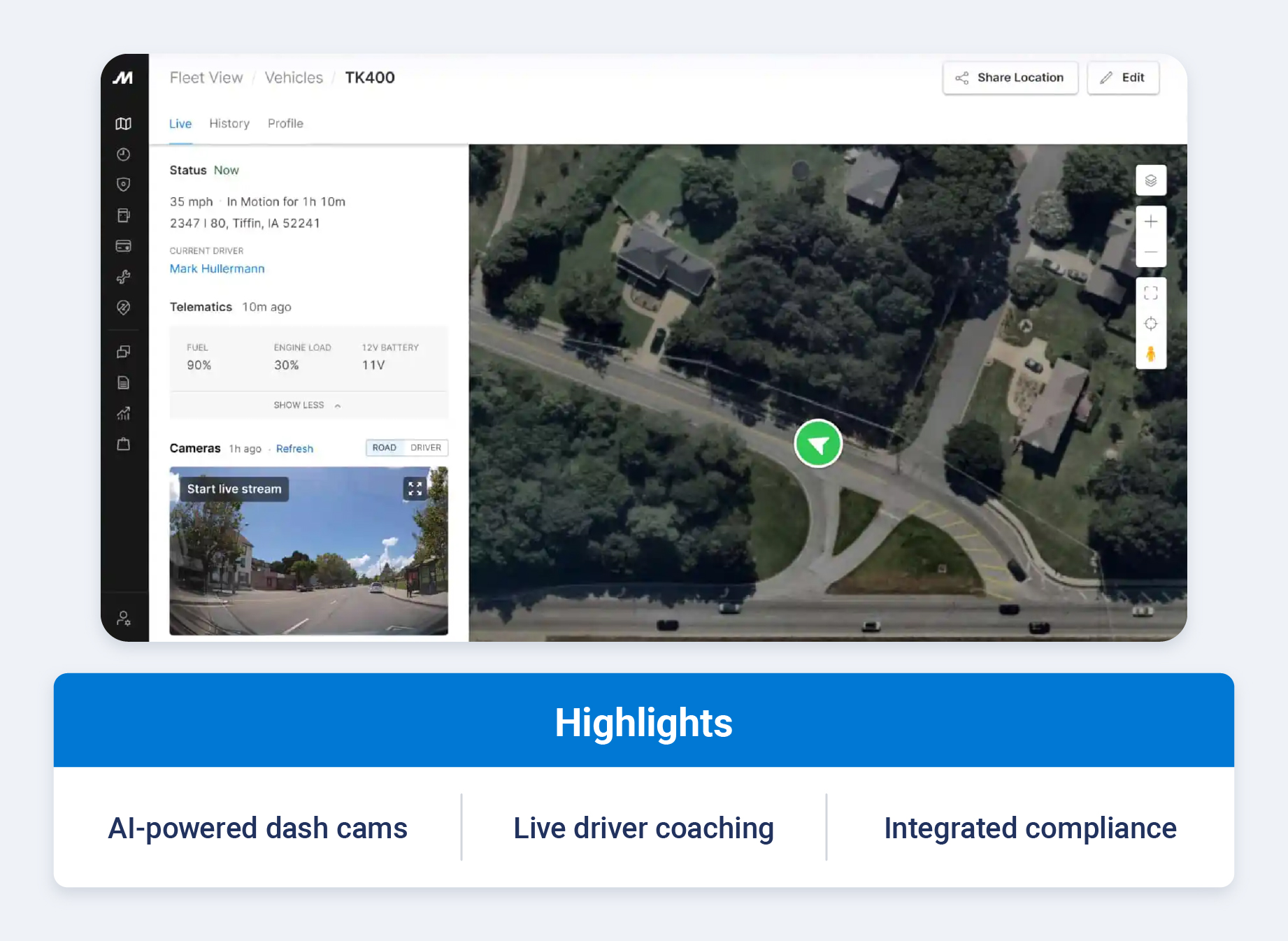
Motive is a natural fit for long-haul trucking and heavy-duty logistics operations where ELD compliance and driver satisfaction are non-negotiables.
How to evaluate fleet software
Choosing the right platform is not just about which fleet management software features compare best in the demo. Use this step-by-step framework to make a confident, data-backed decision.
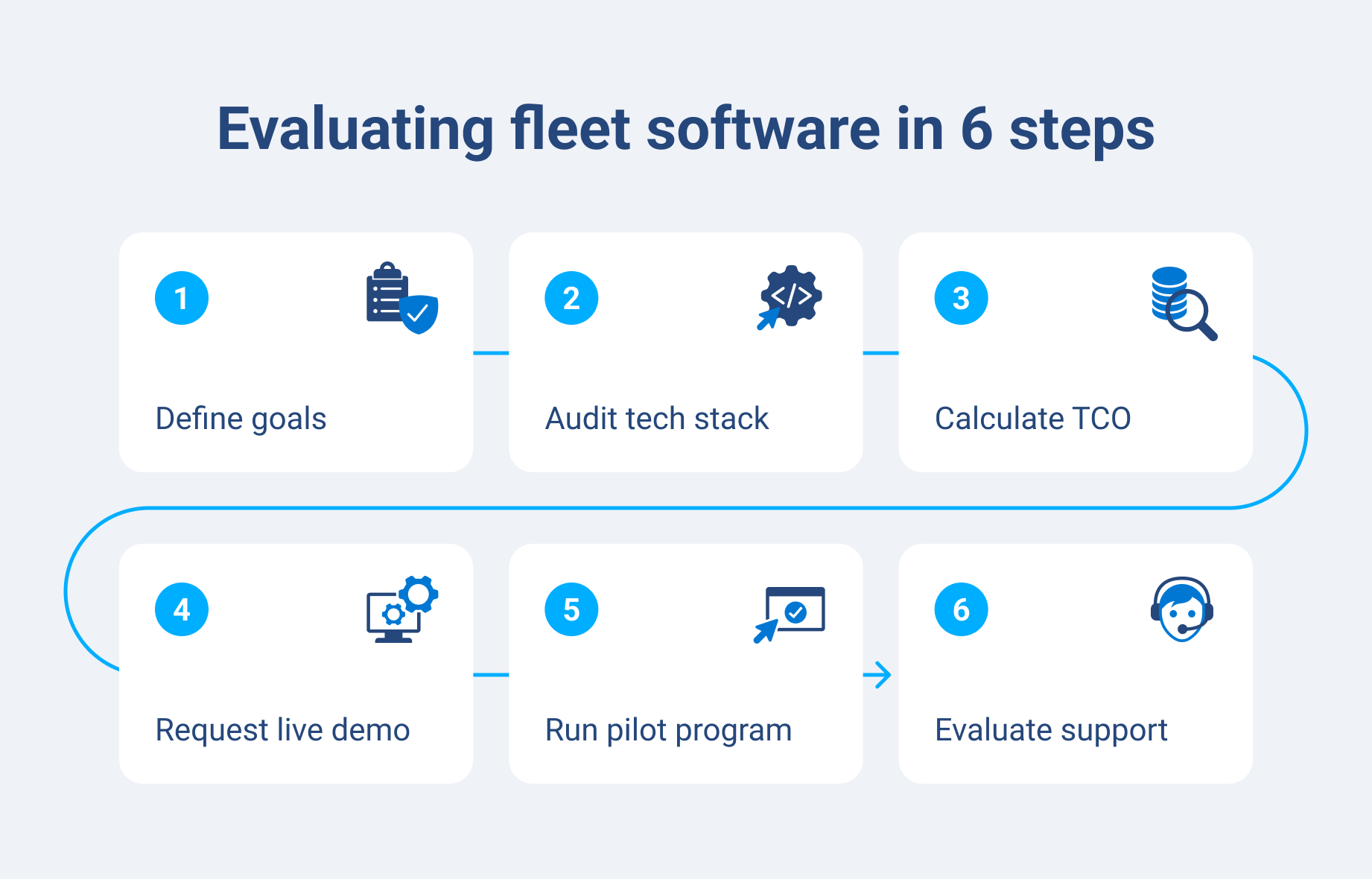
Define your "North Star" metrics
Start by identifying the primary outcomes you are trying to achieve. Do you want to:
- Reduce collisions by 20%?
- Cut fuel spend by 10%?
- Hit 100% ELD compliance?
Your top metrics will guide every other decision in this process, including which vendor to prioritize in your fleet maintenance software comparison.
Audit your existing tech stack
List every software system your team currently uses. Your new FMS needs to connect with these predictive fleet maintenance tools through native integrations or open APIs. A platform that does not integrate well with your existing system creates data silos and manual work. Understanding what to look for in a telematics RFP helps you ask the right questions upfront.
Calculate the Total Cost of Ownership (TCO)
Monthly subscription costs are just the starting point. Factor in hardware costs, professional installation fees, training time and any potential data overage charges to get the true total cost of ownership.
Request a "Live Data" demo
Ask vendors to demo the platform using real, anonymized data from a fleet similar to yours, not just a polished sandbox environment. This reveals how the system actually performs with messy, real-world inputs and gives you a more accurate sense of what your team will experience from day to day.
Conduct a 30-day pilot program
Before committing to a full rollout, install units in five to ten vehicles and run a structured pilot. Measure hardware reliability, data quality, driver sentiment and reporting accuracy. A pilot also surfaces integration issues early, when they are easier to fix.
Evaluate the support and training ecosystem
Onboarding is where many fleet software implementations stall. Make sure to check the:
- Vendor's onboarding process
- Availability of a dedicated account manager
- Depth of their online training resources
For Geotab customers, the reseller model means localized support from partners who understand your specific industry, not a generic help desk. Geotab also offers a comprehensive video hub that features walkthroughs, product tutorials and educational resources to help users get more value from the platform.
Make your fleet software comparison count
The right way to compare real-time fleet management software is not via a one-time checklist. This is a process that connects your business goals to the platform best equipped to help you reach them.
Start with your North Star metric and run a pilot before committing. The data from fleet management ROI vs. the cost of inaction makes a compelling case for moving quickly.
When you are ready to see what Geotab can do for your fleet, the next step is a conversation with one of our experts.
Subscribe to get industry tips and insights
Frequently Asked Questions
Fleet management software helps organizations monitor and manage vehicles, drivers and fleet operations. Depending on the solution, it can bring together data such as vehicle location, diagnostics, mileage, fuel use and driver activity in a central dashboard.
The fleet management ROI varies by operations. One-third of fleets report positive ROI in less than six months, while half of telematics users saw positive ROI in less than a year. Results depend on the fleet’s needs, costs and how the system is used. Estimate ROI by comparing measurable savings with software, hardware, installation and integration costs over a defined period.
Yes, you can use fleet software without installing hardware. App-only solutions exist, but they lack the engine diagnostics and tamper-resistant GPS data that professional fleet management requires. For ELD compliance, maintenance alerts and accurate driver behavior data, a physical device is essential.
Fleet management software itself is generally not required by law. Specific requirements may apply to certain operations. For example, U.S. electronic logging device rules apply to covered drivers, subject to exemptions. Check with your compliance officer for the specific rules that apply to your operation.
Implementation time varies based on fleet size, installation needs, integrations, data migration, training and rollout scope. For small fleets the installation could be done within a couple of weeks, while on enterprise rollouts could involve hardwired installs and API integrations with existing systems that might take two to four months. Ask vendors for a timeline based on your requirements and implementation plan.
Telematics refers to collecting and transmitting vehicle data, often through hardware, built-in vehicle systems or mobile devices. Fleet management software organizes that data into tools for tracking, reporting and managing operations. Some solutions include both; others connect to existing data sources.
Many platforms support mixed fleets, but vehicle compatibility and available data vary by make, model, year, powertrain and connection method. Confirm support for the vehicles and data your fleet needs, including electric vehicles and specialized equipment.
Geotab team
Table of Contents
Subscribe to get industry tips and insights
Related posts
GPS fleet tracking small businesses: A complete guide
November 11, 2026
8 minute read

How to start a trucking business: Step-by-step guide for owner operators
October 28, 2026
6 minute read

Garbage truck safety: Three questions for your video review process
October 28, 2026
4 minute read

How private haulers can help prepare their fleets for new waste management contracts
October 23, 2026
4 minute read