Waste management fleet safety: Reducing hazards during service with AI garbage truck cameras
Waste management fleet safety is essential for reliable collection service. AI garbage truck cameras help your drivers maintain it by alerting them to risks before incidents occur.

Sep 28, 2026
Key Insights
- Unaddressed waste fleet management safety risks can lead to inconsistent service, financial penalties and damage to your company’s reputation.
- Garbage truck cameras provide actionable, video-based insights, enabling you to coach your operators on safer driving habits with objective evidence of their behaviors.
- From models that strictly face the road to those that offer 360° visibility around waste trucks, Geotab offers a range of cameras to meet specific fleet needs.
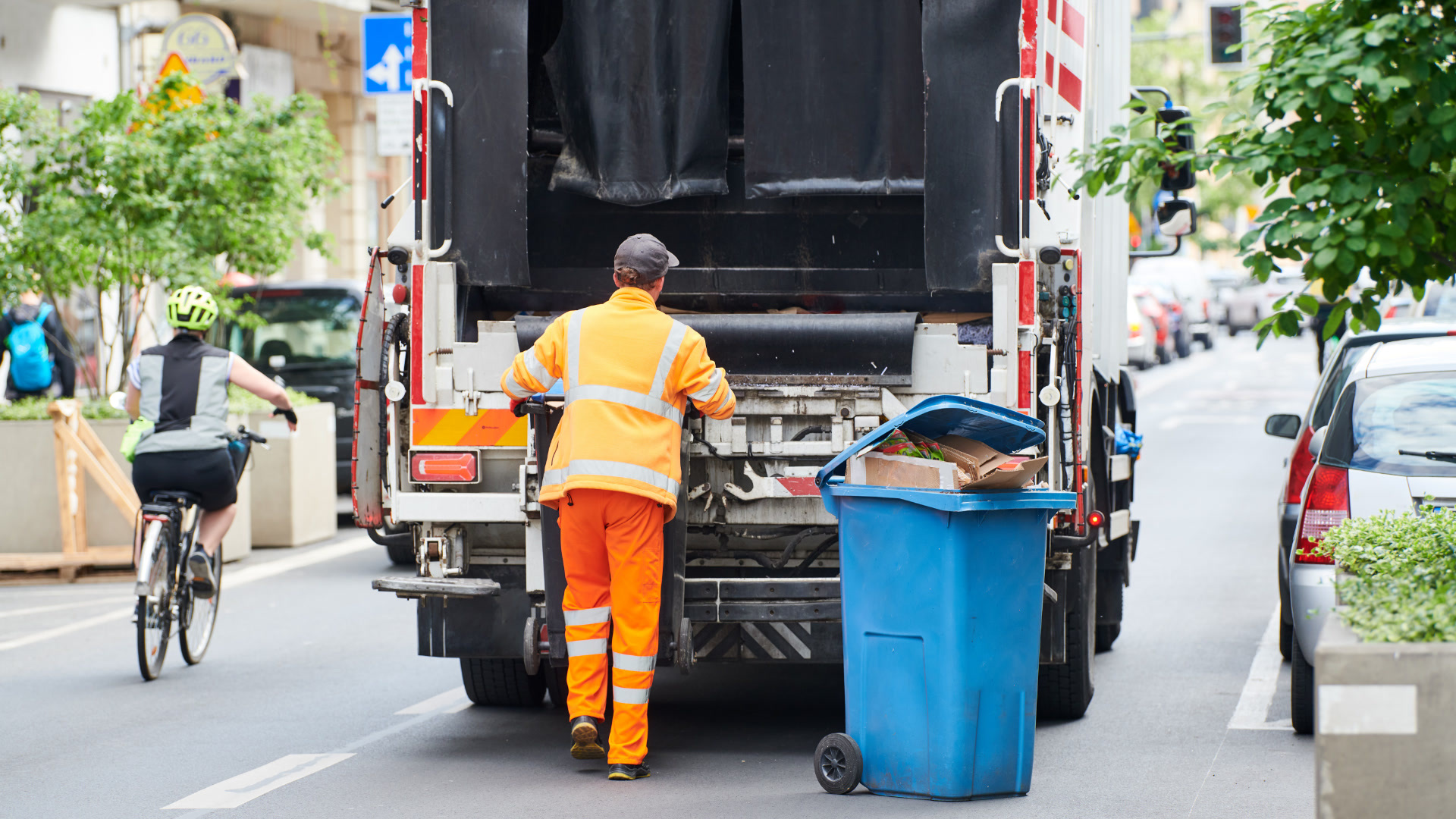
Your waste collection team faces greater risk from the road than anywhere else, and the numbers prove it. According to Bureau of Labor Statistics data, nearly 72% of 2024 workplace deaths in solid waste collection were related to transportation incidents. That’s almost double the 38.2% average observed across all industries.
There are several factors at play that make waste truck driving a particularly dangerous job. Blind spots around large vehicles, driver fatigue on early morning routes and cramped residential streets are just three of the many unique safety challenges your team has to navigate daily.
To combat these risks, technologies that deepen your drivers’ visibility are critical. With AI garbage truck cameras, you can help your operators detect and avoid hazards as they happen and provide smarter coaching supported by video footage. This post unpacks why waste management fleet safety is so important and how today’s camera systems can help you keep your team (and community) more protected during daily collection.
Why is waste management fleet safety so crucial?
Waste management fleet safety doesn’t just impact your drivers’ health. Although their well-being is your most important consideration, you must also account for these other potential consequences if risk goes unaddressed in your fleet operations:
- Injuries to residents or property damage.
- Fewer available vehicles if a truck is involved in a collision and needs repairs.
- Challenges with sticking to service level agreements (SLAs).
- Financial loss from Occupational Safety and Health Administration (OSHA) fines, collision liability settlements and vehicle repair costs.
- Weakened community trust that’s difficult to rebuild.
- Reduced employee morale and increased turnover.
- Contract terminations with your municipality (for commercial waste fleets).
In light of these repercussions, it’s clear that the success of your collection operation hinges on safety. Read on to see how video-based technologies set your drivers up for safe, uninterrupted service every day.
Did you know? Under OSHA’s General Duty Clause, employers are required to create working environments that are clear of known, fatality-causing hazards, and the maximum penalty for a serious infraction is $16,550 per violation. With a camera-supported safety program, you can help your team stay accountable to safety protocols and reduce the risk of infractions.
Enhance safety along collection routes with garbage truck cameras
Certain garbage truck cameras today can do more than just record the road. Through built-in AI, there are a range of deeper capabilities they offer to help you actively keep drivers safer while they’re completing pickups. And since many can connect to a telematics solution, you can review video insights alongside important safety data. This full view gives you the complete story of how safe your operators drive, making it easier to identify which behaviors should be praised and if any require targeted intervention.
However, camera compatibility is also important to consider. Depending on whether you run a commercial or municipal waste fleet (or what level of risk protection you want), your sanitation fleet has unique needs. Thankfully, a variety of camera options exist to fit your operations. These are the three main types you should become familiar with.
Event-based dash cameras: Develop your operators through video insights
Event-based dash cameras are often a good fit for municipal waste fleets that face strict driver privacy or union restrictions. This is because in many cases, they exclusively face the road and only record when specific driving events happen. For example, Geotab’s GO Focus camera is a road-facing model that doesn’t stream constant video. It only captures footage of events like tailgating or collisions and processes encrypted data directly on the device, helping to minimize driver exposure while still giving you quality safety insights.
With cameras like these, you can use the footage to support face-to-face driver coaching sessions and help your team understand what to improve on with real-world evidence.
Cameras with AI-enabled alerts: Bring safety coaching into the cabin
The next evolution of AI dash cameras involves those that don’t require you to wait for a coaching conversation to start reducing risk. Cameras with AI-enabled alerts can continuously record, catching risky or distracted driving behaviors and informing operators the instant they’re detected. Examples of events that will trigger in-cab voice alerts include:
Advanced driver assistance system (ADAS) events
| Driver monitoring system (DMS) events
|
In practice, here’s what in-cab alerts can look like: If a driver is showing signs of drowsiness, such as frequent eye rubbing or yawning (common during early morning routes), dual-facing cameras like Geotab’s GO Focus Plus will issue an audible warning about it. And as that driver progresses throughout their day, the safety coaching continues. If they’re running behind on their route, they might roll through stops or closely follow cars in front of them to stay on schedule. Models with AI alerts will also flag behaviors like these, helping your operator correct them before a serious incident occurs.
Product insight: If you’re prohibited from recording driver facing video, but still want some form of in-cab alerts, Geotab’s GO Focus Plus Road Only exclusively coaches based on ADAS events. These alerts help your team avoid certain behaviors that could cause collisions, while still protecting their privacy.
360° dash cameras: Expand driver visibility around the entire truck
The most advanced garbage truck cameras today include in-cab alerts, advanced AI and the ability to gain full 360° visibility. They can connect up to five auxiliary cameras and are ideal for commercial waste fleets wanting multi-angle protection. Models like Geotab’s GO Focus Pro even offer deeper features like:
| Blind spot detection | Zero-latency monitor connectivity | Pre-collision warnings | Proof of service* | Overage detection* |
|---|---|---|---|---|
| Spot pedestrians, cyclists and bollards hidden by the sides of your trucks with AI inferencing that accurately distinguishes objects. | GO Focus Pro can feed video from rear-view cameras to in-cabin screens for your operators to see. This helps them reduce injury and property damage risk while completing complex backing maneuvers. | In-cab alerts warn your drivers of detected events that could cause a forward or reverse collision – before an incident takes place. | Monitor collections by capturing snapshots of scheduled pickups. Use that visual evidence to demonstrate accountability and help reduce the need for second trips. | The system can automatically identify when waste bins are overfilled and capture video evidence. This can help you determine whether additional charges are warranted and recover lost revenue. |
Through these tools, you and your drivers get a truly panoramic view of the surroundings they’re driving in every day. This perspective helps you reduce risk and even shield your organization from liability, with incident footage captured from every angle.
*Add-on features of GO Focus Pro that may incur additional charges.
Start improving waste management fleet safety today
Accountable service starts with safer fleet operations. By deploying garbage truck cameras, you have reliable tools to help your operators reduce hazards on every route and provide more consistent service. However, cameras only scratch the surface of what today’s waste fleet technologies can do. Regardless of whether it’s your busiest season or not, learn additional ways they can help you deliver safe, effective service by reading “Peak season, peak pressure: The waste fleet safety and service accountability playbook.”
Subscribe to get industry tips and insights
Frequently Asked Questions
AI dash cameras like Geotab’s use computer vision, a technology that enables machines to detect and classify objects in real time, combined with predictive AI models that track movement patterns and estimate proximity. This gives operators early warning before a risk escalates.
Beyond garbage truck cameras, telematics tools like driver scorecards and Collision Risk can also help you improve sanitation fleet safety. For instance, scorecards can guide targeted safety tips during manager/driver coaching sessions. They provide baseline performance grades based on each team members’ previous driving behaviors, factoring in everything from seatbelt usage to speeding and harsh braking events.
On top of scorecards, you can also use Collision Risk to measure the effectiveness of your fleet safety program long-term. This AI-enabled capability forecasts your drivers’ chances of being involved in an incident over their next 100,000 miles, accounting for more than just driving behaviors alone. By building your safety program on data-driven insights, you can fairly gauge your team’s performance over time and help everyone remain focused on safer collection operations.
In addition to helping you enhance fleet safety, telematics solutions like Geotab can also help you tighten the efficiency of your sanitation fleet. Ways like these demonstrate how:
Reduce operating costs, improve margins - Monitor idling trends and report on driving habits that burn unnecessary fuel (such as speeding and harsh acceleration) to limit consumption. Optimize maintenance schedules for each sanitation truck in your fleet with data to lower total cost of ownership and extend asset lifespans.
Keep routes on track - Track route completion rates throughout the day to verify that service is being delivered to your community on time and as expected. If delays are noticed, address them proactively before residents call to complain.
Optimize waste truck availability - Predict when specific components could fail and address them before a curbside breakdown occurs. Doing so will decrease the chances of critical failures that sideline your waste trucks, delay service and cause resident frustration.
Content Marketing Manager at Geotab
Table of Contents
Subscribe to get industry tips and insights
Related posts
Top seven best fleet fuel cards: How to choose the right one for your business?
October 1, 2026
7 minute read
Four ways to transform garbage fleet efficiency with data and video tools
September 28, 2026
4 minute read

6 benefits of an open, AI-powered fleet data platform
September 17, 2026
8 minute read

Field service GPS fleet tracking: what mid-market fleet managers need to know
September 15, 2026
4 minute read

Fleet accident management: How to improve safety and reduce costs
September 4, 2026
5 minute read