Telematics trends for 2026: What is changing and how fleets can respond
Telematics is moving from a back-office utility to an operational brain. What began as basic location and compliance monitoring has evolved into intelligent systems that connect vehicles and assets in near real time.

By Geotab Team
Jan 30, 2026
Key Insights
- Telematics trends are pushing fleets from reactive tracking to predictive, data-driven operations.
- AI, advanced connectivity and open platforms expand real-time visibility and action.
- Telematics insights drive measurable gains in safety, compliance and sustainability.
- Future-ready platforms help fleets grow and support mixed and emerging fleet needs.
As fleets plan for the rest of 2026, the goal is no longer just tracking — it is anticipating. Modern platforms now leverage AI and open data ecosystems to help fleet leaders stay ahead of disruptions, control costs and make smarter decisions about long-term growth.
In this guide, we explore the key trends shaping the future of fleet management and how to prepare for what comes next.
| Trend | Impact |
| AI makes telematics predictive and actionable | Enables dynamic recommendations instead of static reports |
| Advanced connectivity expands fleet visibility | Maintains real-time visibility across remote and complex environments |
| Open telematics platforms help fleets scale | Supports growth through flexible integrations and ecosystems |
| Telematics strengthens safety, compliance and sustainability | Reduces risk, simplifies compliance and supports sustainability goals |
| EV-focused telematics supports mixed fleets | Improves EV uptime while unifying ICE and EV data |
| Digital twins are elevating fleet planning | Allows fleets to test and optimize decisions before deployment |
| Cybersecurity and data privacy remain fleet essentials | Protects fleet data as connectivity and data volumes grow |
Why telematics is evolving faster than ever
The future of telematics is being driven by a shift toward more connected and intelligent fleet operations. Fleets are managing more vehicles across broader geographies while facing rising expectations around safety, uptime and regulatory compliance.
These pressures are accelerating the adoption of telematics solutions that deliver visibility and predictive insights, not just basic tracking. At the same time, vehicles are generating more data than ever before, and advances in connectivity and analytics are making that data easier to use.
Modern telematics platforms bring vehicle, driver and asset data together, helping fleets better understand the value of telematics and make more informed decisions.
Geotab supports this shift by enabling fleets to grow connected operations while maintaining flexibility and long-term visibility as their needs change.
Agentic AI powers actionable telematics
As part of broader fleet telematics trends, AI is moving beyond static dashboards and alerts toward more proactive, agent-based support. In 2026, fleets will increasingly use agentic AI systems that do more than surface insights.
These AI agents can perform actions like:
- Drafting maintenance schedules
- Recommending repair actions
- Rerouting drivers around weather or congestion
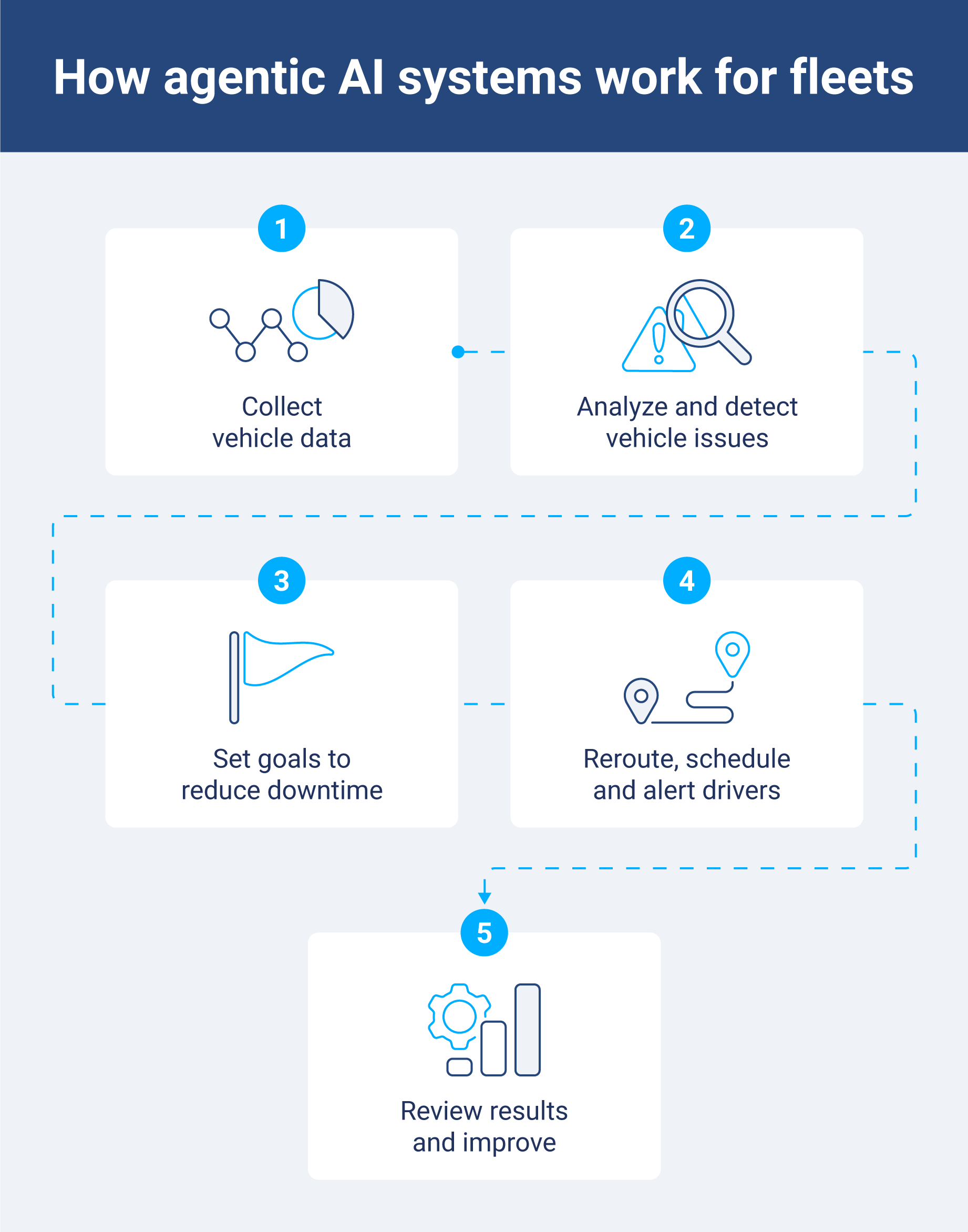
This shift reflects a broader market move from descriptive and predictive analytics to AI-driven decision support that helps fleets act faster and with greater confidence. The real value of AI in fleet management lies in operationalizing data, not just visualizing it.
This evolution mirrors findings from Geotab’s Generative AI research, which shows that organizations gain the most value when Gen AI is treated as a strategic capability rather than a standalone tool.
The report highlights that the most impactful use cases rely on fine-tuned models trained on high-quality, domain-specific data, supported by strong governance and privacy controls.
Solutions like Geotab Ace are exploring how AI can transform telematics data into actionable recommendations across safety, operations and predictive maintenance, helping fleets move from experimentation to measurable business impact as AI adoption matures.
Advanced connectivity expands fleet visibility
Stronger connectivity is expanding what fleets can measure and manage in real time. By supporting multiple communication paths, modern telematics devices deliver more reliable data across diverse operating environments, including remote regions, cross-border routes and time-sensitive operations.
This reliability reduces data gaps, enabling consistent tracking and faster issue detection that supports day-to-day fleet decisions. Two connectivity advances are driving this shift:
- Satellite connectivity: When cellular coverage weakens or drops, telematics devices can switch to satellite communication to help maintain location visibility and critical data transmission in remote or hard-to-reach areas.
- Vehicle-to-everything (V2X) connectivity: Vehicles can share data with other vehicles and roadway infrastructure, improving situational awareness and unlocking new safety and efficiency use cases.
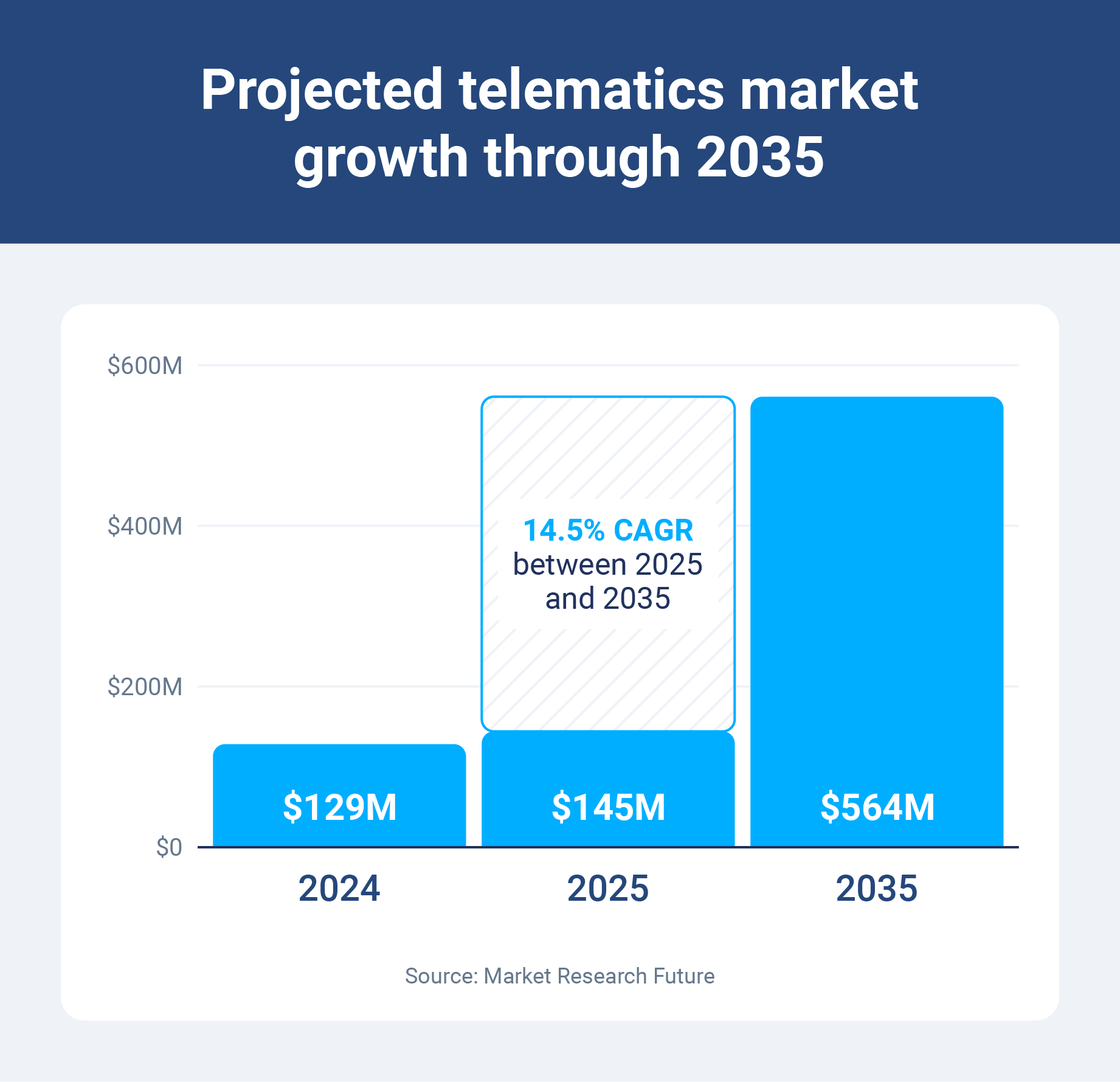
Industry research shows that advances in IoT fleet management and connectivity are significantly expanding what telematics systems can support. As connected devices and initiatives like smart traffic systems mature, these capabilities are expected to drive substantial industry growth — projections estimate that the telematics market could reach over $564 million by 2035.
Open telematics platforms help fleets scale
As fleets grow, the future of fleet telematics depends less on standalone tools and more on flexible platforms that can adapt over time. Open telematics platforms are designed to integrate with existing systems and new technologies as they emerge. This flexibility helps fleets avoid vendor lock-in and boost operations without replatforming as needs change.
Open platforms also enable stronger partner ecosystems, which expand functionality beyond what any single provider can deliver. Through APIs and certified integrations, fleets can connect telematics data to:
- Maintenance systems
- Safety tools
- EV charging platforms
- Enterprise software
Industry groups in transportation and technology agree that interoperability and data portability are key to building fleet operations that can scale and adapt over time. For growing fleets, open telematics platforms turn data into a shared foundation that supports innovation and efficiency rather than a closed system with fixed limits.
Telematics strengthens safety, compliance and sustainability
Telematics insights are increasingly tied to measurable fleet outcomes, particularly in safety, compliance and environmental performance. As regulations tighten and safety expectations rise, fleets are turning to telematics data to better understand driver behavior, vehicle health and operational risk.
Market research shows that the global telematics market is projected to grow at a compound annual rate of more than 16% through the next decade. This growth reflects how central telematics has become to meeting modern safety and compliance requirements.
In practice, telematics helps fleets translate data into action across three key areas:
- Safer operations: Proactive safety programs use telematics insights to identify risky driving patterns, coach drivers and reduce collision rates. These insights form the foundation of an effective fleet safety program that prioritizes prevention over response.
- Simplified compliance: Automated data collection and reporting reduce the manual burden of compliance, helping fleets stay aligned with evolving regulations while minimizing administrative effort.
- Sustainability and efficiency: By monitoring fuel use, idling and vehicle performance, telematics supports fuel efficiency and emissions reduction initiatives that help fleets maximize fleet efficiency while advancing sustainability goals.
Together, these capabilities position telematics as a critical tool for fleets looking to improve performance today while preparing for stricter safety standards and environmental expectations in the years ahead.
EV-focused telematics supports mixed fleets
As trends in fleet telematics continue to evolve, electrification is reshaping how fleets collect and act on vehicle data. Electric vehicles (EVs) generate different types of information than internal combustion engine (ICE) vehicles — especially battery performance and charging session metrics.
Dedicated EV-focused telematics helps fleets monitor these unique data points in real time, enabling more accurate predictions of range and uptime needs. By understanding battery health and charging patterns, fleet teams can reduce unplanned downtime and improve overall EV reliability.
Unifying EV and ICE data on a single telematics platform gives fleets a holistic view of performance across their entire operation. This centralized visibility allows teams to:
- Benchmark efficiency
- Optimize routing based on power availability
- Plan strategic electrification investments with confidence
Telematics data also supports broader electrification planning by highlighting where charging infrastructure is needed most and how different duty cycles impact EV performance. For mixed fleets navigating the transition to electric power, integrated telematics delivers the insights needed to balance operational effectiveness with long-term sustainability goals.
Digital twins are elevating fleet planning
Digital twins are emerging as a powerful planning tool as fleets look for ways to reduce risk and improve decision-making before deploying changes in the real world. In fleet operations, a digital twin is a virtual model of vehicles, assets or entire operations that uses real telematics data to simulate performance under various conditions.
Transportation and technology research increasingly point to digital twins as a foundational capability for the future of transportation, particularly as fleets become more connected, automated and data-driven.
Digital twins make it possible for fleets to test scenarios without disrupting operations. Fleet teams can model route changes, maintenance strategies, electrification plans or safety initiatives to understand potential impacts on cost, uptime and performance before implementation.
By combining telematics data with advanced analytics, digital twins help fleets move from reactive planning to proactive optimization, reducing uncertainty and supporting smarter long-term decisions as fleet complexity continues to grow.
Cybersecurity and data privacy remain fleet essentials
As vehicles become more connected, fleet data protection has moved beyond IT and into daily operations. Modern telematics systems collect and transmit large volumes of sensitive information, including vehicle location and operational performance.
Industry and transportation research consistently highlight that as connectivity increases, so does exposure to cyber risk, making strong security practices essential to maintaining trust, compliance and business continuity.
For fleets, effective cybersecurity and data privacy strategies focus on a few critical areas:
- Data protection: Encryption, secure data storage and controlled access help safeguard sensitive fleet and driver information.
- System integrity: Secure device firmware and regular updates reduce vulnerability as telematics technology evolves.
- Governance and compliance: Clear policies around data ownership, usage and privacy help fleets meet regulatory requirements and manage risk as regulations continue to tighten.
By prioritizing cybersecurity and data privacy alongside connectivity and analytics, fleets can confidently adopt advanced telematics capabilities while protecting the data that powers their operations.
Prepare for the future of fleet telematics with Geotab
As telematics industry trends continue to reshape fleet operations, the most successful fleets will pair advanced technology with a scalable, secure platform. Understanding today’s telematics trends is the first step, but turning those insights into action requires the right foundation.
Geotab helps fleets do exactly that by combining data-driven intelligence with flexible, enterprise-grade fleet management software designed to support long-term growth.
Subscribe to get industry tips and insights
Frequently Asked Questions
The telematics market includes several large global providers, with Geotab consistently recognized as the leading option for fleets. Geotab supports millions of connected vehicles worldwide and offers an open platform with a large marketplace of integrations, making it easier for fleets to scale and adapt over time.
Other well-known telematics platforms include Samsara, Verizon Connect and Trimble, each offering different strengths depending on fleet size, industry and use case. What sets Geotab apart is its focus on high-quality data, strong security standards and a deep ecosystem of partners that support fleets of all sizes.
Next-generation telematics is moving beyond basic tracking toward intelligent, connected systems. These platforms combine real-time data, AI-driven analytics and open integrations to support predictive decision-making and long-term fleet planning rather than reactive reporting.
AI enhances predictive maintenance by analyzing vehicle health data to identify early signs of wear and recommend maintenance actions before breakdowns occur. This helps fleets reduce downtime and extend vehicle life while improving overall reliability.
V2X communication is enabled by vehicle connectivity and onboard sensors that allow vehicles to exchange data with other vehicles and road users. These features support improved situational awareness and traffic efficiency as connected transportation systems evolve.
The Geotab Team write about company news.
Table of Contents
- Why telematics is evolving faster than ever
- Agentic AI powers actionable telematics
- Advanced connectivity expands fleet visibility
- Open telematics platforms help fleets scale
- Telematics strengthens safety, compliance and sustainability
- EV-focused telematics supports mixed fleets
- Digital twins are elevating fleet planning
- Cybersecurity and data privacy remain fleet essentials
- Prepare for the future of fleet telematics with Geotab
Subscribe to get industry tips and insights
Related posts
The size myth: Why intelligence, not inventory, is driving 2026 leasing profits
May 13, 2026
4 minute read

How fleet telematics helps protect police officers and build community trust
May 11, 2026
4 minute read
Why maintenance scheduling for fleet assets requires more than a calendar
May 7, 2026
5 minute read

The plug-and-play rental fleet: Upgrade your technology without missing a single booking
April 27, 2026
5 minute read

What is remote fleet management? Benefits, features and top platforms
April 24, 2026
7 minute read
The asset black hole: Why your equipment disappears the moment it leaves your facility
April 23, 2026
4 minute read