Best ELD for trucks: Top devices for compliance and safety [2026]
Electronic logging devices (ELDs) are essential for fleets to maintain compliance, improve driver safety and streamline daily operations.

Jan 28, 2026

Key Insights
- The best ELD for trucks helps simplify fleet operations through automated HOS tracking and real-time visibility.
- Geotab stands out for combining telematics, compliance and driver safety tools in one connected platform.
- Choosing the right ELD depends on your fleet’s size, compliance needs and feature priorities.
Electronic logging devices (ELDs) are essential for fleets to maintain compliance, improve driver safety and streamline daily operations. The best ELD for trucks automates Hours of Service (HOS) tracking and reduces paperwork to prevent costly violations.
With real-time visibility into driver activity and vehicle performance, fleets can make informed decisions that enhance safety and productivity on every route.
In this guide, we review the top ELD systems for trucks, including pricing insights, key features and tips for choosing the right solution for your operation.
1. Geotab
Geotab ELD is an advanced truck eLog solution designed to simplify compliance and provide real-time visibility across every route. The ELD automatically reports driving hours, rest periods and driver status in real time, giving fleet managers a complete view of operations from a single dashboard.
With 100+ HOS rulesets and exemptions for the U.S. and Canada, Geotab simplifies cross-border compliance for mixed, long-haul and hotshot fleets.
.jpg)
Drivers can complete daily vehicle inspections, receive alerts as they approach HOS limits and annotate logs directly through the mobile app, even when offline. The platform also supports team driving, multi-language functionality and over-the-air updates that keep systems current without downtime.
And with Geotab’s open APIs and partner integrations, fleets can extend their ELD to include dash cams, asset tracking, cold chain monitoring and more.
Key features
- Comprehensive HOS tracking: Monitor driver hours, rest periods and exemptions across 100+ U.S. and Canadian rulesets.
- Simplified log management: Auto-record vehicle movements, send log certification reminders and manage unassigned driving time.
- Custom vehicle inspections: Enable drivers to complete DVIRs via mobile app with configurable checklists and defect alerts.
- Cross-border compliance: Auto-switch between regional HOS rulesets to maintain accuracy for intrastate and international fleets.
2. Zonar
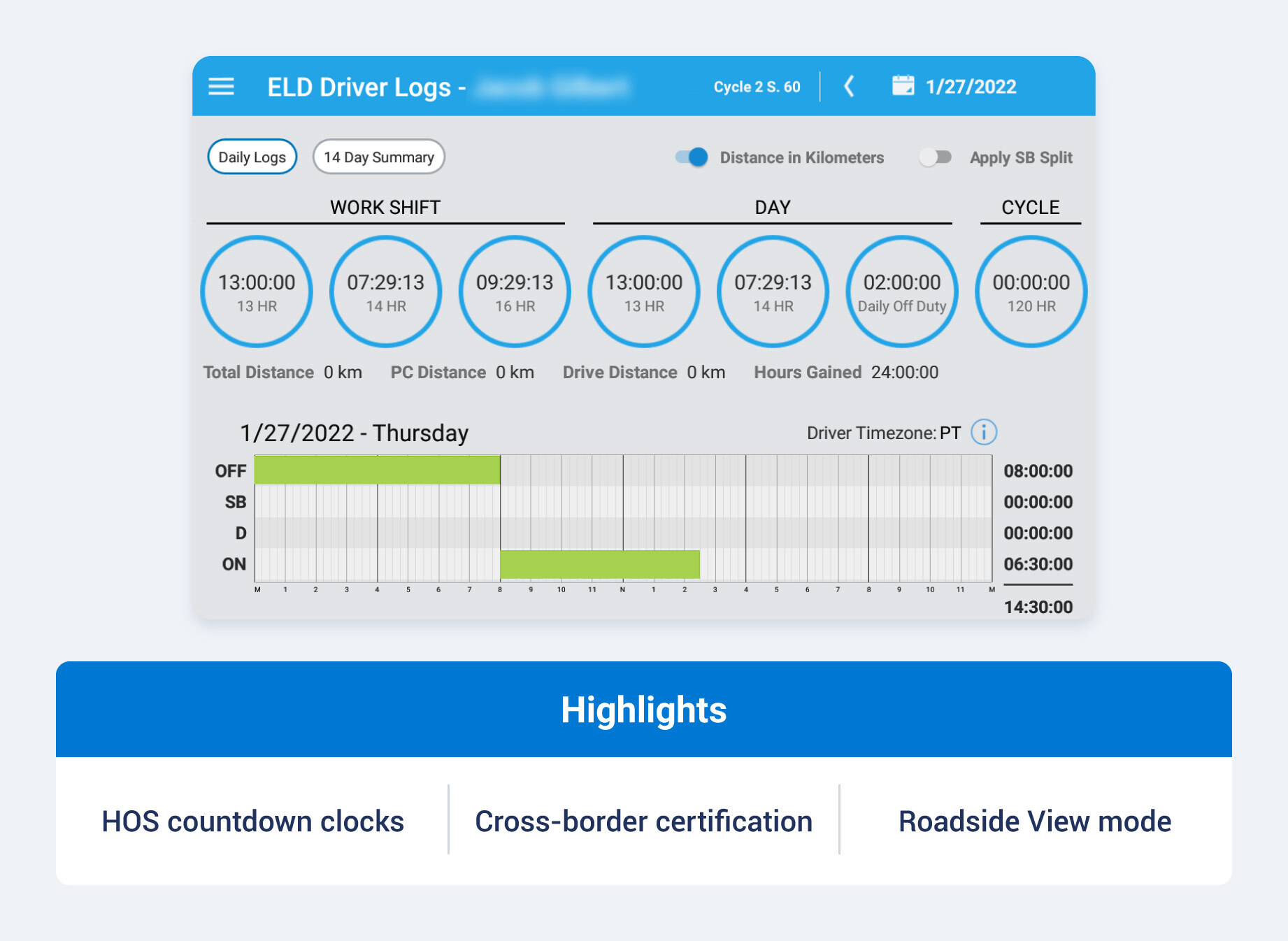
Zonar’s ELD helps fleets maintain compliance and visibility through log reporting and inspection tools. The platform is self-certified through the U.S. FMCSA and third-party certified with Transport Canada’s accreditation body, COMDriver, making it suitable for fleets operating across borders.
Drivers can view their real-time duty status, receive in-cab alerts when nearing a violation and certify logs directly through the Zonar Logs mobile app.
The system also includes countdown clocks and color-coded notifications that simplify HOS management on the road. During inspections, drivers can use Roadside View mode to securely display and transfer required log data, helping reduce delays and manual errors.
Key features
- Cross-border certification: The platform is FMCSA self-certified and COMDriver approved for fleets operating in the U.S. and Canada.
- Mobile log management: Drivers can review, edit and certify logs using the Zonar Logs and Zonar Ignition apps.
- In-cab compliance alerts: Real-time countdown clocks and notifications support proactive HOS management.
- Simplified roadside inspections: Roadside View displays only required data for faster, more efficient checks for boosted fleet safety ROI.
3. Motive
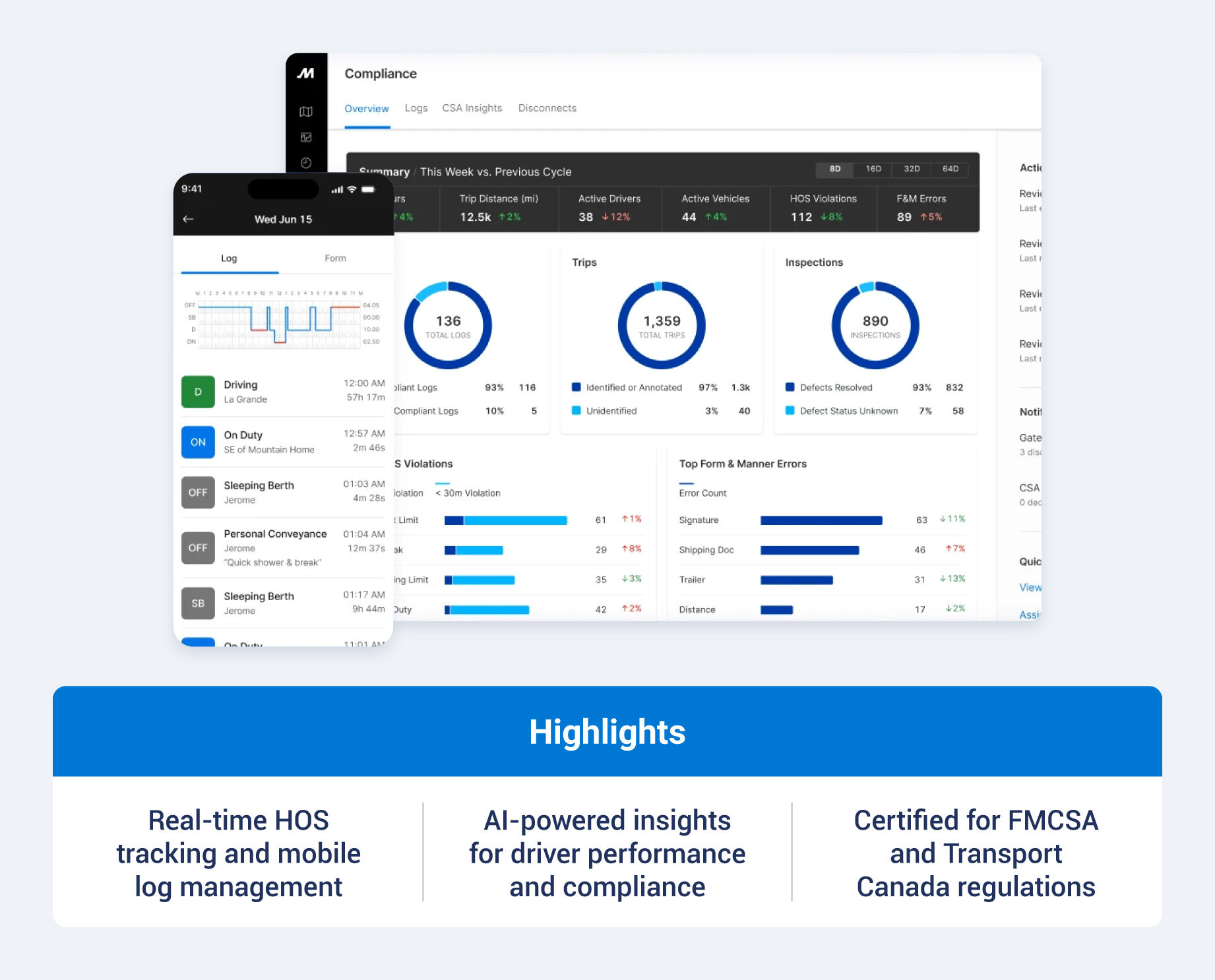
Motive offers an ELD system that supports both compliance management and fleet visibility. The platform meets FMCSA and Transport Canada standards, supporting cross-border operations for U.S. and Canadian fleets. It’s designed for both fleet managers and drivers, combining HOS tracking, inspection tools and performance data in one interface.
For managers, Motive provides visibility into driver logs, duty status and HOS trends to help reduce violations and improve operational efficiency.
Through its Compliance Hub, managers can identify recurring issues, review violation history and monitor cycle trends across the fleet. For drivers, the Motive Driver app simplifies log management, sending real-time alerts when nearing HOS limits and helping streamline roadside inspections.
Key features
- Cross-border certification: The platform is FMCSA and Transport Canada approved for use in both regions.
- Fleet visibility tools: Monitor driver behavior, duty status and CSA score trends through the Compliance Hub.
- Integrated management: Access HOS, DVIR and IFTA reports in one centralized platform.
4. Gorilla Safety
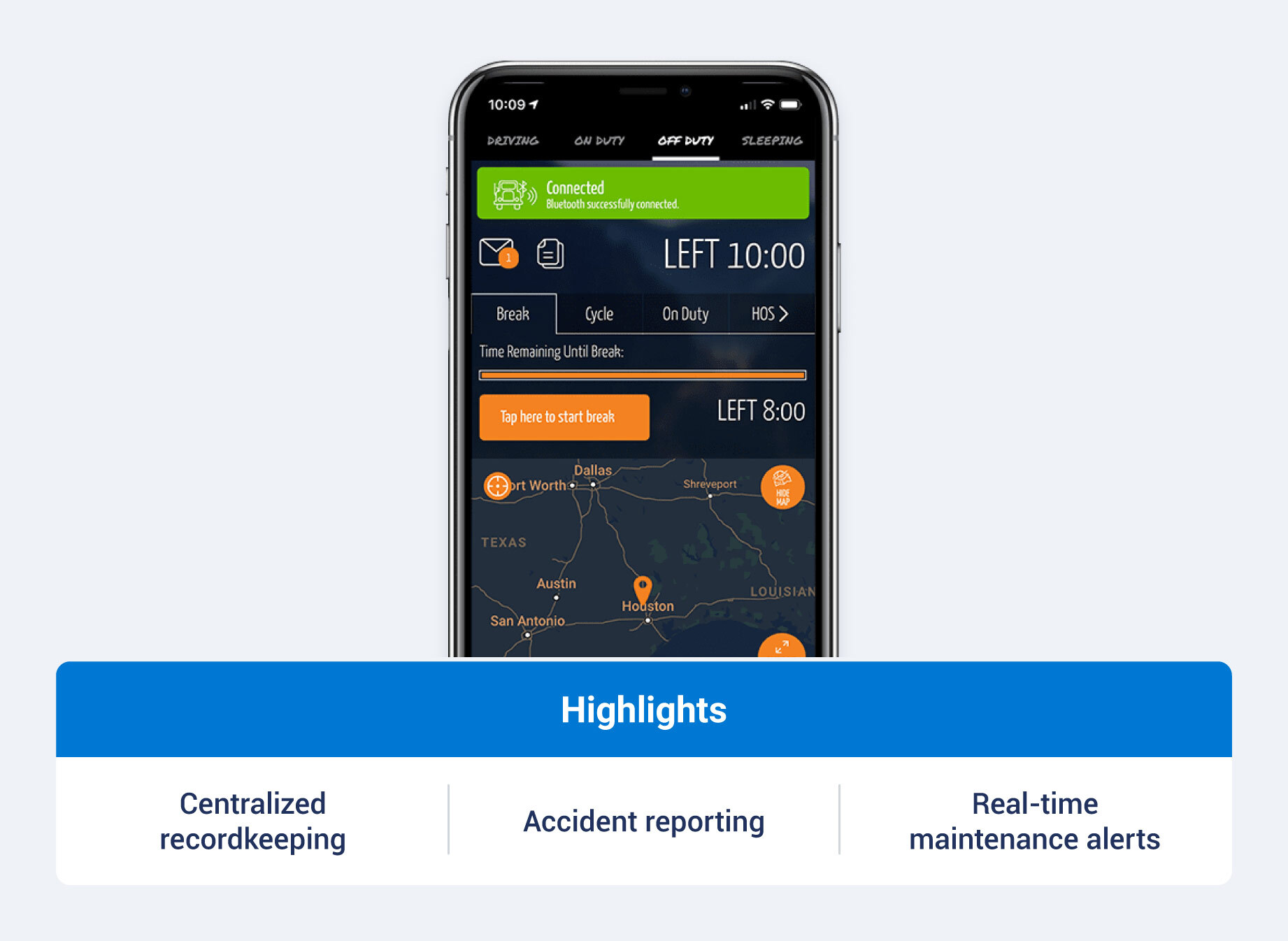
The Gorilla Safety ELD focuses on helping with fleet management, maintenance and compliance tasks from a single platform. Built for both drivers and mechanics, it centralizes records like inspection logs, maintenance reports and policy manuals.
This system helps ensure documentation is accessible when needed while supporting compliance with the ELD mandate. Fleet managers can set automated notifications to stay informed about repairs, document status or potential safety concerns, reducing the need for manual follow-ups and phone calls.
These tools make Gorilla Safety a practical choice among the best truck ELD solutions for fleets that prioritize documentation control and workflow visibility.
It is important to note that this tool does not offer telematics and compliance or advanced telematics and dashboards.
Key features
- Document management: Store manuals, inspection reports and maintenance records in one system.
- Maintenance tracking: Enable drivers to notify mechanics of issues and schedule repairs promptly.
- Automated alerts: Receive notifications for missed signatures, overdue inspections or repairs.
- Accident reporting: Capture photos, statements and details directly within the mobile app.
5. Samsara
Samsara offers an ELD system built to help fleets save time and prevent HOS violations through real-time insights and guided driver workflows. Its interface supports compliance while helping drivers stay on schedule and avoid potential violations.
The Samsara Driver app provides step-by-step prompts for daily tasks such as safety inspections and log certification. Countdown clocks and real-time alerts help drivers plan their shifts proactively, while Inspection
Mode allows them to share only the required data during roadside checks.
Key features
- Guided workflows: Prompt drivers to complete inspections, certify logs and meet compliance steps on time.
- Inspection Mode: Securely display and transfer required ELD data to DOT officers during roadside checks.
- Custom app design: Use Workflow Builder and App Designer to create tailored mobile experiences without coding.
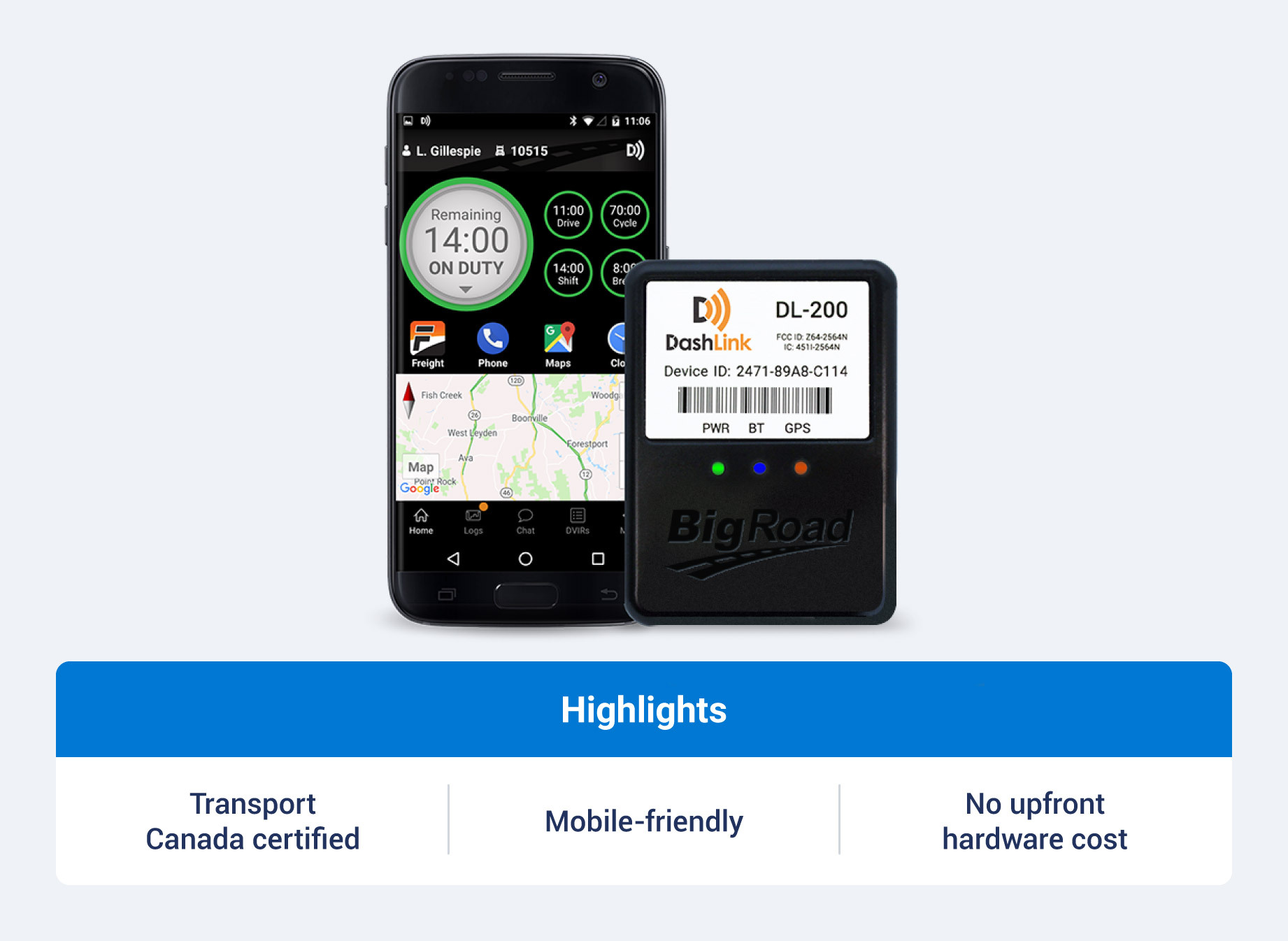
6. BigRoad DashLink
BigRoad DashLink provides fleets with a simple and affordable way to enhance safety under the ELD mandate. The platform supports trucking ELD systems that automate HOS logs and ease reporting for long-haul drivers. It’s both FMCSA registered and Transport Canada certified, making it suitable for fleets operating in the U.S. and Canada.
DashLink automates engine-connected log recording to minimize manual entry errors. The solution supports easy setup and flexible use between vehicles and drivers, with no upfront hardware costs. Mobile compatibility through Android and iOS devices allows drivers to access logs, complete inspections and view reports on the go.
Unlike some competitors, BigRoad lacks features like advanced analytics, driver safety alerts and robust telematics features.
Key features
- Cross-border compliance: It supports U.S. and Canadian rulesets with accurate, engine-connected logs.
- Flexible setup: The tool is interchangeable between vehicles and drivers for easier deployment.
- Inspection-ready reports: You can generate clean log reports for DOT inspections.
- Maintenance tools: The tool includes in-app DVIR and fuel tracking for complete record management and increased fuel efficiency.
Benefits of ELDs for trucks
Electronic logging devices do more than track hours — they help fleets maintain compliance, enhance safety and optimize efficiency. Benefits include:
- Automate compliance tasks: ELDs automatically record HOS data, eliminating manual logs and reducing the risk of costly violations.
- Improve driver safety: Real-time alerts help prevent fatigue, harsh driving and unsafe behavior while promoting proactive coaching.
- Simplify inspections: Digital records and instant log certifications make roadside checks faster and less stressful for drivers.
- Boost operational efficiency: Integrated GPS and telematics provide visibility into routes, idle time and fuel use, helping fleets cut costs and stay productive.
As regulations like California’s Clean Truck Check program emphasize, connected and compliant fleet data is essential for improving air quality, ensuring safety and maintaining operational transparency.
How to choose the right ELD for trucks
Choosing the right ELD for your fleet doesn’t have to be complicated. Understanding your fleet’s needs and priorities can help you select a device that improves efficiency, keeps drivers safe and keeps your operations compliant. Here’s what to consider when choosing an ELD system for trucks:
Fleet size and operations
The size and type of your fleet affect which ELD will work best. For example, a large long-haul fleet may need advanced telematics and reporting, while smaller fleets or local deliveries, like box trucks, might prioritize ease of use and affordability.
If you’re looking for the best ELD for box trucks, focus on solutions that are simple to install, easy to manage and scalable as your fleet grows.
Budget and total cost of ownership
ELDs involve more than just a one-time purchase. Consider subscription fees, hardware costs and any optional add-ons like dash cams or GPS tracking. Evaluating the total cost of ownership helps you find a solution that fits your budget while meeting your fleet’s needs.
Desired features
Different fleets rely on different features. Common considerations include:
- HOS tracking: Every fleet needs accurate HOS tracking to comply with FMCSA rules. Long-haul trucking fleets especially benefit from automated HOS logs that reduce paperwork, minimize risk of violations and simplify roadside inspections.
- GPS tracking: This gives fleet managers full visibility into routes and vehicle locations. Local fleets can improve dispatch efficiency, while long-haul operations optimize routes and fuel use.
- Dash cams: Dash cams add an extra layer of safety and accountability. Fleets that prioritize driver coaching, insurance protection or risk reduction often rely on dash cams to capture incident footage and promote safer driving habits.
- Maintenance alerts: For fleets managing a large number of vehicles, automated maintenance alerts are key to reducing downtime. These alerts flag upcoming service needs based on engine data or mileage, helping prevent costly repairs and extend vehicle life.
FMCSA compliance and inspection readiness
Compliance is not optional. The right ELD should make it easy to pass DOT inspections and stay prepared for a DOT audit at any time. A system that automatically updates with FMCSA regulations and generates detailed reports helps fleets maintain accurate records and avoid costly violations.
Selecting the best ELD isn’t just about checking boxes — it is about finding a solution that aligns with your fleet’s size, operations and goals while supporting safety and compliance every day.
Finding the best ELD for fleets
Finding the best ELD for trucks comes down to understanding your fleet’s unique needs — whether that means simplifying compliance, improving driver safety or gaining clearer visibility into operations.
The right solution should simplify HOS management, streamline inspections and stay current with FMCSA regulations.
For carriers that operate across the U.S. and Canada, maintaining truckload cross-border compliance is just as important. A reliable ELD ensures your records remain accurate and accessible no matter where your vehicles travel, helping you avoid delays and stay audit-ready.
Explore Geotab’s ELD solution to see how our platform helps fleets automate compliance tasks, capture real-time data and improve efficiency from a single unified dashboard.
Subscribe to get industry tips and insights
Frequently Asked Questions
The best ELD for trucking depends on your fleet’s size, operations and priorities. A top system will have features like DOT inspection support and real-time visibility.
Geotab’s ELD combines compliance, safety and analytics in one connected platform to meet diverse fleet needs.
Yes, many ELDs monitor driving patterns such as speed, braking, idle time and hours of service to improve safety and compliance.
True free ELDs are rare. Some providers offer free trials or low-cost hardware with subscription fees, but fully free solutions are limited and may lack FMCSA compliance.
Yes, nearly all ELDs require a monthly subscription to cover software, updates and support. Some low-cost options bundle hardware and service in one price.
Geotab ELD Team write about electronic logging news.
Table of Contents
Subscribe to get industry tips and insights
Related posts


Best ELD for owner operators: Top 6 picks and how to choose one
December 1, 2025
6 minute read

Infographic: Upgrading your cold chain solution to minimize waste and maximize profit
September 11, 2025
1 minute read

Enhancing winter road maintenance with postseason materials usage analyses
June 20, 2025
6 minute read