Trucking logistics: What it is, how it works, and how telematics reduces costs (2026)
Trucking logistics covers the planning, management and execution of moving goods by truck. This guide explains how telematics technology helps North American fleets reduce costs and improve supply chain performance.

By Geotab Team
May 19, 2026

Key Insights
- Trucking logistics involves managing the transportation of goods using trucks, including planning routes, coordinating shipments and maintaining compliance.
- Trucking logistics reduces fleet operating costs by optimizing routes, minimizing delays and automating compliance — keeping supply chains running on time and within budget
- Telematics-powered trucking logistics reduces fuel costs by 14% and cuts collision rates by up to 40%, freeing fleet managers to focus on growth instead of operational fire-fighting
The trucking logistics industry is the backbone of global commerce, driving economies forward with every shipment. Valued at $2.2 trillion globally and employing over 3.54 million drivers in the U.S. alone, this essential industry ensures goods are transported efficiently and on time.
For businesses relying on the timely delivery of products — whether managing supply chains, shipping perishables or moving large freight — a trucking logistics company plays a critical role in keeping operations running smoothly. This guide covers the types of trucking logistics companies, their key functions, and how telematics technology improves fleet performance and reduces costs
What is trucking logistics?
Trucking logistics refers to the planning, management and execution of transporting goods by truck, ensuring they move efficiently from one location to another. In the trucking industry, logistics encompasses a range of activities, including route optimization, load scheduling, vehicle maintenance and compliance with transportation regulations.
By streamlining these processes, trucking logistics companies help you meet delivery timelines, reduce costs and improve overall supply chain performance by optimizing routes, minimizing delays and ensuring seamless coordination between transportation and warehousing. This optimization can range from planning complex routes for large freight to orchestrating rapid, 'hotshot' deliveries for urgent, smaller loads that demand immediate attention.
For fleets transitioning to electric vehicles, Geotab's platform monitors EV state of charge, range availability, and charging status alongside traditional vehicles in a single mixed-fleet dashboard.
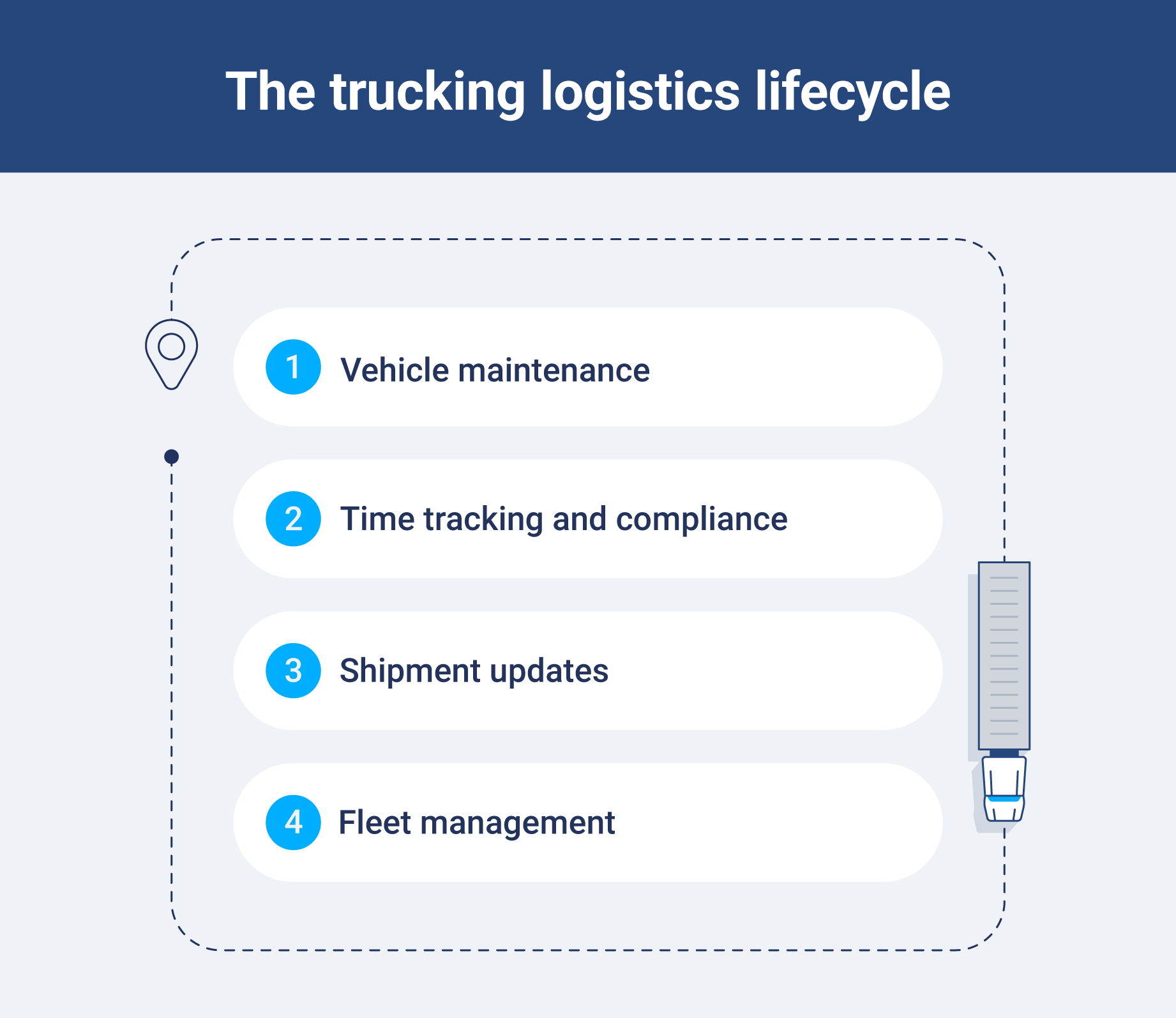
What does a trucking logistics company do?
A trucking logistics company acts as a bridge between businesses and carriers, simplifying the complexities of freight transportation and saving you time and resources. Here’s what it does:
- Vehicle maintenance: Trucking logistics companies also oversee vehicle maintenance, ensuring trucks meet safety standards and stay roadworthy.
- Time tracking and compliance: Many logistics companies use advanced technologies, such as electronic logging devices (ELDs), to monitor drivers’ hours and maintain compliance with federal regulations.
- Shipment updates: A trucking logistics company often provides real-time tracking and updates, allowing you to monitor shipments throughout the journey.
- Fleet management: One of the key responsibilities of a trucking logistics company is fleet management, which involves coordinating trucks, drivers and shipments to optimize efficiency.
Types of trucking logistics companies
Trucking logistics companies come in various forms, each handling different types of trucks in logistics, such as flatbeds, refrigerated trucks or tankers, depending on the cargo requirements, such as cold chain logistics. Here are the most common types.

Freight broker
A freight broker acts as a middle person between shippers and carriers, facilitating the transportation of goods without owning trucks or warehouses. Their primary role is to match businesses needing transportation with carriers that can deliver. Using their industry relationships, freight brokers negotiate rates, ensure capacity and handle logistics paperwork.
While freight brokers simplify the shipping process, they don’t oversee operations directly, making them a good choice if you already have reliable carriers and need help with coordination only.
3PL
A third-party logistics (3PL) company takes a more hands-on approach, managing transportation and often owning assets like trucks, warehouses and distribution centers. Unlike freight brokers, 3PL providers actively handle logistics, including storage, freight consolidation and order fulfillment.
3PL companies are a good choice if you’re looking to outsource logistics without losing control of day-to-day operations.
4PL
A fourth-party logistics (4PL) provider oversees the entire supply chain at a strategic level, managing 3PLs, carriers and other vendors. Acting as a logistics consultant and coordinator, a 4PL provider focuses on streamlining operations, optimizing costs and providing end-to-end supply chain visibility.
4PL providers handle everything from transportation planning to warehouse management. This executive-level approach makes 4PLs ideal for companies seeking comprehensive, long-term logistics solutions aligning with their business strategy.
Common trucking logistics pain points
Whether it’s maintaining compliance with regulations or navigating the rising expenses of the trucking industry, logistics professionals face a range of hurdles that require proactive solutions:
- Tracking and analytics: Without real-time tracking, you can lose visibility into your shipments, leading to inefficiencies and delays. You can use a vehicle tracking device to get critical insights into fleet performance and shipment status.
- Staying compliant: Regulations such as Hours of Service (HOS) requirements and emissions standards require careful monitoring. Failure to comply can result in fines and operational delays, making compliance management a top priority.
- Client communication: Poor communication with clients can result in misunderstandings, missed deadlines and dissatisfaction. Maintaining open lines of communication ensures clients are updated on shipment statuses and potential delays.
- Scheduling routes: Inefficient route planning can lead to wasted fuel, missed delivery windows and overworked drivers. Advanced route optimization tools are essential for maximizing efficiency and minimizing costs. Geotab's route optimization tools reduce unnecessary miles by up to 20%, directly cutting fuel spend and overtime
- Rising trucking costs: From fuel prices to insurance premiums, the cost of operating a trucking business continues to climb. These rising expenses create the need for creative ways (like freight factoring) to maintain profitability without sacrificing service quality.
- Fleet maintenance: Regular vehicle upkeep is essential to prevent breakdowns and ensure safety. You can use a fleet maintenance program to track maintenance schedules and minimize costly repairs.Proactive maintenance scheduling reduces unplanned downtime by 25–40% and cuts total maintenance costs by 14%.
Understanding these pain points can help improve supply chain efficiency and mitigate potential disruptions.

Benefits of using a trucking logistics company
A trucking transportation company can significantly alleviate common logistics pain points, offering solutions that enhance efficiency and reduce operational burdens. By managing everything from fleet maintenance to compliance and route planning, these companies take the complexity out of transportation, allowing you to focus on growth and customer satisfaction.
While there are both advantages and drawbacks, the benefits often outweigh the challenges for companies aiming to streamline their logistics operations.
| Advantages | Challenges |
| Reduced transportation and operational costs | Costs associated with outsourcing logistics |
| Streamlined supply chain processes | Potential loss of direct control over certain operations |
| Mitigation of risks, such as cargo damage or shipment delays | |
| Advanced expertise in areas like compliance and fleet management |
Reduced costs
A trucking logistics company can lower costs on multiple fronts thanks to its ability to maintain fleets, optimize routes and manage drivers efficiently. Geotab customers report an average 14% reduction in fuel costs through telematics-powered route optimization, idle time monitoring, and driver behavior coaching — savings that most fleets recover within the first year of deployment.
Additionally, trucking logistics companies often have established relationships with carriers and suppliers, allowing them to negotiate better rates for fuel, insurance and equipment. These savings are passed on to clients, making outsourcing logistics a cost-effective choice for businesses of all sizes.
Streamlined operations
Trucking logistics companies simplify the complexities of managing transportation by coordinating every aspect of the supply chain. This includes scheduling pickups and deliveries, managing warehouse operations and ensuring compliance with transportation regulations.
Advanced technologies, such as real-time tracking and automated dispatch systems, further enhance efficiency by providing instant visibility into the status of shipments and optimizing routes.
Risk mitigation
Experienced trucking logistics companies have robust risk management measures and insurance policies to protect their clients. They are equipped to handle unforeseen challenges such as cargo damage or shipment delays. Tools like asset trackers can also help lower insurance costs by ensuring that valuable goods are monitored in transit.
By outsourcing to a trucking logistics company, you can rely on expert-level mitigation strategies, ensuring disruptions are managed effectively and liabilities are minimized.
Advanced expertise
With years of experience in the trucking and logistics industry, these companies bring a deep understanding of best practices and operational efficiency.
Their expertise in compliance, fleet management and supply chain coordination allows you to delegate transportation challenges and focus on your core operations, such as sales and customer service. This specialized knowledge helps you avoid costly mistakes and optimize logistics processes.
How to choose a trucking logistics company
The right trucking logistics company combines strong customer service, proven technology, and the scalability to grow with your operation. Selecting the right trucking logistics company ensures smooth operations and reliable transportation. A good logistics partner can help reduce costs, mitigate risks and streamline your supply chain. Here is what you should consider:
- Customer service: Look for a company that provides responsive and helpful customer service. Clear communication and quick problem resolution are critical for addressing issues like delays or damaged shipments.
- Technologies implemented: Companies that use advanced tools like transportation management systems (TMS) or predictive maintenance can offer better tracking, route optimization and fleet performance insights. Geotab's MyGeotab platform integrates GPS tracking, ELD compliance, predictive maintenance, and driver behavior monitoring in a single system — eliminating the need to manage multiple vendor tools
- Reputation: Research reviews, testimonials and case studies to evaluate a company’s track record. A logistics provider with a strong reputation is more likely to deliver consistent, high-quality service.
- Rates: Compare pricing among providers to ensure you're getting value for your money. While cost shouldn’t be the sole factor, a company offering competitive rates with transparent pricing is always a better choice.
- Scalability: Choose a logistics company that can scale with your business as it grows. Whether you need more trucks or expanded service areas, flexibility ensures the provider can accommodate your future needs.
Streamline operations with a comprehensive telematics solution
Incorporating technology into your operations is one of the most effective ways to streamline trucking logistics. Easy and simple choices to get started include using telematics for real-time tracking, predictive maintenance and data-driven insights.
This helps you optimize fleet performance, reduce operational costs and streamline compliance. For better control over your supply chain, use a comprehensive fleet management tool for transportation and logistics.
How does Geotab support trucking logistics operations?
Geotab's vehicle tracking device connects to any commercial truck's OBD-II port, delivering real-time GPS location, engine diagnostics, fuel consumption data, driver behavior scoring, and ELD-compliant Hours of Service tracking. MyGeotab, Geotab's cloud-based fleet management platform, gives trucking operators a single dashboard to monitor every vehicle, manage maintenance schedules, and generate compliance reports automatically.
With more than 6 million connected vehicles and 100 billion data points processed daily, Geotab provides North American trucking fleets with the data scale and platform depth to reduce costs, improve safety, and stay compliant.
Subscribe to get industry tips and insights
Frequently Asked Questions
Telematics improves trucking logistics by providing real-time GPS tracking, engine diagnostics, driver behavior monitoring, and automated compliance reporting from a single device. Fleet managers gain visibility into every vehicle's location, fuel consumption, idle time, and Hours of Service status — enabling faster dispatch decisions, proactive maintenance scheduling, and measurable cost reduction. Geotab customers report a 14% reduction in fuel costs and up to a 40% reduction in collision rates through telematics-powered driver coaching, across more than 6 million connected vehicles processing 100 billion data points per day.
The best telematics solution for trucking fleets combines real-time GPS tracking, OBD-II engine diagnostics, ELD compliance, and driver behavior monitoring in a single integrated platform. Geotab's GO9 device connects to any commercial truck's OBD-II port and transmits location, engine data, fuel consumption, and safety events to the MyGeotab fleet management platform — processing more than 100 billion data points per day across more than 6 million connected vehicles globally.
Truck transportation moves raw materials or finished goods to warehouses, distribution centers or retail locations, where they are stored as inventory until needed for production or sale. This ensures a steady supply of goods within the supply chain.
Trucking companies reduce fleet operating costs through four proven strategies: route optimization to eliminate unnecessary miles, idle time reduction, preventive maintenance scheduling to avoid costly roadside breakdowns, and driver behavior coaching to close the fuel efficiency gap between best and worst performers on identical routes. Geotab customers achieve an average 14% reduction in fuel costs and 14% reduction in maintenance costs through integrated telematics and fleet management.
The Geotab Team write about company news.
Table of Contents
Subscribe to get industry tips and insights
Related posts

Top seven best fleet fuel cards: How to choose the right one for your business?
October 1, 2026
7 minute read

Fleet maintenance software for small business: 8 top tools and guide
September 29, 2026
7 minute read
Four ways to transform garbage fleet efficiency with data and video tools
September 28, 2026
4 minute read