What is an ELD? Benefits, key features and how to keep your fleet compliant
Electronic logging devices (ELDs) are mandatory for many commercial trucks and buses in the U.S.

By Vik Sridhar
Senior Group Product Manager at Geotab
Jun 26, 2026

Key Insights
- An electronic logging device (ELD) is a hardware device that automatically records driving time and hours of service (HOS) data for commercial drivers.
- The ELD mandate requires most commercial motor vehicle drivers to use a certified ELD system in place of paper logbooks.
- ELD compliance requires using an FMCSA-registered device, providing driver documentation and retaining records for at least six months.
- The best ELD solution should help with compliance and deliver real-time fleet visibility, fewer HOS and measurable operational efficiency gains.
Electronic logging devices (ELDs) have become a core part of compliance and safety management for commercial fleets by reducing manual record-keeping errors and automated Hours of Service (HOS) tracking. An ELD connects directly to a commercial vehicle's engine and to record driving activity in real time.
The system replaces paper logbooks with more accurate, tamper-resistant records that help both drivers and fleet operators. Learn exactly what an ELD is, what it does and how it works below.
What is an ELD?
An ELD is an electronic logging device that is used by drivers of commercial motor vehicles (CMVs) to automatically record driving time and HOS records, as well as capture data on the vehicle’s engine, movement and miles driven. The ELD keeps truck drivers and dispatchers informed of driver status in real-time to support fleet compliance, inspections and planning.
ELDs are made up of several parts, including a vehicle tracking device which connects to the truck, fleet management software and a mobile app. Together, these parts create a continuous, connected record of driver activity throughout every shift.
What does an ELD do?
An ELD integrates with the vehicle engine to record driving time for accurate HOS. How does an ELD work? The ELD communicates directly with a vehicle’s engine and automatically records driving activity and captures operational data like engine hours, ignition status, vehicle location and miles driven.
The telematics device then sends engine and GPS location data to a server, where duty status logs are created and pushed to the ELD mobile app for viewing. The information updates continuously in real time.
Drivers can access their electronic logbook information from an ELD mobile app on their smartphone or tablet. The mobile app is also synced with fleet management software so that fleet and compliance managers can monitor and analyze compliance with the help of ELD reports, maps and notifications.
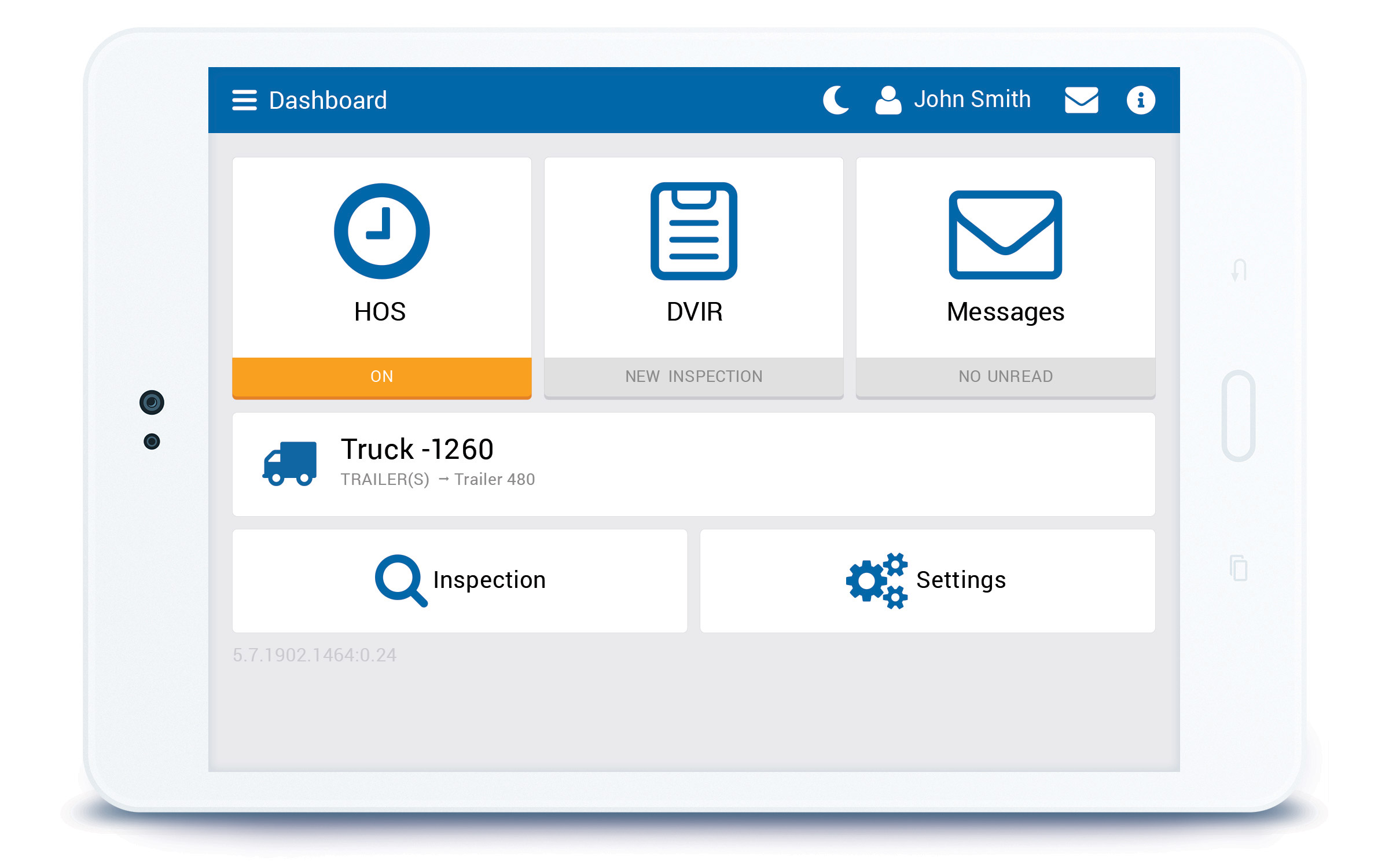
How does an ELD work?
Installation starts by connecting the ELD into the vehicle's diagnostic port, either a 9-pin or 6-pin connector. The device syncs with the engine and begins recording automatically once the vehicle moves. Here is what that workflow looks like:
- Driver login at the start of a shift. The driver logs in using a unique identifier and duty status is set manually for non-driving activities like loading, unloading or on-duty not driving.
- Automatic driving detection. Once the vehicle reaches a speed threshold, usually five miles per hour, the ELD automatically switches to the duty status of "Driving," so drivers do not have to worry about manually changing their status while the vehicle is in motion.
- End-of-day certification. Drivers review their logs at the end of each 24-hour period and certify that the records are accurate. Edits can be made with an annotation explaining the reason for the change.
It is important to note that ELDs must meet FMCSA technical specifications to be compliant. Drivers and carriers cannot self-certify a device. Certification is the responsibility of the ELD manufacturer or provider.
Who needs to use an ELD?
The ELD mandate applies to most commercial motor vehicle (CMV) drivers required to keep records of duty status (RODS) under 49 CFR Part 395. If an individual has eight or more days' worth of duty status logs out of 30 days, they will require an ELD. The rule applies to interstate and intrastate drivers in most states, and it covers owner-operators and large fleets.
The mandate covers the following vehicle types:
- Trucks with a gross vehicle weight rating (GVWR) over 10,001 pounds
- Vehicles transporting more than 8 passengers for compensation.
- Vehicles transporting more than 15 passengers are not for compensation.
- Vehicles carrying hazardous materials require placards.
To verify if your fleet is affected by the ELD trucking rule, consult the FMCSA website
ELD mandate exemptions
Not all drivers or operations fall under the ELD mandate. The FMCSA has defined specific categories of drivers that are exempt from ELD requirements.
- Short-haul drivers who return to their home base within 12 hours and operate within a 150 air-mile radius.
- Drivers of vehicles manufactured before model year 2000.
- Drivers who use paper logs for no more than 8 days in any 30-day period.
- Agricultural commodity transport during planting and harvest seasons within a 150-mile air radius.
- Driveaway-towaway operations, where the vehicle being driven is the commodity.
If you are unsure if your operation qualifies for an exemption, consult the FMCSA exemptions page to verify your situation.
ELD mandate background and timeline
Back in 2015, the U.S. Federal Motor Carrier Safety Administration (FMCSA) published a mandate on ELDs requiring motor carriers and drivers who keep records of duty status (RODS) to switch to electronic logging. The main goals of the ELD regulations are to improve road safety, reduce driver fatigue and simplify HOS tracking across the industry.
Canada introduced new electronic logging device regulations in June 2021. The Canadian ELD certification differs from requirements in regions like California, where EDL mandates follow separate compliance rules and enforcement timelines.
Before ELDs, many carriers used automatic on-board recording devices (AOBRDs) regulated by the 1988 AOBRD rule (49 CFR 395.15). While AOBRDs recorded duty status automatically, they had fewer technical requirements compared to ELDs.
Here are the key dates in the ELD mandate timeline:
- March 2014: FMCSA released a notice of proposed rulemaking that outlined amendments to establish the ELD mandate.
- December 10, 2015: FMCSA published the ELD mandate final ruling.
- December 18, 2017: Deadline for drivers using paper logs to switch to ELDs.
- December 16, 2019: Deadline for full compliance. Any drivers or carriers still using AOBRDs had to switch to ELDs on this date.

ELD compliance requirements
ELD compliance means using a device registered on the FMCSA's list of certified ELDs, correctly installed in the vehicle and properly operated by the driver. Both carriers and drivers share responsibility for maintaining compliance.
Core ELD compliance requirements include:
- Use only an FMCSA-registered ELD from the agency's official registered devices list.
- Provide drivers with ELD instruction documentation kept in the cab at all times.
- Establish a malfunction reporting procedure so drivers know how to respond when a device fails.
- Retain ELD records for a minimum of six months.
- Ensure drivers certify their logs at the end of a 24-hour period.
Fleet managers should note that carriers are responsible for providing compliant devices, and drivers are responsible for using them correctly. Non-compliance can result in HOS violations, out-of-service (OOS) orders and fines.
Features and functions of an ELD
According to the FMCSA, ELDs must conform to set technical specifications, be certified by the manufacturer and be registered with the FMCSA. Every compliant ELD must include:
- Internal synchronization with the engine control module
- Automatically record driving time and details
- Record location data
- Electronic data transfer: telematic (wireless or email) or local (USB 2.0 or Bluetooth)
- Tamper prevention
- Certification of driver records (at the end of each 24-hour period)
- Displays report for safety officials on demand (on screen or print-out)
- User manual
- Audio controls (volume and mute)
For the full list of minimum features and functions, see the FMCSA requirements for drivers and carriers.
Key features to look for in an ELD
Compliance is only the starting point. The best ELD solutions give fleet managers and drivers the tools they need to make their job easier and operations more efficient. When evaluating an ELD system, look for:
- Automatic HOS tracking with real-time violation alerts before limits are reached
- GPS and real-time location tracking for dispatching and route visibility
- Driver Vehicle Inspection Report (DVIR) functionality built into the driver app
- Two-way messaging and integration with fleet management, dispatch and payroll systems
- Integration with fleet management software, dispatch and payroll systems
- Multiple data transfer options (Bluetooth, USB, telematics)
Fleet managers running small fleets or large operations must evaluate devices based on how well they integrate with existing compliance, dispatch and reporting workflows.
Benefits of ELD
Choosing the best ELD for trucks has many important benefits for carriers. Most importantly, electronic logging helps improve driver safety by enforcing stronger compliance with Hours of Service regulations and reducing driver fatigue. Eliminating paper logbooks also increases the accuracy of record-keeping and saves time.
Here are the key benefits of ELD technology for carriers:
- Faster roadside inspections: Electronic logs transfer in seconds, reducing time spent at inspection stops.
- Fewer HOS violations: Automatic tracking removes manual calculation errors and prompts drivers before they reach limits.
- Reduce paperwork: Eliminates manual log entries at the end of each shift, saving time for drivers and office staff.
- Better fleet visibility: Real-time data helps dispatchers optimize routing and respond quickly to delays.
- Fuel savings: Identifying idle time and inefficient driving behavior reduces fuel costs across the fleet.
- Dispute resolution: Objective records provide accurate documentation in the event of collisions or compliance disputes.
ELD solutions built on an open platform also support additional capabilities. These include IFTA fuel tax reporting, International Registration Plan (IRP) mileage reporting, vehicle inspection reporting, fuel usage monitoring and engine fault alerts for proactive maintenance.
Simplify ELD compliance with the right solution
Now that you understand what an ELD is and how it works, the next step is choosing the best solution for your fleet. Geotab offers a fully FMCSA-compliant ELD solution that supports HOS tracking, DVIR, driver identification and real-time fleet visibility, all within a single, easy-to-use platform.
No matter if you operate a single truck or a large fleet, Geotab's ELD system is built to scale with your business and connect with the tools you already use. Request a demo to see what it looks like in action.
While Geotab recognizes our place as a self-registered ELD manufacturer and provider and we will answer questions regarding those Hours of Service (HOS) ruleset options we provide, neither Geotab nor any of its employees, officers or agents can offer legal advice to any resellers or customers concerning which HOS ruleset(s) or exemption(s) may apply to any particular situation. Please contact your local DOT department or refer to the FMCSA website at https://www.fmcsa.dot.gov/ for questions Geotab is unable to answer, or additional information pertaining to the electronic logging device law.
Subscribe to get industry tips and insights
Frequently Asked Questions
The ELD automatically records the information to keep records of duty status and help drivers track their driving limits and prevent fatigue-related issues:
- Date
- Time
- Location
- Engine hours
- Vehicle miles
- Driver identification
- User authentication
- Vehicle
- Motor carrier
Usually, you can use the FMCSA's online list to check on ELD compliance. The FMCSA does not guarantee that any registered device is compliant with the ELD guidelines. Under the regulations, the ELD providers self-certify their devices and then register them with the FMCSA in a process called “self-certification.”
The difference between AOBRDs and ELDs is that an AOBRD is an Automatic On-Board Recording Device, regulated by the 1988 AOBRD rule (49 CFR 395.15), but ELDs include greater technical requirements and functionality not covered under the original AOBRD rule.
Yes, drivers or someone authorized at the carrier office can edit an ELD log if there is a mistake or if information is missing. All edits require an annotation explaining the reason for the change and must follow the guidelines. The driver must carefully review, certify and resubmit the log. Original driving time records cannot be edited.
The ELD costs can range from hundreds of dollars to thousands per vehicle. When purchasing an ELD solution, there are several costs involved: the device hardware, professional installation (if required) and a monthly software fee. It is important to research the ELD provider and solution to ensure that you’re getting the best value for the dollar.
ELDs are important because they help fleet managers stay compliant with regulations. They benefit the trucking industry in many ways, by saving time and costs associated with paper logs, increasing the efficiency of record-keeping and inspections, and most importantly, by helping reduce collisions and improving driver safety.
Read more: California's Clean Truck Check [2025 Fleet Manager's Guide]
Yes, Geotab has an ELD solution that also supports Hours of Service, Driver Vehicle Inspection Reporting (DVIR) and driver identification. The smart driver app syncs data between the Geotab GO device and a tablet to provide automatic duty status changes, violation alerts and a complete end-to-end inspection workflow.
Senior Group Product Manager at Geotab
Vik Sridhar is a Senior Group Product Manager at Geotab, and a member of the Fleet team, responsible for the Productivity, Safety and Optimization pillars.
Table of Contents
Subscribe to get industry tips and insights
Related posts

6 benefits of an open, AI-powered fleet data platform
September 17, 2026
8 minute read
Beyond consumer apps: 5 ways integrated navigation protects your fleet
July 23, 2026
6 minute read
Closing blind spots in cargo security with a 360 fleet camera system
July 22, 2026
3 minute read
Top 7 transportation management systems (TMS) for small carriers
July 16, 2026
9 minute read

10 best ELD for hotshot truckers to stay compliant and profitable
July 6, 2026
9 minute read